
Persimmon Pudding

This post may contain affiliate links. See my disclosure policy.
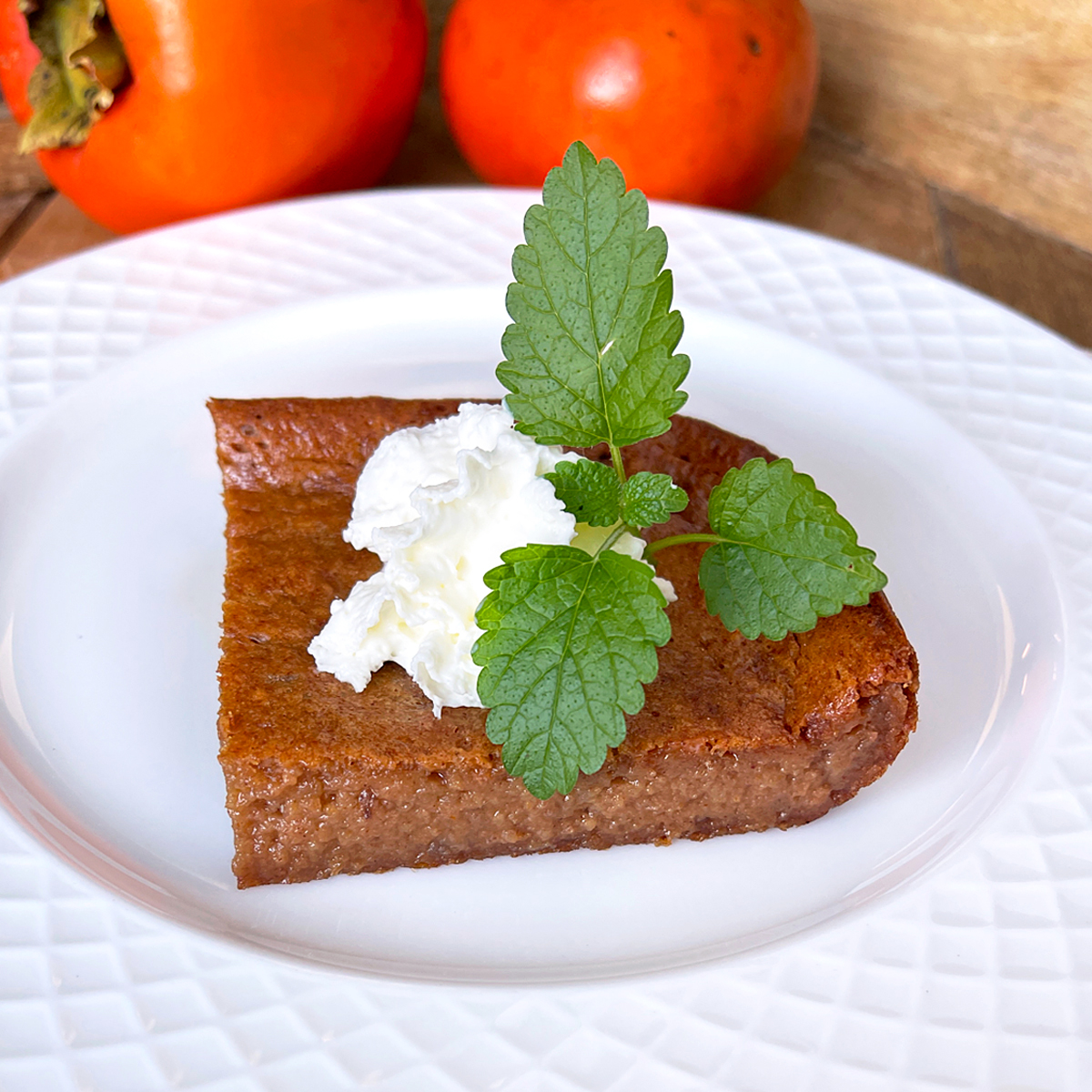
Featuring a honey-like fruity flavor, cozy warm spices, and a soft, custard-like texture, this unique dessert captures everything there is to love about fall baking. If you’re looking for something a little different from the usual lineup of seasonal pies and cakes, try this traditional Persimmon Pudding recipe! With a long and rich heritage, persimmon pudding is one of those old-fashioned desserts that deserves to be enjoyed by a new generation of home bakers.
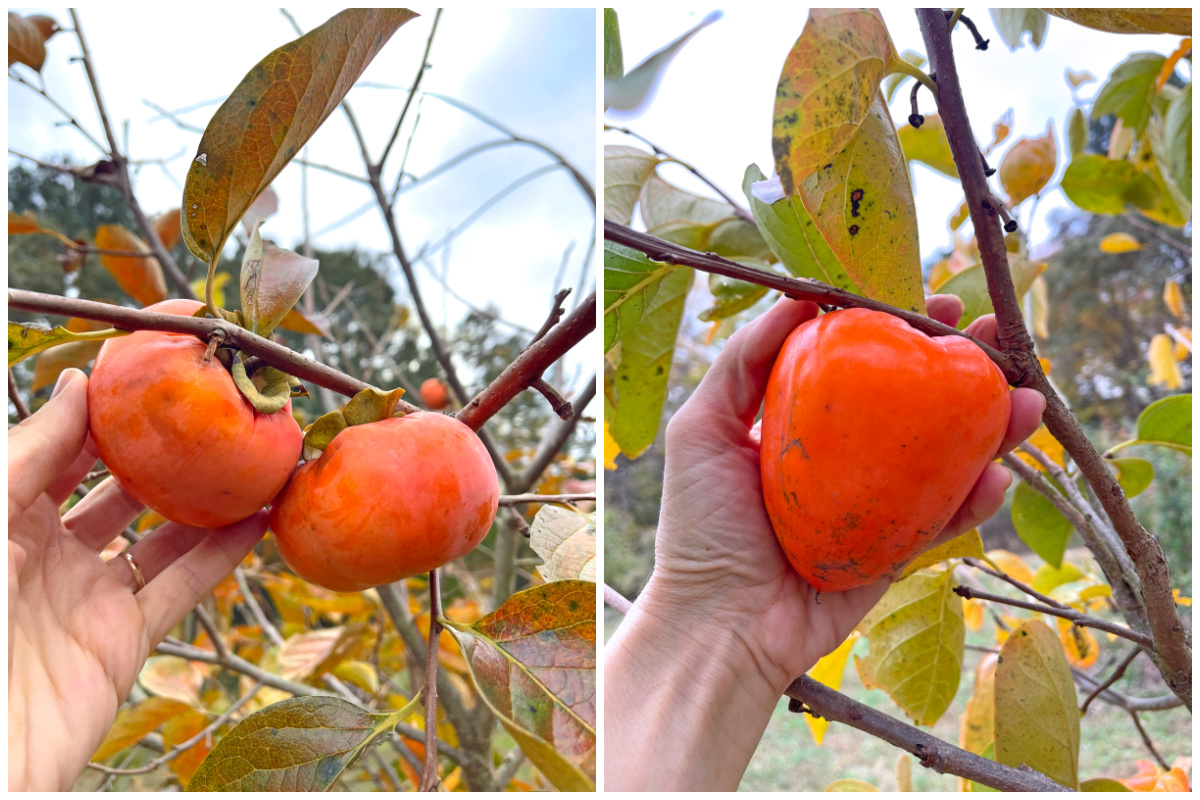
Along with the native wild persimmon trees we have growing all around us, we planted two additional varieties of persimmons in our orchard when we moved to Virginia several years ago. Last year saw the first fruit harvest, with just a handful of persimmons. But this year our trees produced such a generous amount of deeply orange-colored fruits that we have enough frozen pulp to last us until next season. Persimmons can be sliced into salads, blended into smoothies, or made into jams, jellies, and chutneys. Here in the United States, one of their most celebrated uses is this traditional persimmon pudding.
Old-Fashioned Persimmon Pudding
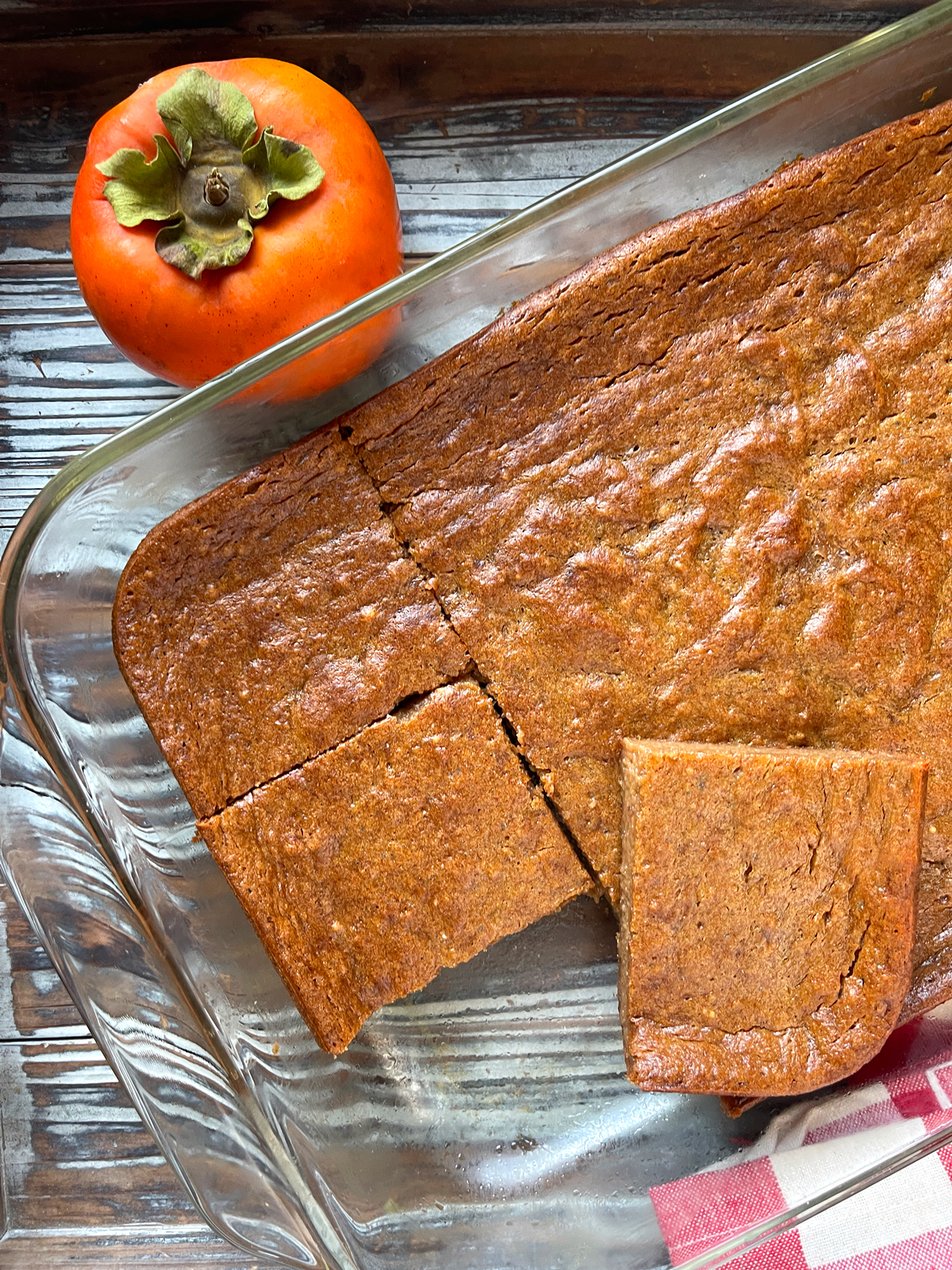
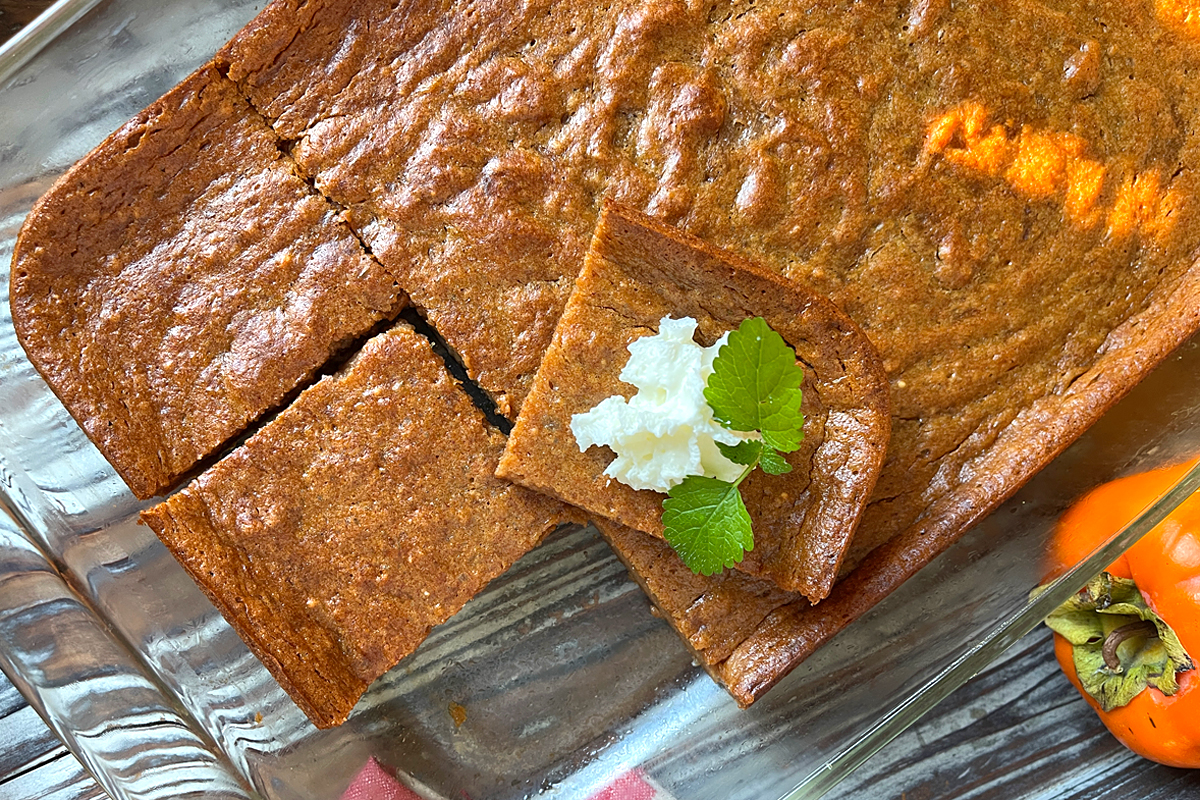
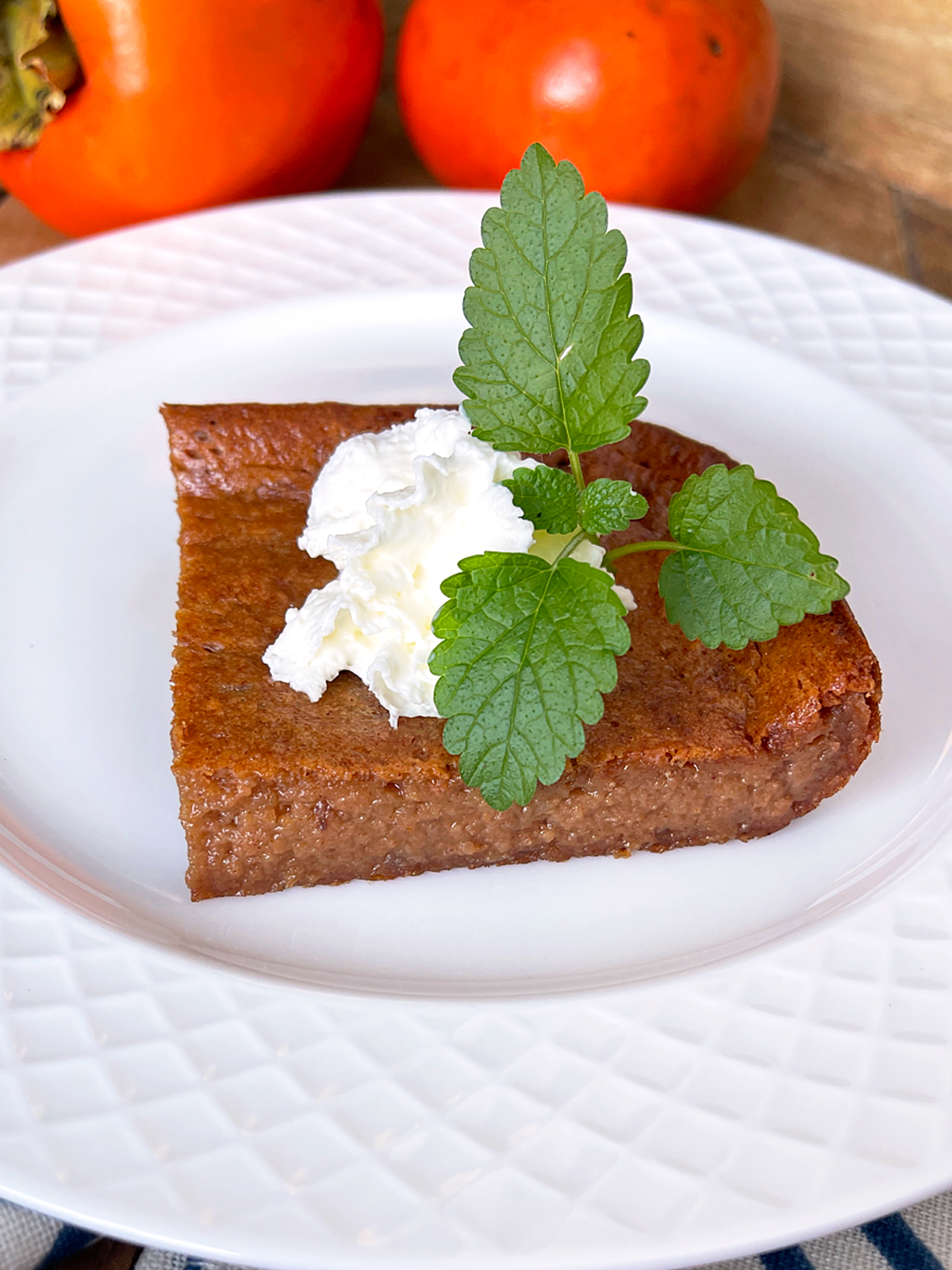
With its rich, custardy texture, warm spices, and deep, caramel-like sweetness, this old-fashioned dessert is a delicious way to celebrate persimmon season. Unlike the smooth, creamy pudding you eat with a spoon, traditional persimmon pudding is more like a cross between a fudgy brownie and a baked custard. It has a soft, almost gooey center, slightly chewy edges, and a flavor that comes from fully ripened persimmons, brown sugar, butter, and cinnamon.
This nostalgic dessert has deep roots in the culinary traditions of the American Midwest and South. Indiana is particularly well known for its persimmon pudding, and the annual Persimmon Festival in Mitchell even hosts a persimmon pudding baking competition. Today, persimmon pudding remains a favorite seasonal dessert, particularly around Thanksgiving and Christmas.
What Are Persimmons?
Persimmons are sweet, orange-colored fruits that grow on trees and are typically in season during the fall and early winter. They have a honey-like flavor with subtle notes of apricot and cinnamon. Depending on the variety, some persimmons are delicious when crisp, while others are extremely astringent and need to become soft and jelly-like before they’re enjoyable to eat.
There are several species of persimmons, each with numerous cultivated varieties. The American persimmon (Diospyros virginiana) is native to the eastern and central United States, while Hachiya and Fuyu are two popular varieties of the Asian persimmon (Diospyros kaki). Native American communities have harvested and enjoyed wild persimmons for centuries. The English name for the fruit is derived from a Powhatan word (right here in my region of Tidewater Virginia), pasimenan or putchamin, referring to dried fruit. Persimmons have since become a treasured ingredient in regional American cooking.
If you’re shopping for persimmons or lucky enough to have a tree nearby, here are three varieties worth knowing about:
- American Persimmons: These small, round fruits grow wild throughout much of the eastern United States and have been enjoyed for centuries. What these little fruits lack in size, they more than make up for in their rich, concentrated sweetness. The trick is patience. American persimmons contain tannins that make them unpleasantly astringent until they’re completely ripe. Once their flesh becomes soft and jam-like, they’re sweet and especially well suited for old-fashioned persimmon pudding.
- Hachiya Persimmons: You can easily recognize Hachiyas by their elongated shape, which resembles a large orange acorn. They’re another variety that requires a little patience because eating one too early can leave your mouth feeling dry and fuzzy. But give them enough time to ripen and their flesh becomes silky, almost like a thick jelly, with a deep, honey-like sweetness.
- Fuyu Persimmons: Short, round, and slightly flattened, Fuyus look a bit like orange tomatoes. What makes them different is that you don’t have to wait until they’re mushy to enjoy them. Unlike American and Hachiya persimmons, Fuyus are non-astringent, so you can slice into one while it’s still crisp and firm. Their flavor is mild and sweet, making them well suited for eating fresh in things like salads. However, when using Fuyus in persimmon pudding, you’ll likewise want to give them extra time to soften so they develop even more flavor and blend up easily into pulp for the batter.
Which Persimmons Are Best for Pudding?
Any of them! Whether you have wild American persimmons or Hachiyas or Fuyus from the grocery store, they’ll all work and once they’re baked into the pudding, you probably wouldn’t notice much of a difference between them. The key is allowing them to become extremely ripe. The flavor develops and becomes richer and sweeter the longer the persimmons sit and the softer and more jelly-like they become. Persimmons are picked from the tree once they turn a rich apricot color, and then they’re left to fully ripen at room temperature.
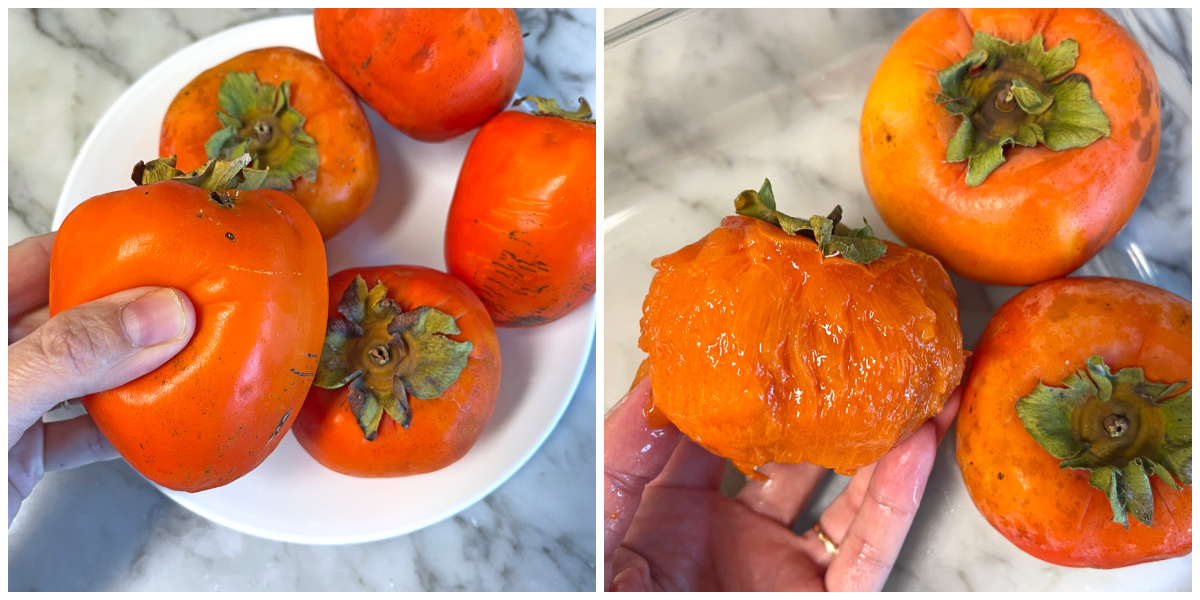
Leave your persimmons at room temperature until they’re very soft and squishy. This is true for any variety you use, but it’s especially important with American and Hachiya persimmons, which are highly astringent before they’re fully ripe. You can speed up the ripening process by placing them in a paper bag. Don’t be put off by slightly wrinkled skins. Provided the fruit shows no signs of spoilage, that exceptionally soft, jelly-like flesh is exactly what you want for persimmon pudding.
Ingredients for Persimmon Pudding
This old-fashioned persimmon pudding relies on familiar pantry staples. Here’s what you’ll need to make it:
- Persimmon pulp: The star ingredient. Fresh, fully ripened persimmons give the pudding its signature sweetness, moisture, and rich custardy texture.
- All-purpose flour: Provides structure while allowing the pudding to retain its soft, dense texture.
- Granulated sugar: Adds sweetness and contributes to a tender texture.
- Brown sugar: Adds sweetness along with subtle molasses and caramel notes that pair beautifully with persimmons.
- Eggs: Help bind the ingredients together and give the pudding its rich, custard-like consistency.
- Whole Milk: Adds moisture and creates a smooth, tender texture. Some traditional recipes use buttermilk instead, which you can substitute if you prefer.
- Butter: Contributes richness and a delicious buttery flavor.
- Spices: Cinnamon, ginger and mace or nutmeg bring a comforting warmth that complements the natural sweetness of the fruit. I love the old-fashioned flavor of mace, but you can substitute nutmeg.
- Vanilla extract: Rounds out the flavors and adds a delicate sweetness.
- Baking powder: Provides a gentle lift and keeps the pudding from becoming overly heavy, while preserving its signature moist, dense, and tender texture.
- Salt: Enhances the overall flavor and balances the sweetness.
- Chopped pecans or walnuts (optional): You can add these for a pleasant crunch that contrasts with the pudding’s soft, chewy texture.
How to Make Persimmon Pulp
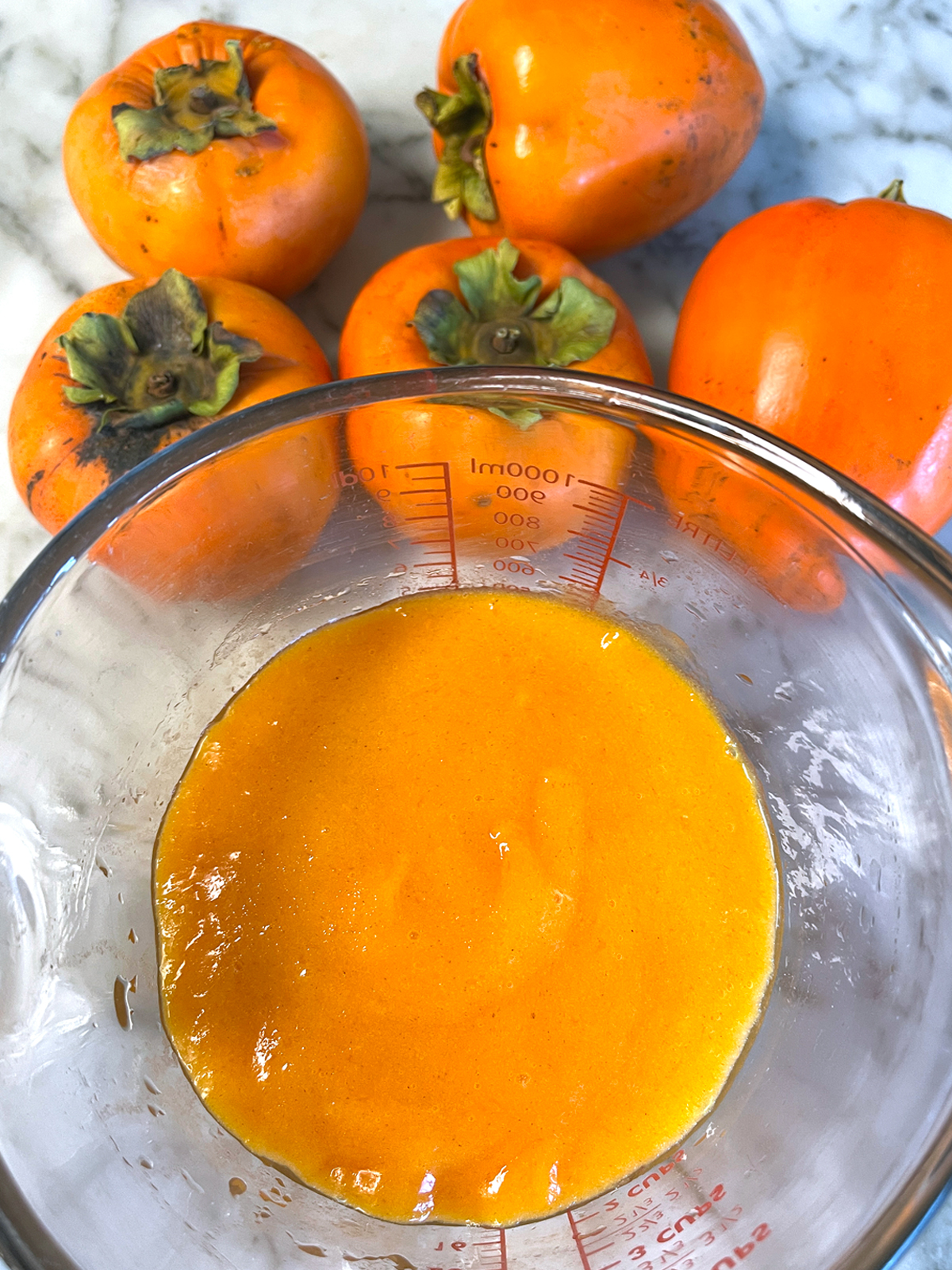
Once the persimmons are fully ripe, you’ll remove the skins and any seeds inside, transfer the flesh to a blender, and puree until smooth.
If you have extra pulp, it freezes beautifully, so you can make homemade persimmon pudding or jam long after persimmon season has ended. To freeze persimmon pulp, spoon the pulp into airtight, freezer-safe containers or resealable freezer bags. Dividing it into measured portions, such as one- or two-cup amounts, makes it especially convenient for future baking. For the best quality, use frozen persimmon pulp within 6 to 12 months. When you’re ready to bake, thaw the pulp overnight in the refrigerator. Stir it well before measuring, as some liquid may separate during freezing and thawing.
Pro Baking Tips for the Best Persimmon Pudding
Although persimmon pudding is a very easy dessert to make, a few simple tips can make a noticeable difference in its flavor and texture:
- Use extremely ripe persimmons. This is the most important tip! All varieties should be left at room temperature until very soft, particularly astringent types like Hachiya and American persimmons. Their flesh should be almost gelatinous for the best sweetness and flavor. An unpleasant puckering sensation means the persimmons aren’t ripe enough. I’ve had some take a couple of weeks to fully ripen. To encourage ripening, you can place persimmons in a paper bag with a ripe apple or banana. These fruits release ethylene gas, which helps speed up the ripening process.
- Measure the pulp rather than counting fruits. Persimmons vary significantly in size, so measuring the prepared pulp gives you more consistent results.
- Avoid over-mixing the batter. Too much mixing can develop excess gluten, resulting in a tougher pudding. A gentle hand helps preserve the soft texture.
- Don’t expect a fluffy cake. Traditional persimmon pudding is meant to be dense, moist, and somewhat custard-like. Its unique consistency is part of its charm. The center should have a soft, custard-like consistency rather than a light, airy crumb. However, it should still be properly baked and set, not contain raw batter.
- Keep an eye on the baking time. The center should be set but remain soft. Overbaking can dry out the pudding and take away its characteristic custard-like richness.
- Allow the pudding to rest before serving. A little cooling time helps the texture settle and makes it easier to cut into portions.
- Consider adding nuts. Especially if you prefer something more substantial and crunchy along with the soft and custardy consistency.
- Serve it with something creamy. Lightly sweetened whipped cream, Creme Anglaise, Hard Sauce, or vanilla ice cream balances the pudding’s richness beautifully.
Persimmon Pudding Recipe
Let’s get started!
Preheat the oven to 325 F / 160 C and butter a 9×13 inch glass (or ceramic) baking dish.
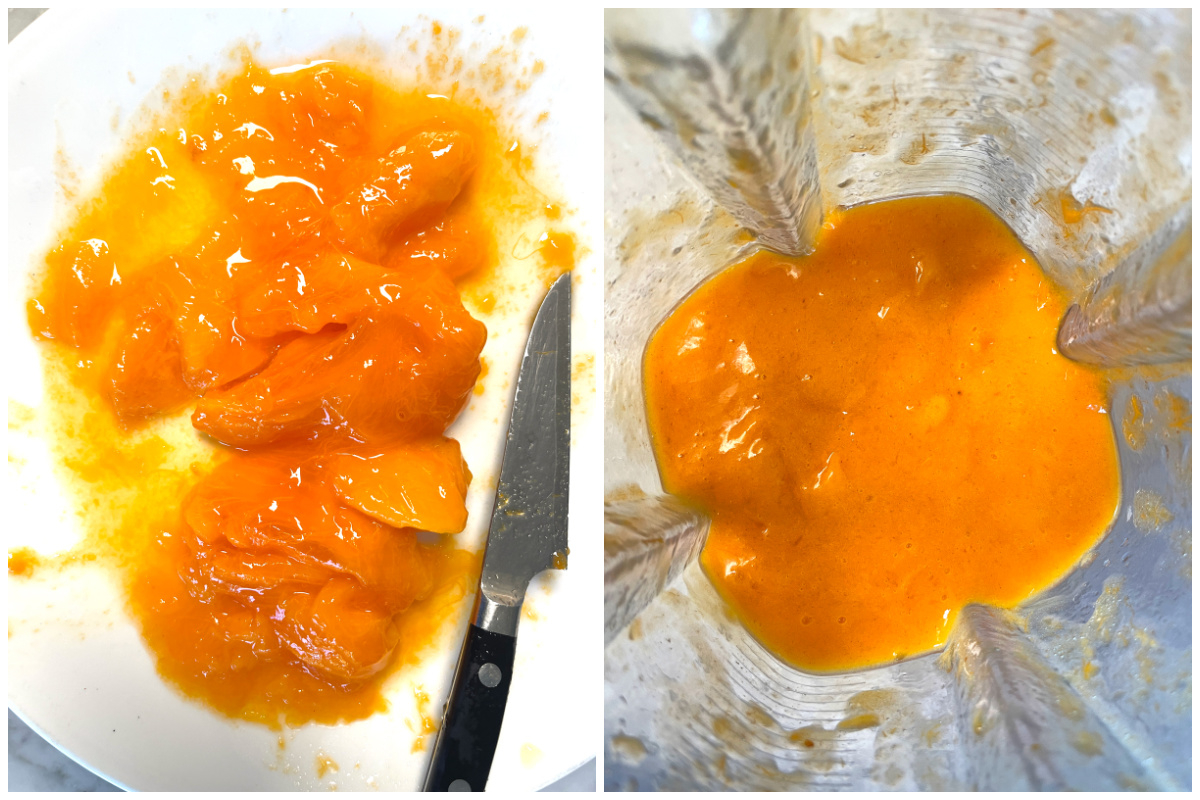
Make the persimmon pulp: remove the skins and any seeds inside, transfer the flesh to a blender, and puree until smooth.
Place the persimmon pulp, white and brown sugar, eggs and vanilla extract in a large mixing bowl.
Whisk or beat until smooth.
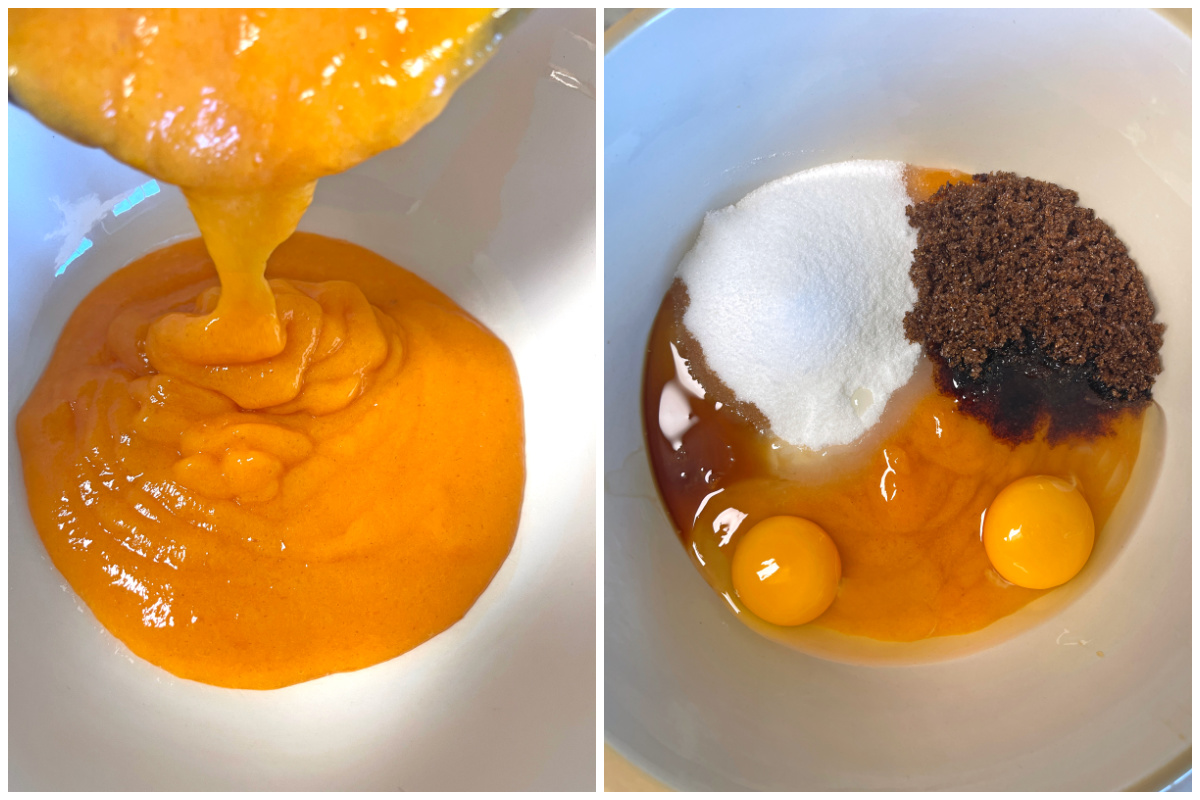
Add the melted butter and milk. Whisk or beat until smooth.
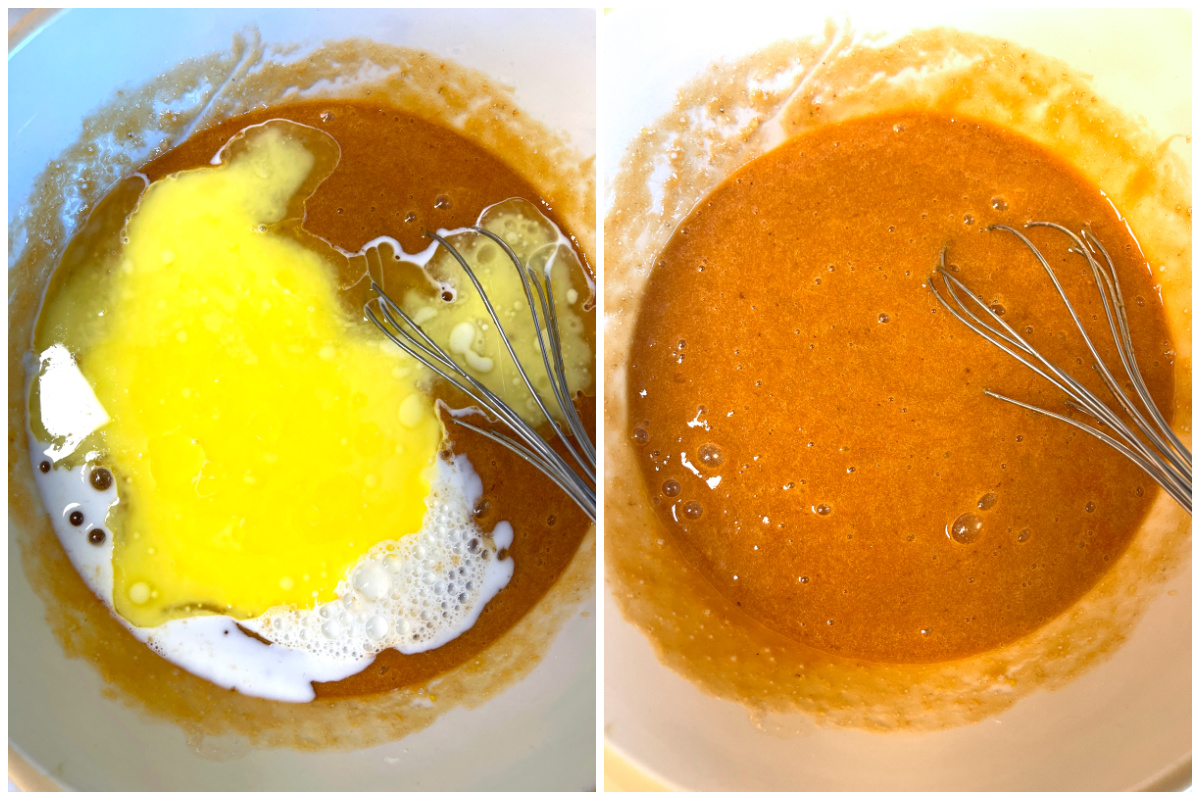
In a separate bowl, combine the flour, baking powder, spices and salt.
Add the flour mixture to the wet mixture and whisk just until combined. Be careful not to over-mix the batter, as this can result in a tough or rubbery texture. If you’re adding nuts, stir them in now.
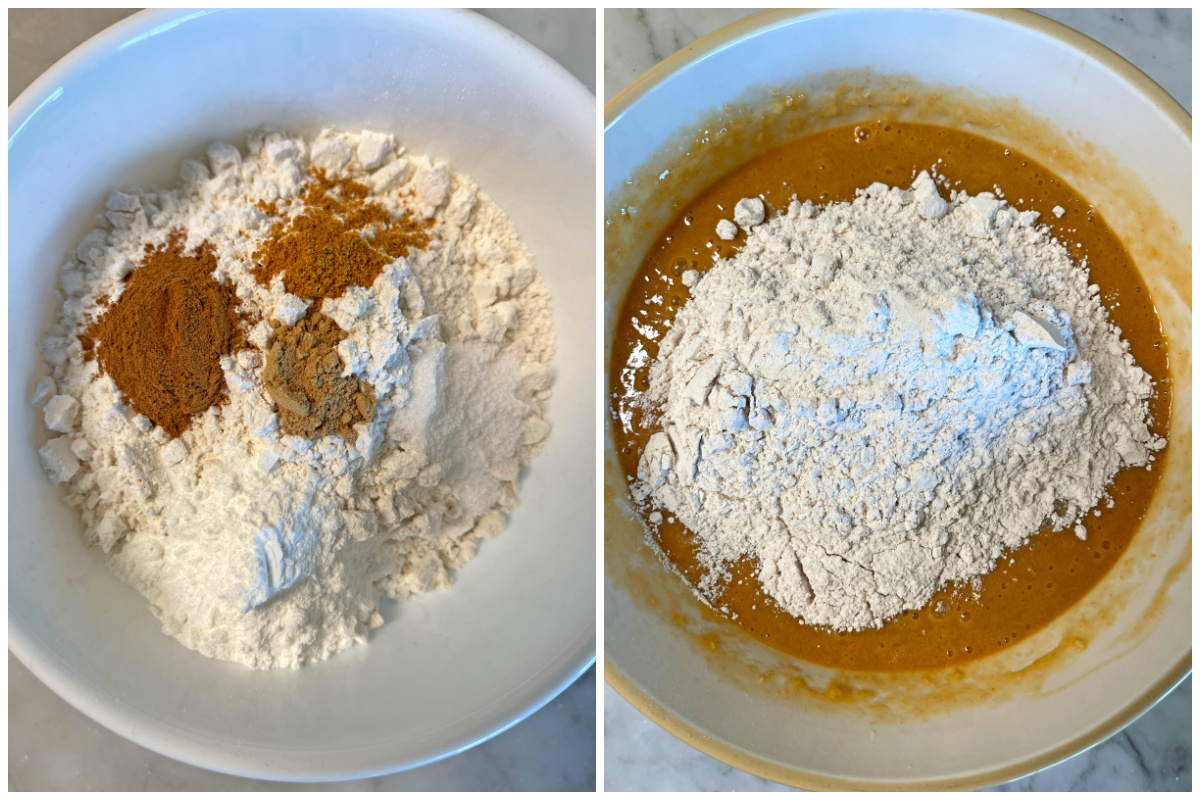
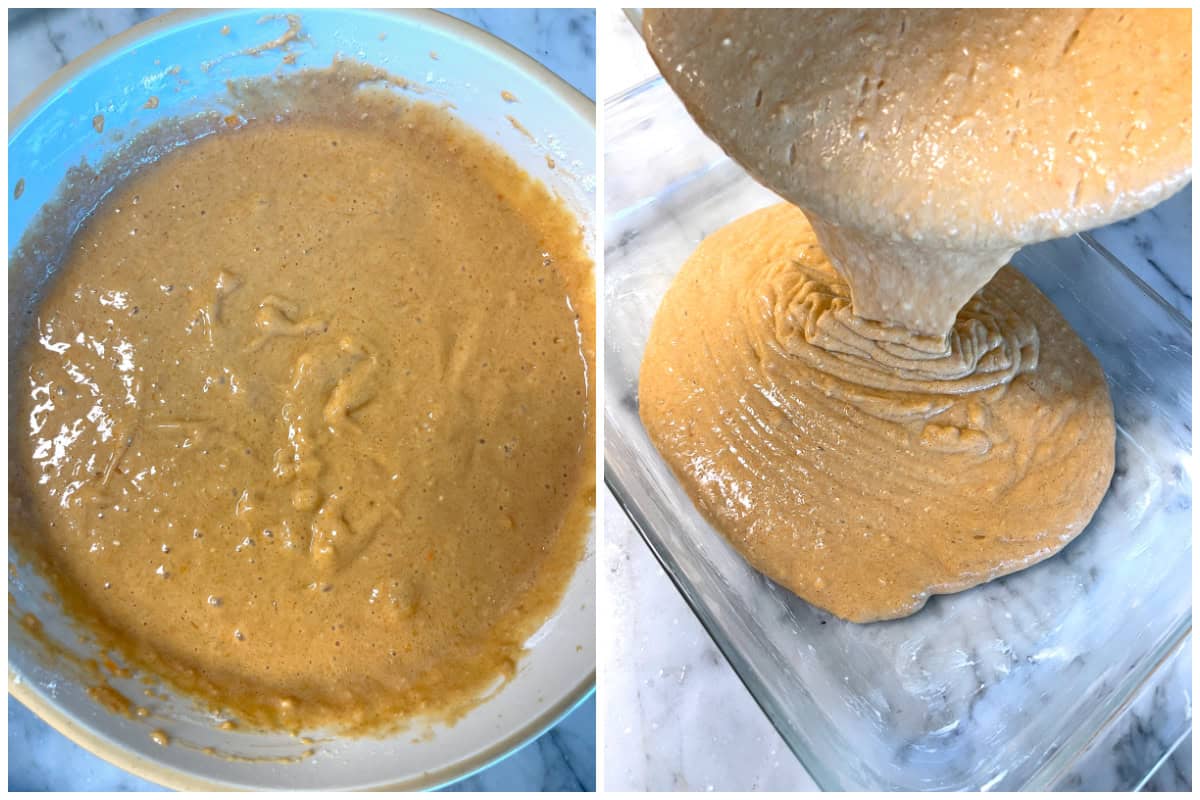
The batter will be loose and runny, similar to pancake batter.
Pour the batter into the baking dish.
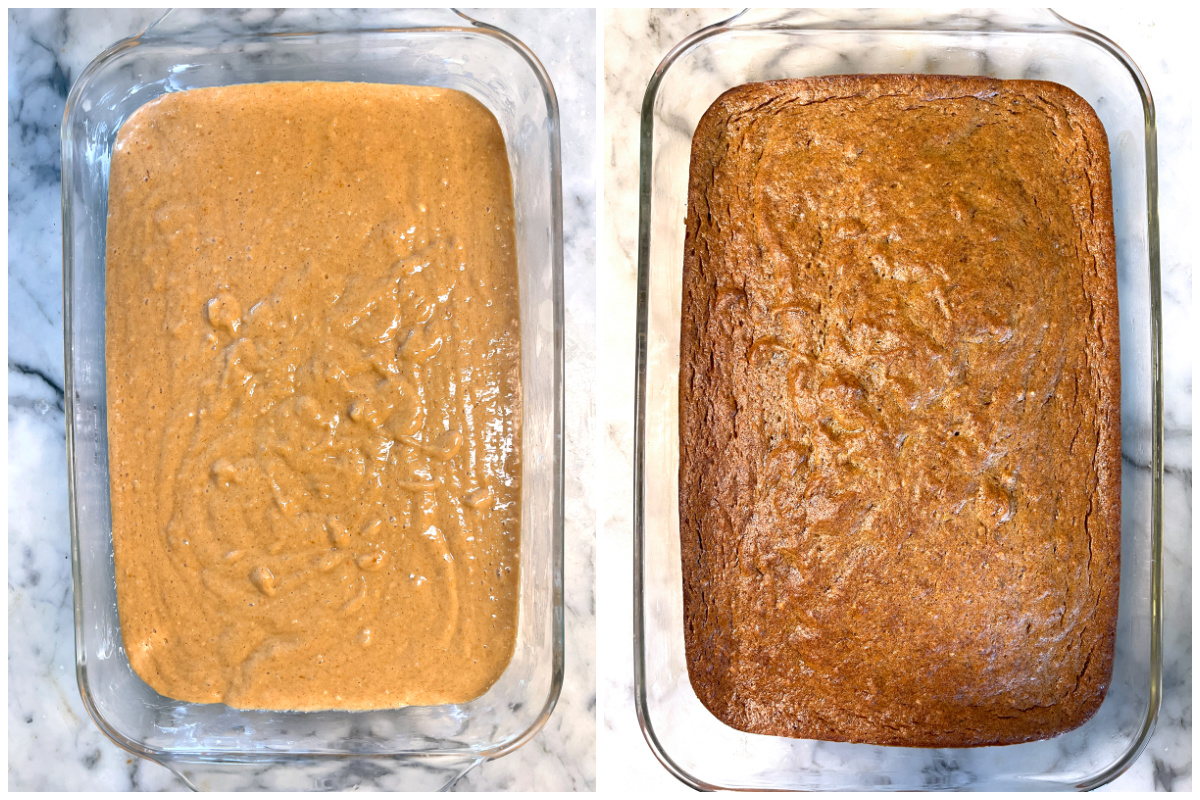
Bake the persimmon pudding on the middle rack for 50-60 minutes or until it’s dark golden brown, the center is set, and the edges are starting to pull away from the baking dish.
Be careful not to over-bake the pudding. A toothpick inserted into the center may will come out with moist crumbs clinging to it, but it should not be coated in raw batter. The center should be set but still soft, with slightly darker edges that are beginning to pull away from the baking dish.
Let the pudding cool for 10-15 minutes before cutting and serving.
Storage, Freezing & Advance Preparation
Because persimmon pudding contains a generous amount of fruit pulp and has an exceptionally moist texture, proper storage helps preserve its freshness. Allow the pudding to cool, then transfer it to an airtight container or cover the baking dish tightly with plastic wrap. It will keep in the refrigerator for 3-4 days.
You can prepare it a day in advance, refrigerate it, and gently warm it before serving. This makes it especially convenient for holiday gatherings when oven space and preparation time are limited.
Persimmon pudding also freezes well. Once completely cooled, cut the pudding into individual servings or leave it in a larger portion. Wrap it securely in plastic wrap, followed by a layer of aluminum foil, or place it in an airtight freezer-safe container. Freeze for up to 3 months for the best flavor and texture. Transfer frozen persimmon pudding to the refrigerator and allow it to thaw overnight.
You can enjoy leftover pudding cold, at room temperature, or gently reheated, whichever you prefer.
Can I Make Persimmon Pudding with Frozen Persimmon Pulp?
Yes! Previously frozen persimmon pulp works very well in this dessert. Simply thaw the pulp in the refrigerator, stir it thoroughly, and measure the amount needed. Freezing the pulp during persimmon season is an excellent way to enjoy this traditional dessert throughout the year.
How to Serve Persimmon Pudding
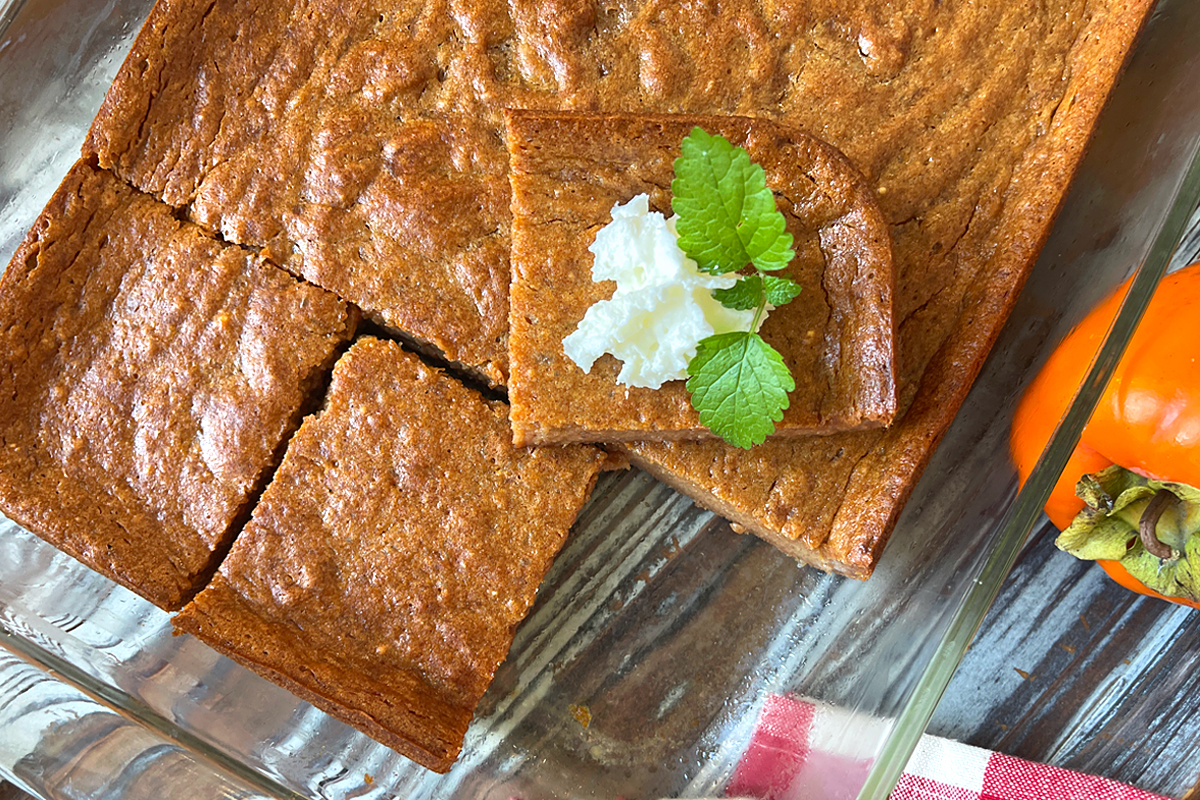
Persimmon pudding is delicious on its own, but for a classic presentation, serve it slightly warm and cut into squares with a dollop of lightly sweetened whipped cream, Creme Anglaise (vanilla custard sauce), Hard Sauce (aka brandy butter), or a scoop of vanilla ice cream. For a variation of the creme anglaise, you can also serve it with Eggnog Custard.
Enjoy!
Save This Recipe
Persimmon Pudding
Equipment
Ingredients
- 2 cups persimmon pulp (approximately 4 large persimmons, depending on size and variety); extremely ripe to the point of soft, jelly-like flesh
- 3/4 cup granulated sugar
- 1/2 cup brown sugar
- 2 large eggs
- 1 teaspoon pure vanilla extract
- 5 tablespoons butter , melted
- 2 cups whole milk
- 1 3/4 cups all-purpose flour
- 3 teaspoons baking powder
- 1/2 teaspoon salt
- 1 teaspoon cinnamon
- 1/4 teaspoon ground ginger
- 1/4 teaspoon ground mace or nutmeg
- 1/4 cup chopped pecans or walnuts (optional)
Instructions
- Preheat the oven to 325 F / 160 C and butter a 9×13 inch glass (or ceramic) baking dish.To make the persimmon pulp: Remove the skins and any seeds inside, transfer the flesh to a blender, and puree until smooth.Place the persimmon pulp, white and brown sugar, eggs and vanilla extract in a large mixing bowl and whisk until smooth. Add the melted butter and milk and whisk until smooth.In a separate bowl, combine the flour, baking powder, spices and salt.Add the flour mixture to the wet mixture and whisk just until combined. The batter will be loose and runny. Be careful not to over-mix the batter, as this can result in a tough or rubbery texture. If you're adding nuts, stir them in now.
- Pour the batter into the buttered baking dish.Bake the persimmon pudding on the middle rack for 50-60 minutes or until it's dark golden brown, the center is set, and the edges are starting to pull away from the baking dish. Be careful not to over-bake the pudding. A toothpick inserted into the center may will come out with moist crumbs clinging to it, but it should not be coated in raw batter. The center should be set but still soft, with slightly darker edges that are beginning to pull away from the baking dish. Let the pudding cool for 10-15 minutes before cutting and serving.Persimmon pudding can be eaten cold or at room temperature, but for best results serve it gently warmed. Traditionally served with lightly sweetened whipped cream, Creme Anglaise, Hard Sauce, or vanilla ice cream.Store leftovers in the fridge, tightly wrapped with plastic wrap, where they will keep for 3-4 days.
Notes
Nutrition

Hi, I’m Kimberly Killebrew and welcome to Daring Gourmet where you'll find delicious originals, revitalized classics, and simply downright good eats from around the world! Originally from Germany, later raised in England, world-traveled, and now living in the U.S., from my globally-influenced kitchen I invite you to tour the world through your taste buds!