
Maritozzi (Roman Cream Buns)

This post may contain affiliate links. See my disclosure policy.
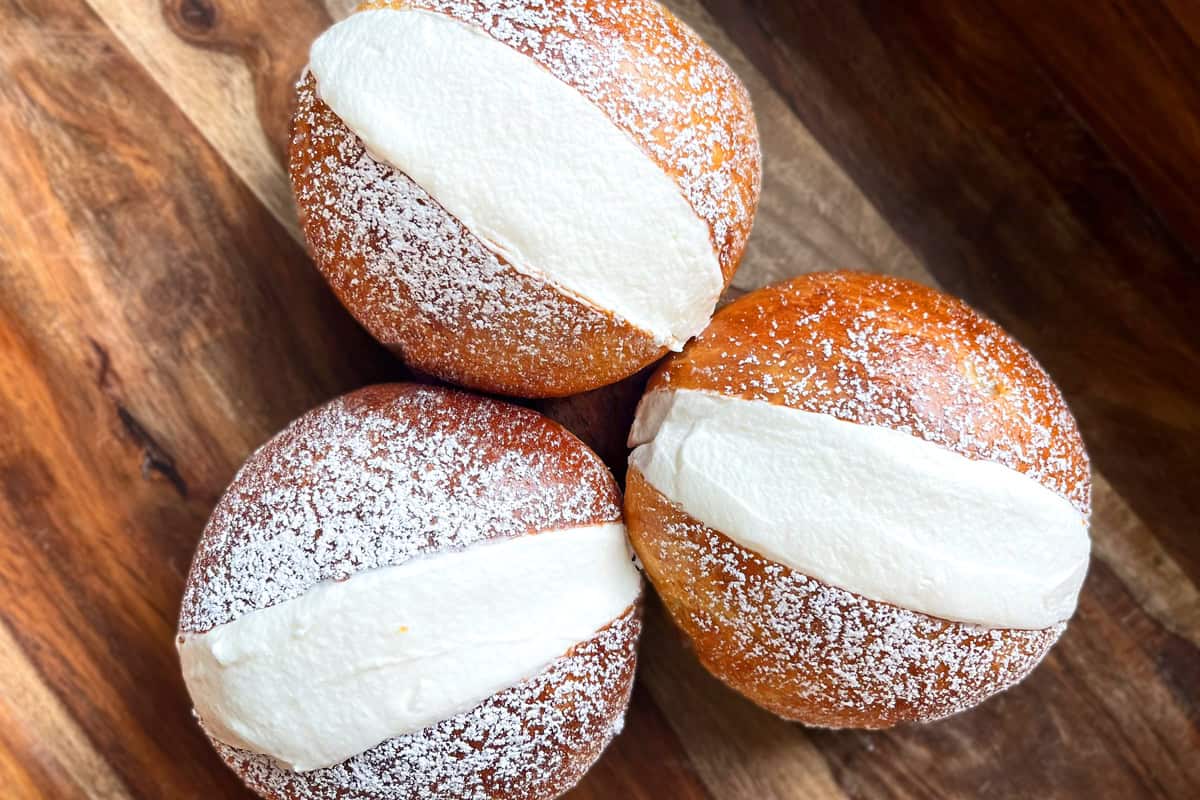
A traditional Maritozzi recipe for making those iconic Italian cream buns from Rome, flavored with fragrant orange and honey and filled with whipped cream. Light, airy, chewy and luxuriously indulgent, their history goes back to ancient times and they’ve remained one of Rome’s most famous and beloved pastries!

Ah, Roma, Italia, the Eternal City! From cobblestone streets and sun-drenched piazzas to magnificent ruins and lively cafés, Rome is a city made for wandering, indulging, and embracing la dolce vita.

But if you’re anything like us, once you’ve checked the iconic sights off your list, you start craving a different side of the city, one beyond the crowds and tourist traps where authentic, everyday Roman life takes center stage. On our previous trip to Rome that search led us to Testaccio, a historic working-class neighborhood just south of the city center, tucked between the Tiber River and Aventine Hill.
If you want to experience authentic Roman cuisine away from the heavily touristed areas like Campo de’ Fiori, you’ll find it in Testaccio. At the heart of the neighborhood is the Mercato di Testaccio, or Testaccio Market, where locals shop for fresh produce, meat, seafood, cheese and baked goods, and grab a bite for lunch at one of the many food stalls while they’re at it. It’s also a terrific place to sample Roman street food, with vendors serving up everything from traditional favorites to more modern takes on the city’s classics.
We were staying across the river in Trastevere, but that didn’t stop us from making the 20-minute walk to Testaccio nearly every day for breakfast or lunch. Each visit brought something new to try and another reason to come back. The local pâtisseries were one of the draws, bustling with locals and not a tourist in sight, serving traditional Roman baked goods, desserts and pastries. One such pastry: the legendary Roman cream-filled sweet buns, Maritozzi.

What Is a Maritozzo?
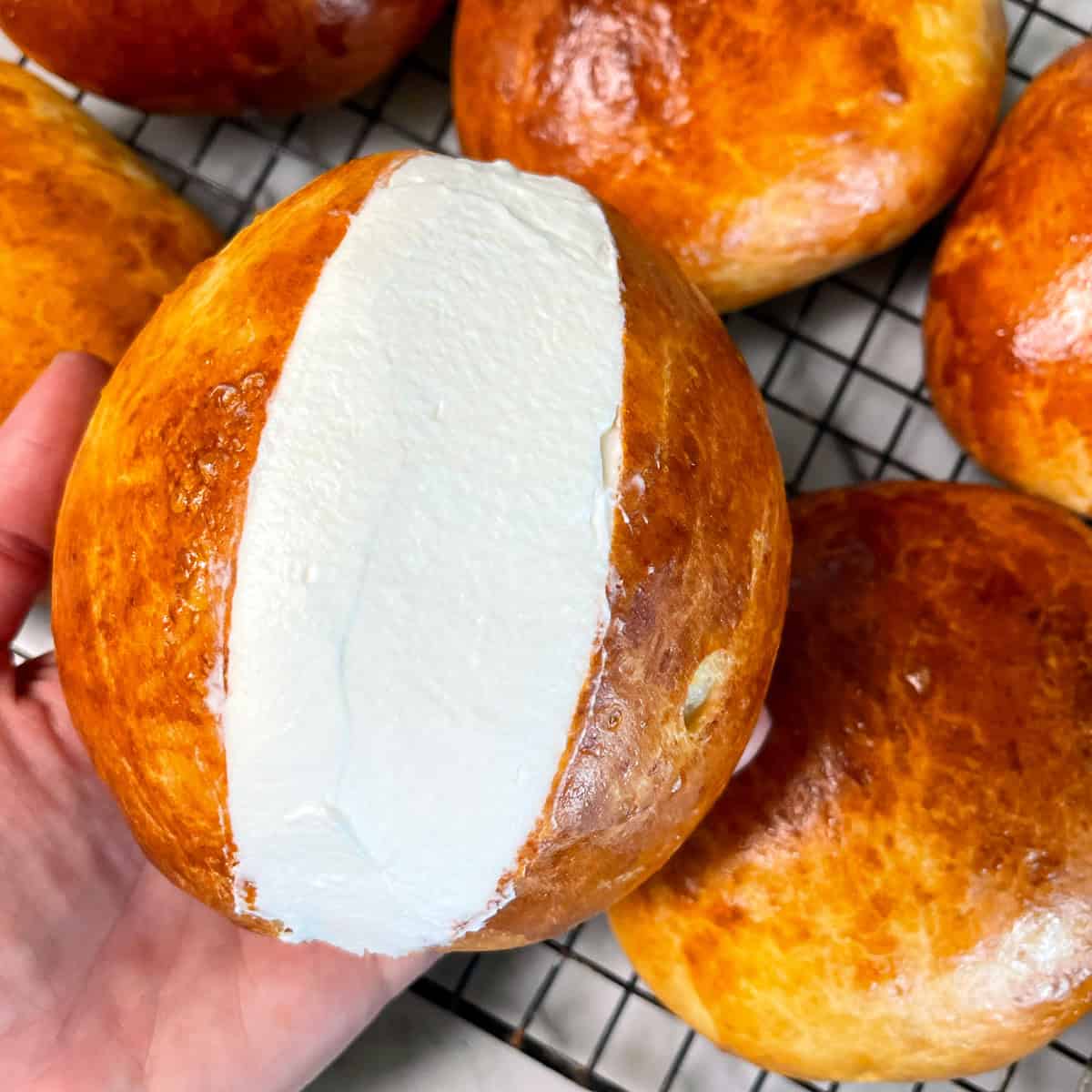
A maritozzo (plural is maritozzi with the double “zz” pronounced like pizza) is a traditional Roman sweet bun known for its soft, airy texture and generous cream filling. Similar to a light brioche, it’s an enriched dough sweetened with honey and often flavored with orange zest. The bun is sliced through the middle and filled with an almost obscene amount of whipped cream (though you’ll never hear me complain about it!) and then dusted with powdered sugar. It’s not overly sweet, but the experience is luxuriously indulgent. Maritozzi can be served as dessert or, as many of the locals do, enjoyed for breakfast.
The History of Maritozzi
The history of the maritozzo can be traced back to ancient Rome, although its earliest form was quite different from the cream-filled pastry eaten today. Early versions were larger, simple loaves prepared with ingredients such as flour, eggs, oil, and salt, while honey and raisins provided sweetness. Just as the Cornish pasty was traditionally made for mine workers, these nourishing Italian breads were specifically associated with laborers and agricultural workers who needed filling food during long days away from home. Workers could carry the loaves in saddlebags, making them a convenient and substantial source of energy throughout the day.
Fast forward to the Middle Ages, the maritozzo gradually developed from a practical bread into something closer to a dessert. It became closely associated with Lent, with the maritozzo being one of the few sweet treats permitted during this period. As a result it was sometimes quipped as er Santo Maritozzo (“the saint maritozzo”), a welcome Godsend during this time of fasting and otherwise avoiding rich or indulgent foods. These medieval versions of the maritozzi were smaller than their ancient predecessors and were enriched further with such ingredients as orange peel, candied fruit and pine nuts.
Over time, the maritozzo took on a more romantic association, becoming closely associated with courtship and marriage. Its name is believed to be connected to marito, the Italian word for “husband”, and according to tradition a man could give a decorated maritozzo to his future bride on the first Friday of March, a day that once had a romantic significance similar to Valentine’s Day. Some pastries were decorated with sugar designs representing hearts, while jewelry or even an engagement ring could occasionally be hidden inside as a surprise (albeit an unpleasant one if the bride accidentally swallowed it!). Likewise unmarried women would also prepare maritozzi and bring them to community gatherings where eligible young bachelors could taste the pastries, giving the women an opportunity to show off their baking skills while meeting potential husbands.
Today, maritozzi remain strongly associated with Rome and the Lazio region and are commonly sold in local pastry shops and cafés, where locals enjoy them for breakfast or as a snack paired with an espresso or cappuccino. Rome’s enthusiasm for the pastry is celebrated through Maritozzo Day, an event generally held in early December where pastry shops, cafés, and chefs throughout the city participate by creating both traditional maritozzi and more imaginative versions while recognizing its importance to Roman culinary culture.
Coming full circle in our history lesson, what began as a practical bread for workers eventually became a special Lenten treat, a symbol of courtship and marriage, and finally one of Rome’s most recognizable pastries as well as a distinctive and beloved part of Rome’s culinary heritage. Viva la cucina romana!

Maritozzi Ingredients & Substitutions
Maritozzi rely on a few simple, staple ingredients. Here’s what you’ll need to make them:
- Bread Flour: This is a must. See more about this in #1 of the “Pro Tips” section below.
- Active Dry Yeast: See a detailed explanation why active dry yeast is recommended over instant yeast in #3 of the “Pro Tips” section below.
- Sugar: Regular granulated sugar (as opposed to caster sugar) works perfectly well because of the long overnight rise.
- Olive Oil and Butter: I like to use a combination of both for improved flavor and texture. The butter adds richness and flavor while the olive oil keeps the crumb tender and moist.
- Whole Milk: Adds richness and helps create a soft, tender crumb.
- Honey: Adds subtle sweetness and a delicate flavor while helping the dough retain moisture.
- Vanilla Extract: As always, I recommend a quality pure vanilla extract.
- Eggs: Contributes richness, softness, structure and flavor.
- Orange Zest: Gives classic maritozzi their signature citrus fragrance and flavor. Lemon zest can be substituted for a brighter flavor.
- Salt: Balances the sweetness and enhances the overall flavor.
- Heavy Whipping Cream: Creates the classic light, airy whipped-cream filling. Mascarpone can replace part of the heavy cream for a thicker, richer filling if desired.
- Powdered Sugar: Sweetens the whipped cream and dissolves easily for a smooth texture.
And if you’d like to dress them up a bit further, you can sprinkle over some chopped toasted pistachios, chocolate curls or candied citrus peel.

Pro Tips for Making the Best Maritozzi
This traditional maritozzi recipe focuses on simple ingredients and techniques that are executed to maximize flavor and texture. They’re light and airy without being dry and have just the right amount of chewiness. The flavor is delicate but refined with hints of orange and honey that also add sweetness and moisture. We use a slow, overnight fermentation to develop its soft and chewy structure and to deepen the flavor complexity.
The secret to bakery-style maritozzi is creating buns that are soft and light, aromatic and flavorful, yet sturdy enough to hold plenty of whipped cream. Because this is an enriched dough, a few small techniques can make a noticeable difference in the final result:
1. Choose a Strong, High-Protein Flour
For maritozzi, bread flour is the best choice. Bread flour has a higher protein content than all-purpose, which creates a stronger gluten network for enriched breads that require extended proofing, giving the dough enough elasticity to support rich ingredients such as eggs, butter, olive oil, milk, and sugar. And if I’m going for an even longer ferment, my favorite high-protein bread flour is King Arthur Flour’s Sir Lancelot flour (it’s also repackaged as High Gluten Flour in smaller quantities but is far less cost effective than bulk). Manitoba flour has a similar gluten content. These can also be combined with regular bread flour or all-purpose flour to add structure. But for the overnight rise called for in this recipe, regular bread flour is fine.
2. Scald the Milk
This is a technique I use for my orange and cinnamon rolls, hamburger buns, maritozzi and more for an especially tender crumb and almost melt-in-your mouth texture that still retains a nice chew. Heat the milk until it is steaming hot and just barely begins to bubble (do not boil), then allow it to cool to room temperature before combining it with the yeast. Scalding the milk also produces a softer, moister crumb that maintains its pleasant texture longer after baking. Leftover maritozzi will remain tender the following day.
3. Use Active Dry Yeast for a Slow Rise
Both active dry yeast and instant yeast can be used successfully in a lot of baked goods but they behave somewhat differently and are more ideally suited for different applications. Instant yeast is convenient for quicker, same-day preparations, while active dry yeast is particularly suited for enriched yeasted doughs requiring a longer fermentation schedule, including overnight cold-fermented doughs. Giving the yeast sufficient time to work allows the dough to develop both flavor and structure and if you have access to active dry yeast, use that.
4. Embrace a Slightly Sticky Dough
One of the biggest mistakes when making maritozzi is adding extra flour simply because the dough feels sticky. Resist the temptation. A properly hydrated enriched dough should feel very soft and somewhat tacky. Adding unnecessary flour can make the finished buns dry, heavy, and dense instead of delicate and airy. The key is to knead it sufficiently long (using a stand mixer, about 10 minutes before adding the butter followed by an additional 10 minutes after). As the dough is kneaded and its gluten structure develops, it will gradually become smoother and more elastic while remaining soft and somewhat tacky.
5. Add the Butter Gradually
For the best texture and flavor, I like to use a combination of butter (for richness and flavor) and olive oil (for moistness). Make sure the butter is softened rather than melted, and incorporate it little by little during kneading, giving each addition time to blend fully into the dough before adding the next. The finished dough should eventually become smooth, elastic, supple, and slightly tacky.
6. Give the Dough Plenty of Time to Rise
Maritozzi are made with an enriched dough which requires a long rise. Pay attention to the dough itself rather than relying exclusively on the clock. Room temperature can dramatically affect the rate of proofing, so the dough’s increase in volume is a better indicator of readiness than time. The second rise is particularly important and it will take a good 2-3 hours because the dough is chilled. Be patient and let those dough balls fully expand before baking.
7. Refrigerate Overnight
Refrigerating your dough after the first rise will give you far more flavor and a much better texture. Cold fermentation slows yeast activity and allows enzymes in the flour to develop deeper flavor with improved texture and a lighter crumb. You can refrigerate it overnight or up to 24 hours.
Follow these tips and you’ll be rewarded with delicious bakery-style Maritozzi!
Maritozzi Recipe
Let’s get started!
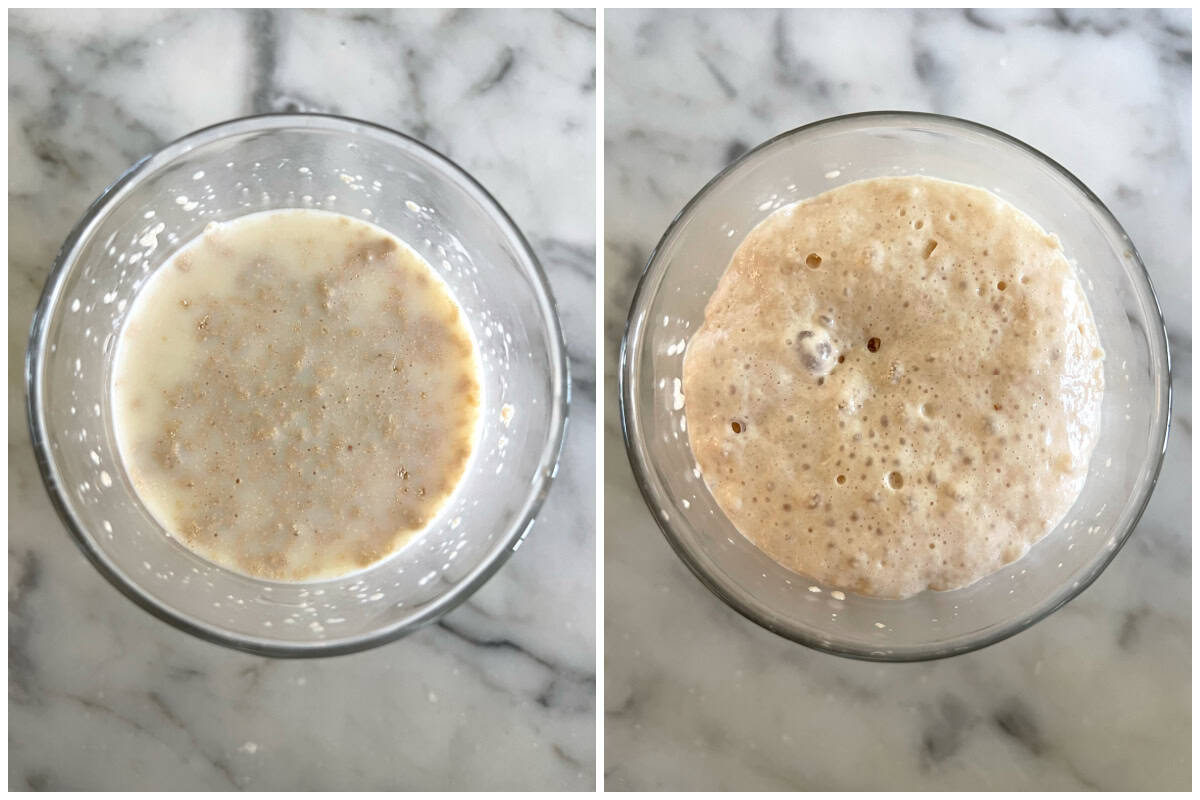
Scald the milk: Pour the milk into a heavy bottomed saucepan and heat the milk over medium heat, stirring frequently. Heat until tiny bubbles appear around the outer rim of the saucepan. Do NOT let the milk simmer or boil. The milk is scalded when it reaches a temperature of 180-185 F. I highly recommend using an instant read thermometer. Cool the milk to 110-115 F; any hotter and it can kill the yeast.
Add the yeast along with 1 teaspoon of the sugar to the cooled, scalded milk. Let it stand for about 10 minutes or until it’s nice and frothy.
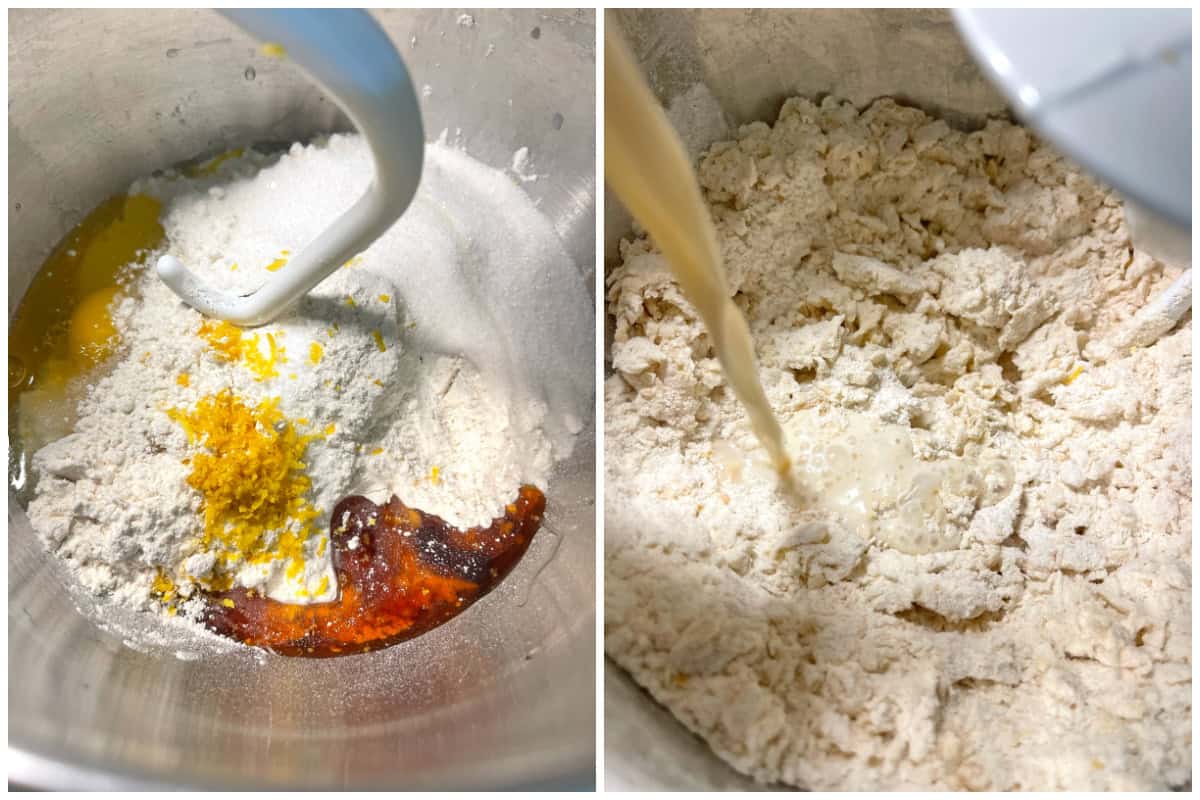
In the bowl of a stand mixer with the dough hook attached, add the flour, sugar, salt, eggs, olive oil, orange zest, honey, and vanilla extract. Mix until combined.
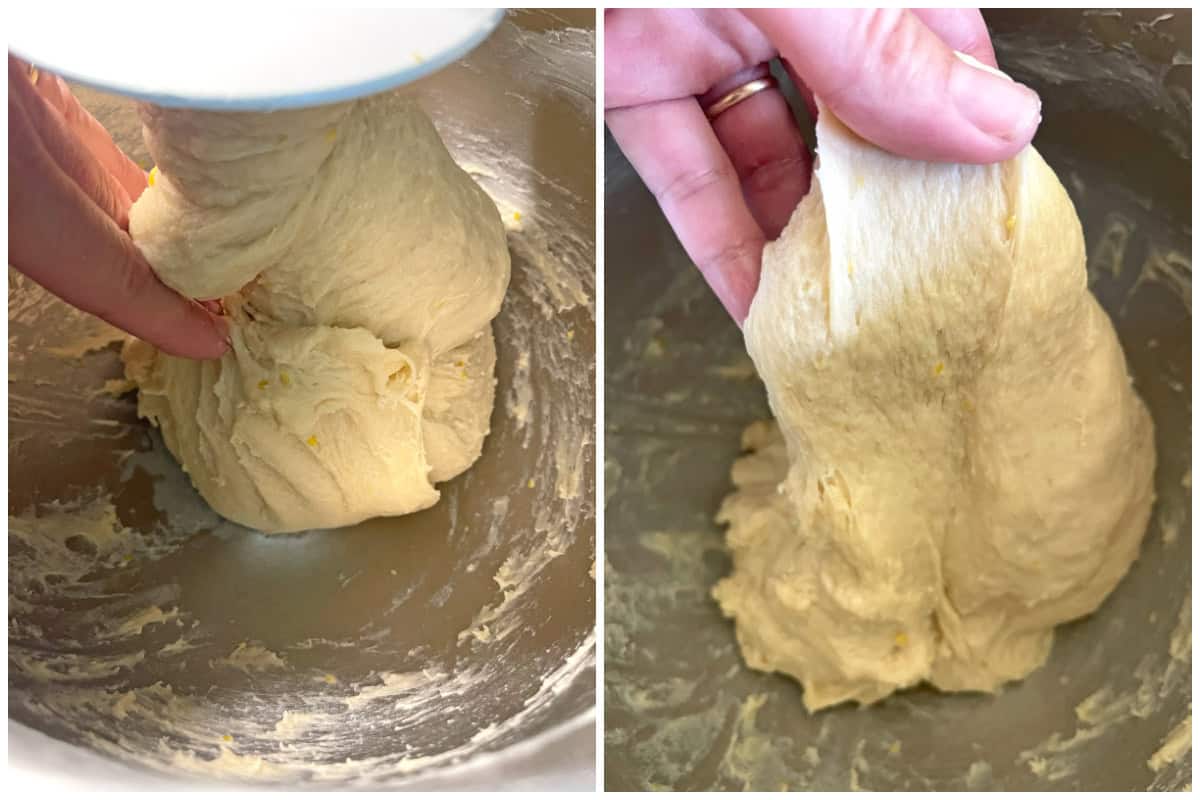
Add the milk/yeast mixture and knead on low speed (“2” on a Kitchenaid) for 10 minutes until the dough is smooth and elastic.
Add the softened butter one tablespoon at a time, kneading after each addition until incorporated before adding more.
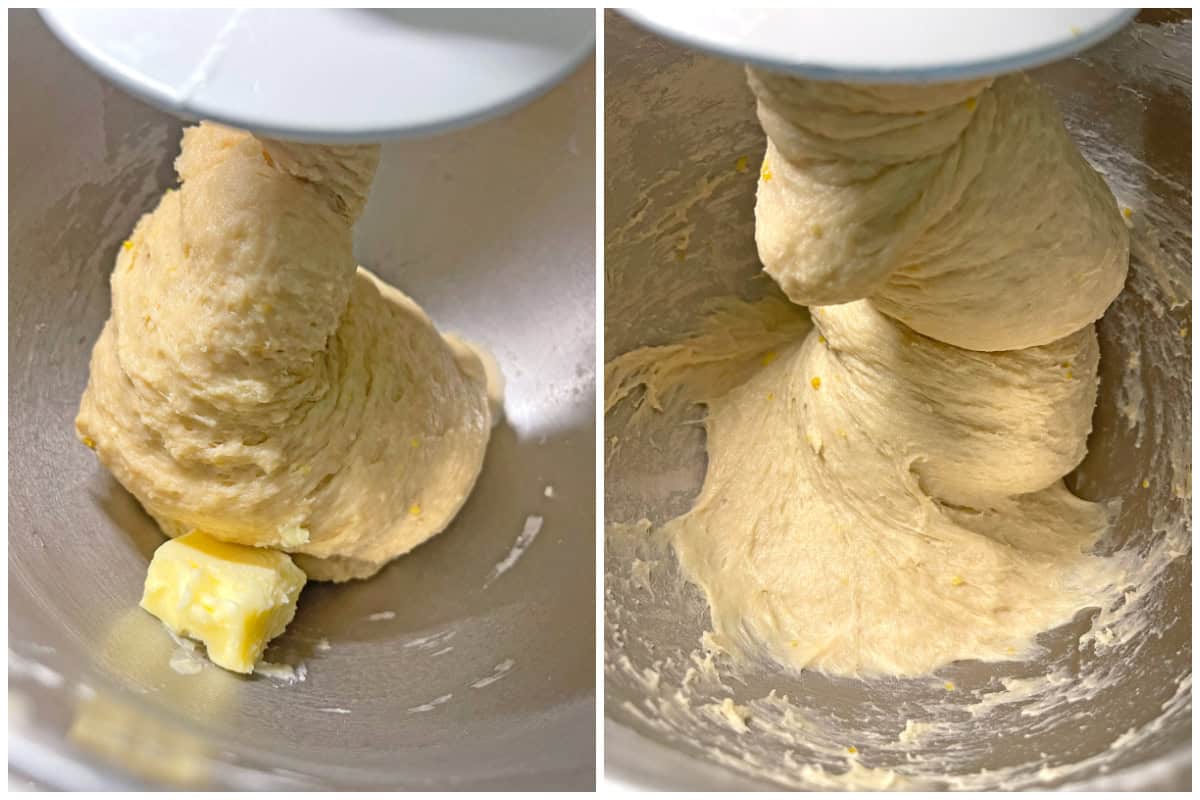
Continue kneading for another 10 minutes. The dough will be very soft and a little tacky; this is how it should be.
If you’re worried that your dough feels softer and tackier than regular bread dough, that’s a good sign. Resist the temptation to add too much extra flour. Give the dough time to develop through the proofing process, handle it gently, and let the yeast do the work.
Lightly spray a large bowl with oil, form the dough into a ball, place it in the bowl and loosely cover it with plastic wrap. Let rise in a draft-free place at room temperature for about 2 hours or until nearly doubled in size (length of time will vary depending on the temperature and the dough may need longer. Don’t go by time, go by appearance). Don’t punch down the dough.
Transfer the dough to the fridge and let it rest there overnight or up to 24 hours.
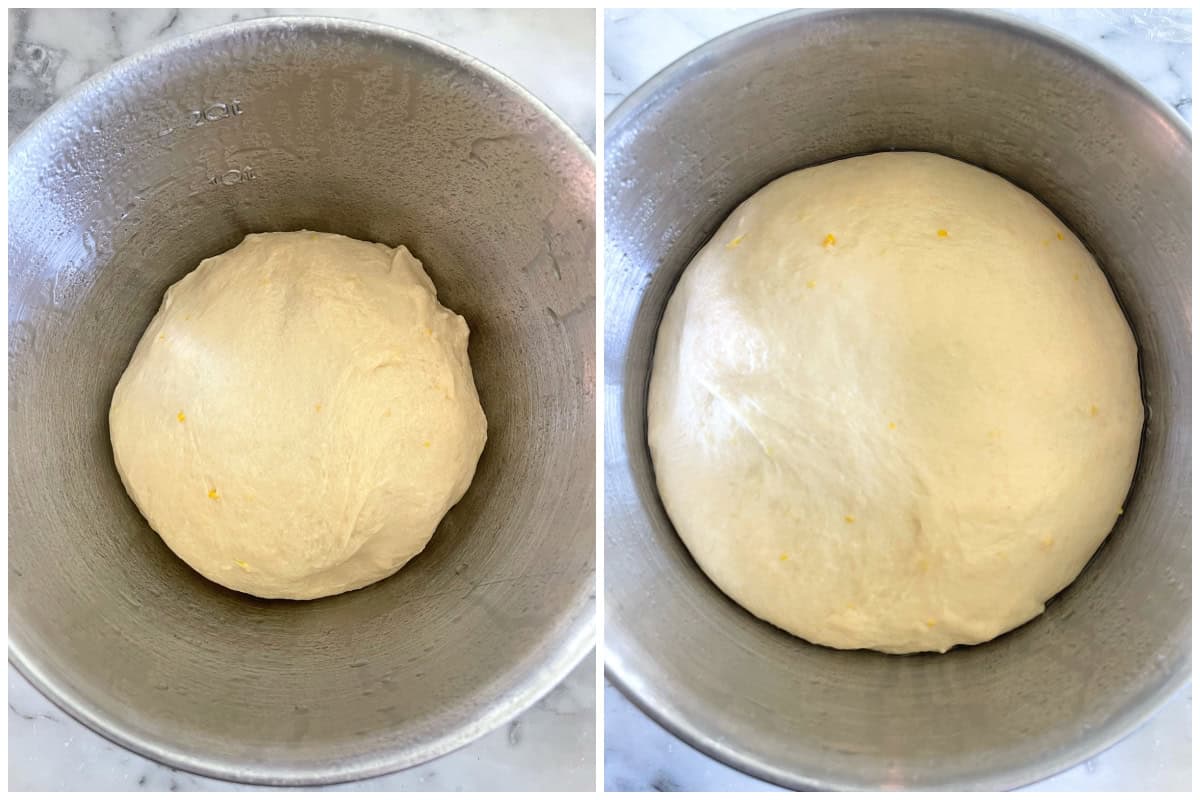
Remove the dough from the fridge and let it sit at room temperature for 10 minutes.
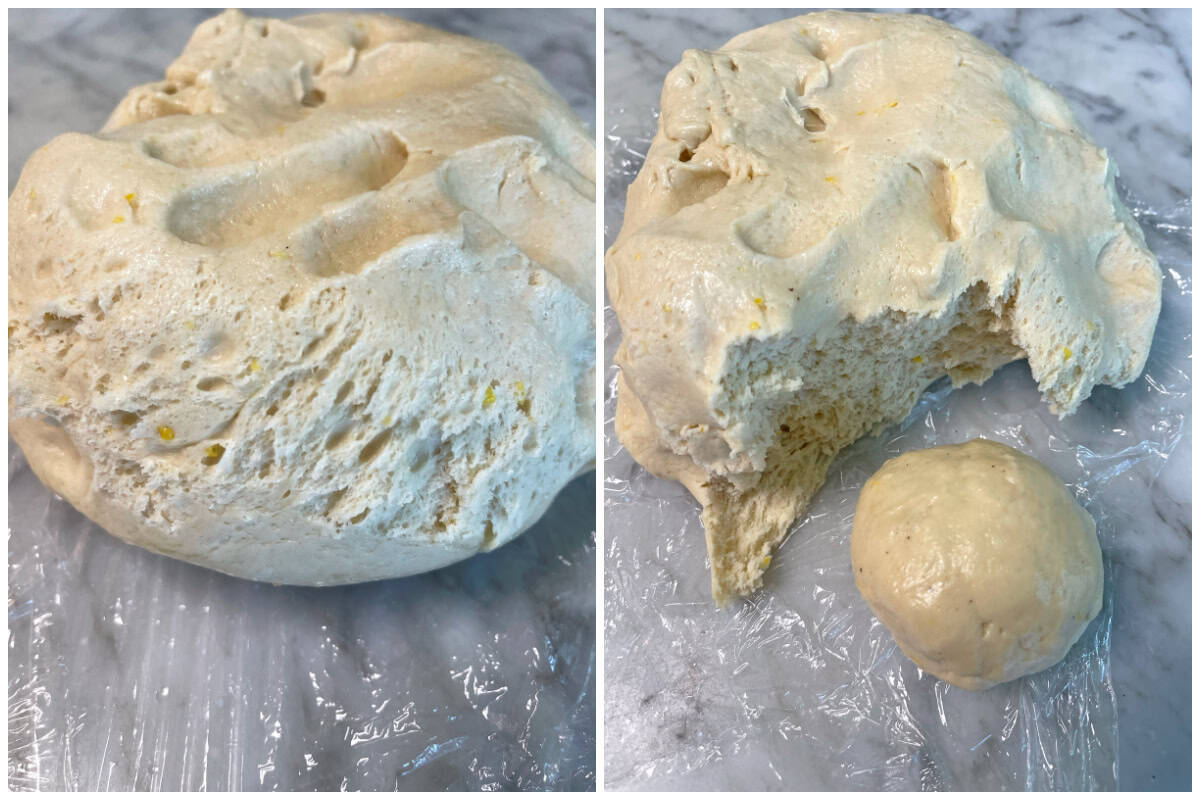
Transfer the dough to a clean work surface. Just look at that beautiful airy texture!
Divide the dough into 8 equal portions. I weigh the whole dough ball in grams and then divide it by 8. Then I remove a chunk of dough at a time and weigh it, adding more until I get to the right weight. With practice you become pretty good at eyeballing and guesstimating the right amount to remove. Roll each of the 8 pieces into smooth balls. If you prefer, you can make them oval-shaped. Both are traditional.
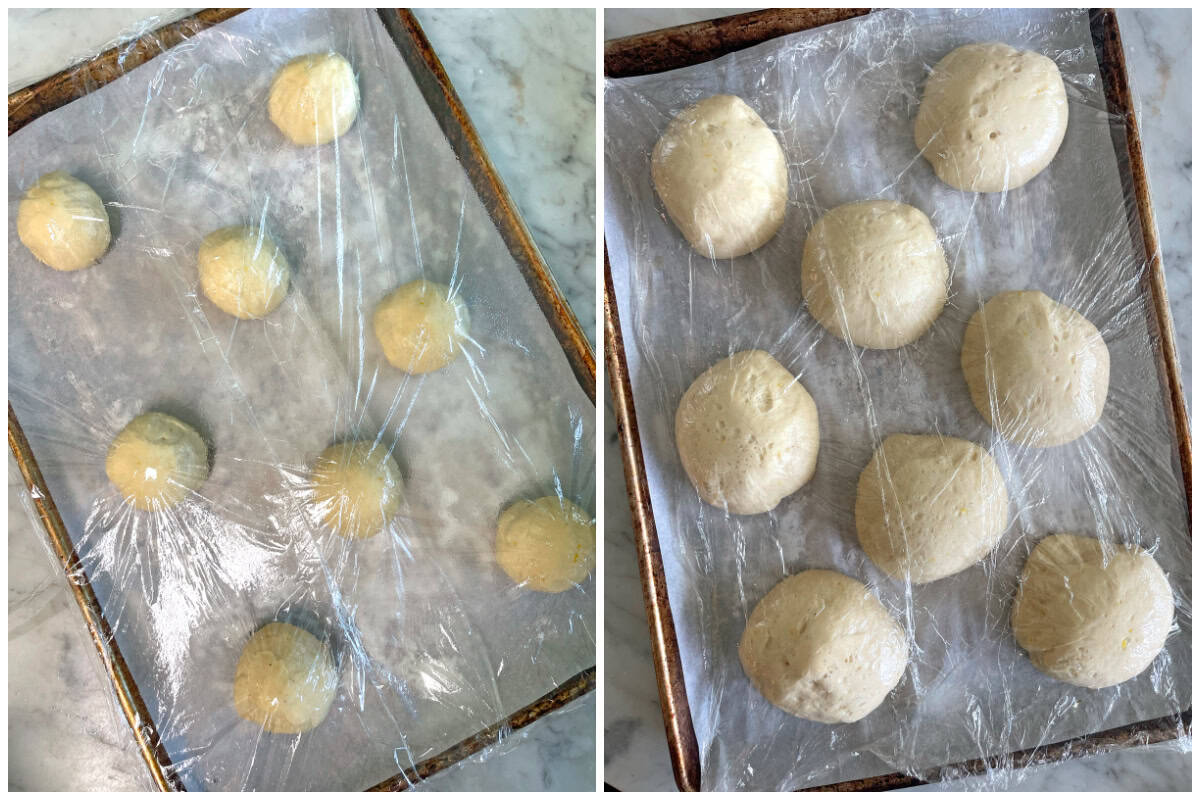
Place the dough balls on an extra large lined baking sheet, spaced equally apart. Loosely cover with plastic wrap that’s lightly sprayed with oil to prevent sticking, and let them rise at room temperature for 2-3 hours or until they’ve doubled in size and are nice and puffy.
The length of time will vary depending on room temperature. If in doubt, let them rise a little longer. Don’t go based on time, go by appearance.
At least 30 minutes before the dough is done proofing, preheat the oven to 375 F with the rack placed in the middle.
Brush the dough balls with the egg wash.
Bake for 15-20 minutes or until golden brown.
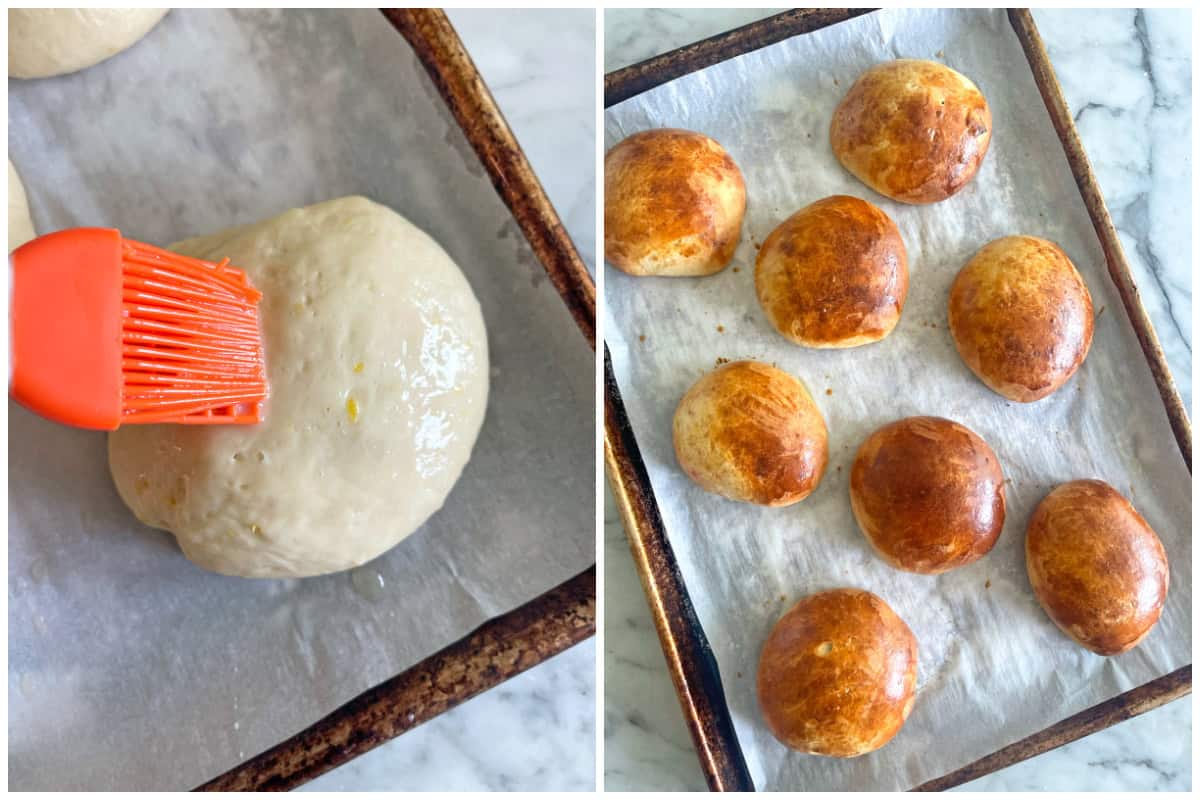
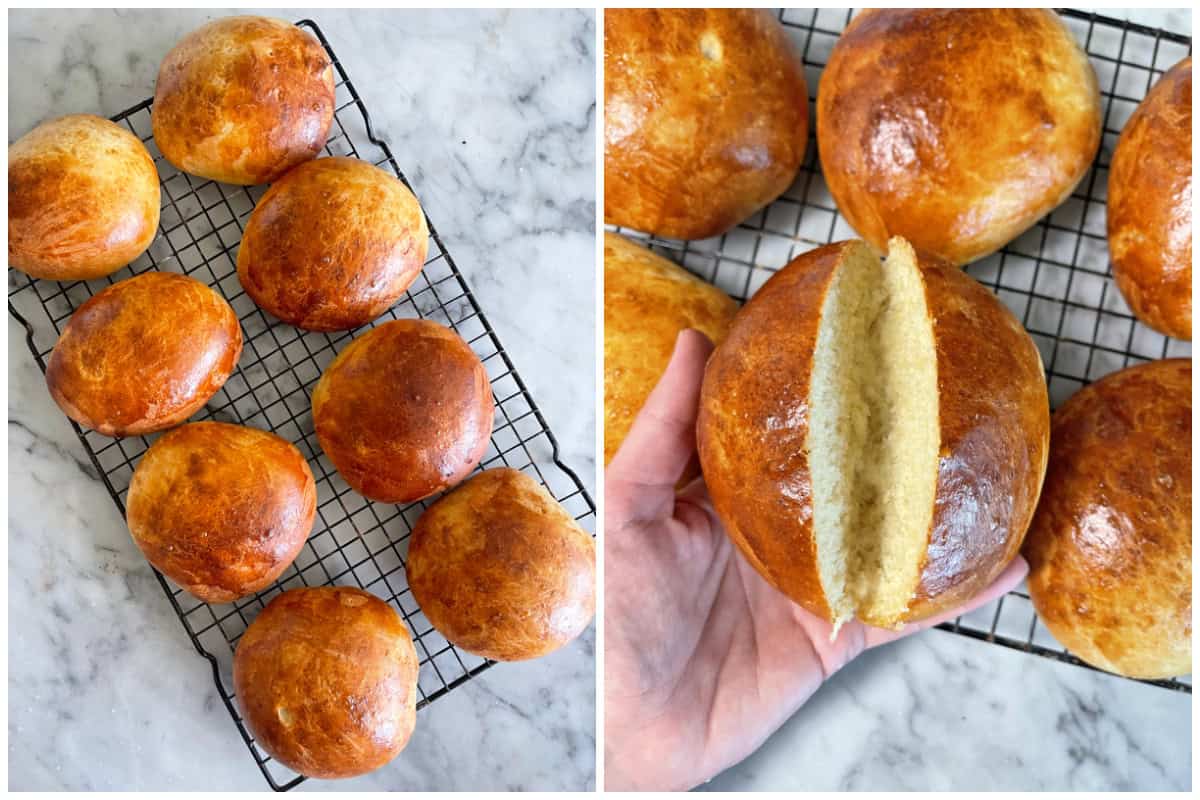
Let them sit for 5 minutes and then transfer them to a wire rack to cool completely.
Use a serrated knife to slice the maritozzi down the center about 3/4 of the way through. Be careful not to cut all the way through.
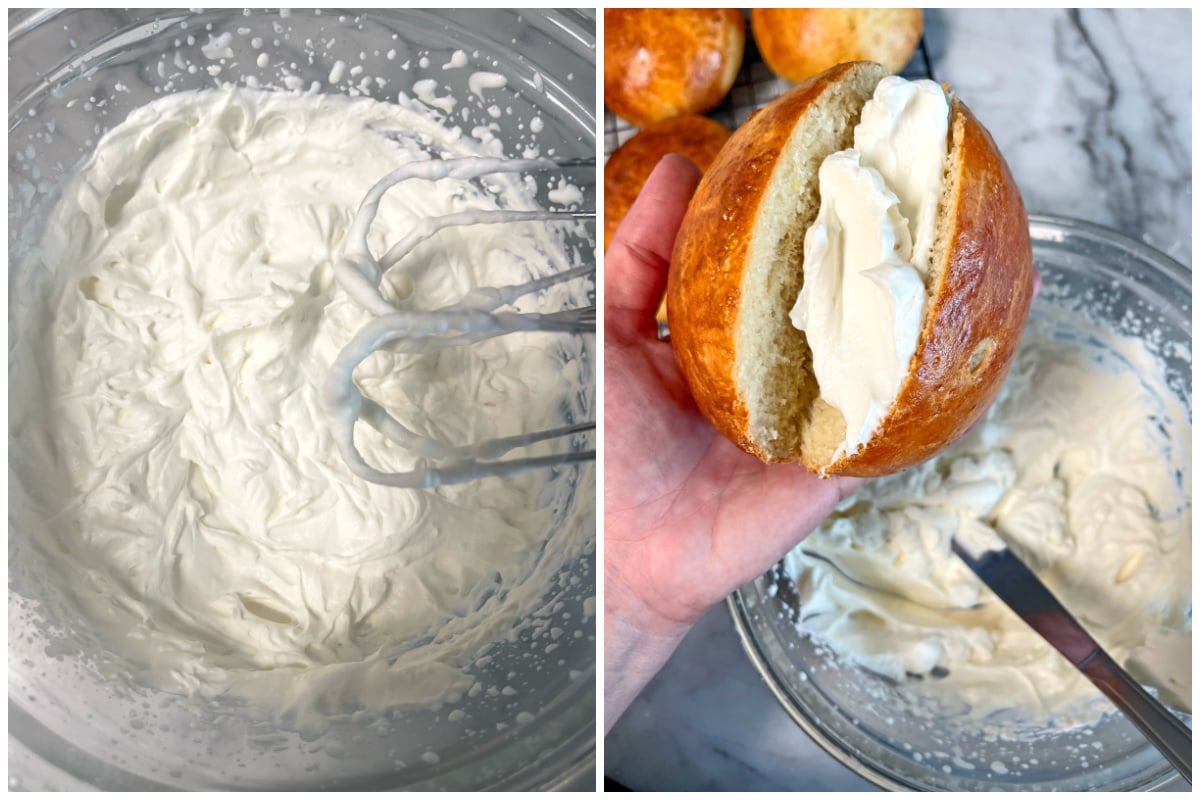
Make the whipped cream: Beat the chilled heavy cream on medium speed and gradually increase the speed until the cream just starts to thicken. Add the powdered sugar and vanilla and continue beating until stiff peaks form. Be careful not to over-beat it.
Carefully open the maritozzi as far as you can without splitting them and spoon in a generous amount of whipped cream.
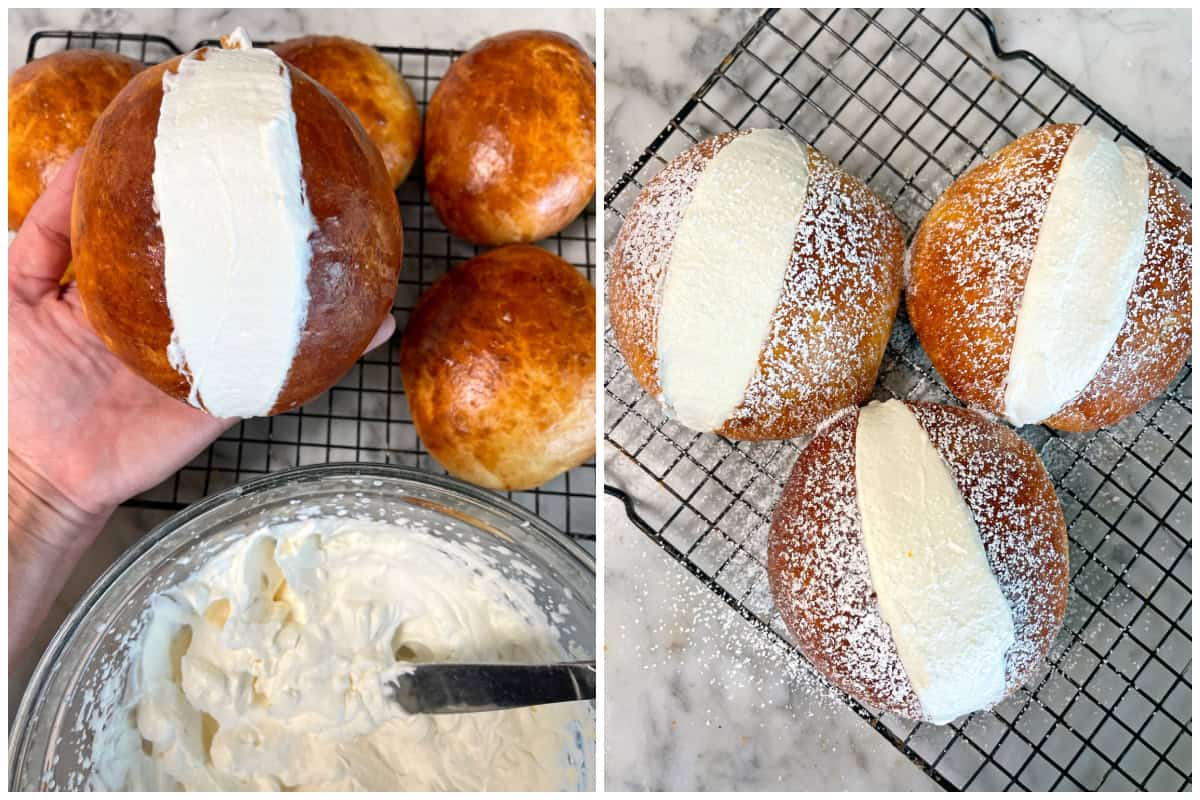
Use the back of a butter knife to scrape off the excess and smooth the whipped cream.
Dust the maritozzi with powdered sugar.
Optional Toppings: If you’d like to dress up your maritozzi you can sprinkle on some chopped roasted pistachios, chopped candied orange peel (or lemon) or chocolate curls.
Enjoy!
How to Store Roman Cream Buns
Only fill as many maritozzi as you intend to eat immediately or within a few hours. Leftover, unfilled buns can be stored in an airtight container at room temperature for up to 2 days.
Unfilled buns can also be frozen in a freezer container for up to 3 months and thawed at room temperature.

For more traditional treats from around the world see my:
- Pastéis de Nata
- Canelé
- Hot Cross Buns
- Rock Cakes
- Marmorkuchen
- Aebleskiver
- Chelsea Buns
- Apple Strudel
- Scottish Shortbread
- Victoria Sponge Cake
- Berliner
- Welsh Cakes
- Treacle Tart
- Germknödel
- Bara Brith
- German Plum Cake
- German Apple Cake
- German Cheesecake
Save This Recipe

Maritozzi (Roman Cream Buns)
Ingredients
- For the Dough:
- 2/3 cup whole milk
- 2 1/4 teaspoons active dry yeast (not instant)
- 3 cups high-gluten bread flour (recommended, but can substitute regular bread flour)
- 1/3 cup sugar
- 1/2 teaspoon salt
- 2 large eggs , room temperature
- 1/4 cup extra virgin olive oil
- 3 tablespoons butter , softened at room temperature
- 1 tablespoon honey
- 1 teaspoon pure vanilla extract
- zest of one large orange
- For the Egg Wash:
- 1 egg beaten with 1 tablespoon water
- For the Whipped Cream Filling:
- 1 1/2 cups heavy whipping cream
- 1/3 cup powdered sugar
- 1 1/2 teaspoons pure vanilla extract
- powdered sugar for dusting
- optional toppings: chopped roasted pistachios, candied citrus peel, chocolate curls
Instructions
- Scald the milk: Pour the milk into a heavy bottomed saucepan and heat the milk over medium heat, stirring frequently. Heat until tiny bubbles appear around the outer rim of the saucepan. Do NOT let the milk simmer or boil. The milk is scalded when it reaches a temperature of 180-185 F. I highly recommend using an instant read thermometer. Cool the milk to 110-115 F; any hotter and it can kill the yeast.Add the yeast along with 1 teaspoon of the sugar to the cooled, scalded milk. Let it stand for about 10 minutes or until it's nice and frothy.
- In the bowl of a stand mixer with the dough hook attached, add the flour, sugar, salt, eggs, olive oil, orange zest, honey, and vanilla extract. Mix until combined.Add the milk/yeast mixture and knead on low speed ("2" on a Kitchenaid) for 10 minutes until the dough is smooth and elastic. Next add the softened butter a little at a time, giving each addition time to blend fully into the dough before adding the next. Continue kneading for another 10 minutes. The dough will be very soft and a little tacky; this is how it should be. Resist the temptation to add too much extra flour. The dough will develop structure through the proofing process.
- Lightly spray a large bowl with oil, form the dough into a ball, place it in the bowl and loosely cover it with plastic wrap. Let rise in a draft-free place at room temperature for about 2 hours or until nearly doubled in size (length of time will vary depending on the temperature, it may need longer. Don't go by time, go by appearance). Don't punch down the dough.Transfer the dough to the fridge and let it rest there overnight or up to 24 hours.
- Remove the dough from the fridge and let it sit at room temperature for 10 minutes.Transfer the dough to a clean work surface. Divide into 8 equal portions (for accuracy you can weigh the dough and then the individual pieces). Roll each of the 8 pieces into smooth balls or into ovals (both are traditional). Place the dough balls on an extra large lined baking sheet, equally spaced apart. Loosely cover with plastic wrap that's lightly sprayed with oil to prevent sticking, and let them rise at room temperature for 2-3 hours or until they've doubled in size and are nice and puffy. The length of time will vary depending on room temperature. Don't go based on time, go by appearance.
- At least 30 minutes before the dough is done proofing, preheat the oven to 375 F with the rack placed in the middle.Brush the dough balls with the egg wash. Bake for 15-20 minutes or until golden brown.Let them sit for 5 minutes and then transfer them to a wire rack to cool completely.Use a serrated knife to slice the maritozzi down the center about 3/4 of the way through. Be careful not to cut all the way through.
- Make the whipped cream: Beat the chilled heavy cream on medium speed and gradually increase the speed until the cream just starts to thicken. Add the powdered sugar and vanilla and continue beating until stiff peaks form. Be careful not to over-beat it.Carefully open the maritozzi as far as you can without splitting them and spoon in a generous amount of whipped cream. Use the back of a butter knife to scrape off the excess and smooth the whipped cream.Dust the maritozzi with powdered sugar.
Notes
Nutrition

Hi, I’m Kimberly Killebrew and welcome to Daring Gourmet where you'll find delicious originals, revitalized classics, and simply downright good eats from around the world! Originally from Germany, later raised in England, world-traveled, and now living in the U.S., from my globally-influenced kitchen I invite you to tour the world through your taste buds!

















We had these on our trip to Rome this summer. They were good but we weren’t overly impressed. We bought them from a bakery famous for their maritozzi but the dough had very little flavor and we really didn’t understand the hype. I can’t help but think that the bakeries catering to tourists that churn these out by the hundreds each day are skimping on quality ingredients. In any case, when I looked at your recipe I could tell by the ingredients that these were going to be vastly better. And I was right. THESE maritozzi are fully worthy of the hype. The delicate orange and vanilla flavors, the subtle taste of honey, and oh the texture. NOW I am fully in love with these!
Ah thank you so much, Renee, I’m so delighted to hear that! <3 I agree, we've had our share of less than stellar maritozzi in Rome and I think you hit the nail on the head about the quality of ingredients factor. And as the old saying goes, nothing beats homemade :)
Absolutely heavenly! My family of four devoured these and savored each and every bite!
Oh I’m so glad, thank you very much, Catelynn!
OMG. These turned out PHENOMENALLY! I followed everything exactly as written (I’ve come to trust your recipes implicitly), following all your tips, and the maritozzi was so airy, tender, and chewy and the flavor was just heavenly. Not too sweet which is exactly how it should be, and absolutely wonderful. I let the dough rise for about 16 hours in the fridge. When I took it out and smelled it I swear I let out an audible sigh. When I have guests over and want to impress them with something truly epic and something they’ve likely never had before, THIS is what I’m making!
Oh I’m so thrilled to hear that, Sophie, thank you so much for the positive feedback and for the compliment! <3
These look absolutely INCREDIBLE, I can’t wait to try them!
Is the dough sweet?
Hi Judie, only very lightly so. It’s only 1/3 cup sugar for 3 cups of flour. The sweetness mostly comes from the sweetened whipped cream and the powdered sugar topping.