
Marmorkuchen (German Marble Cake)

This post may contain affiliate links. See my disclosure policy.
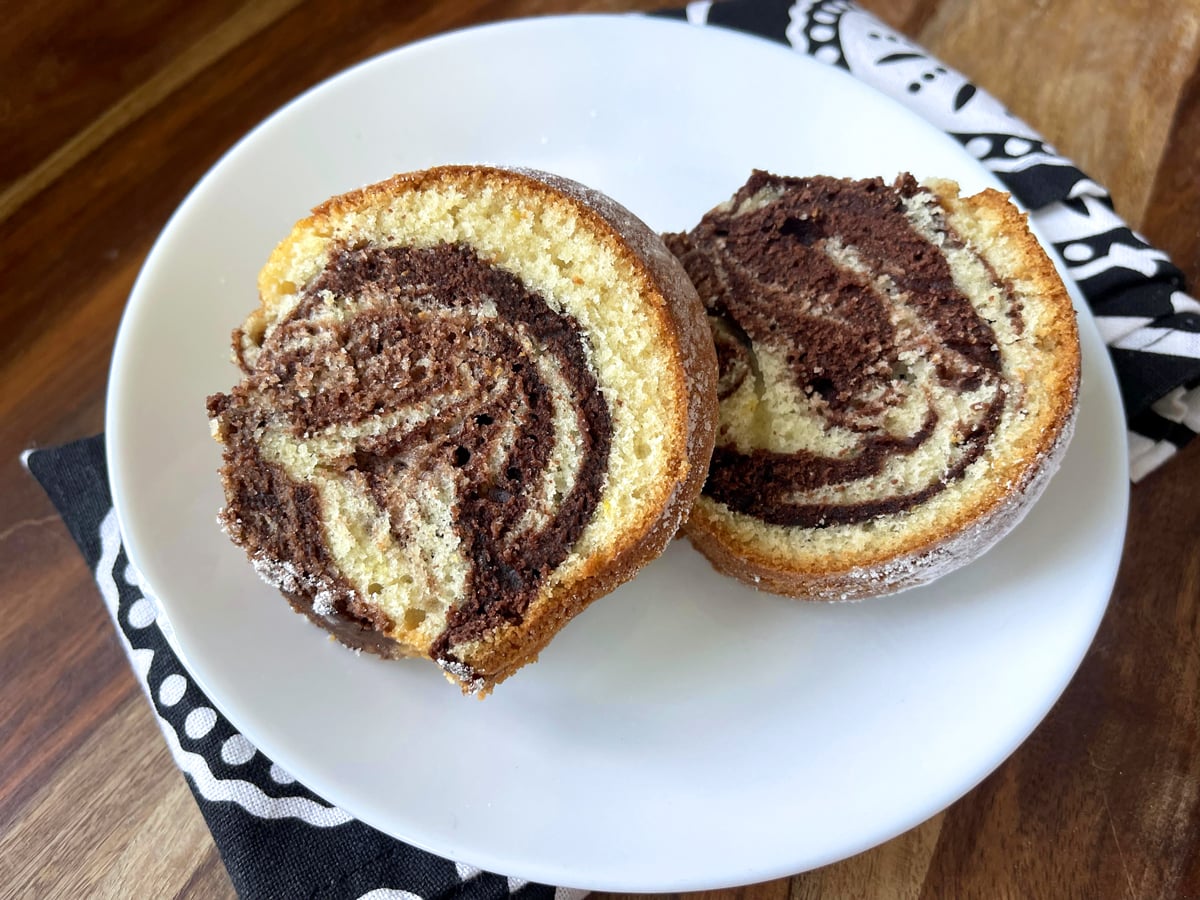
This authentic Marmorkuchen recipe features that rich and buttery vanilla crumb swirled with chocolate that has made it a Kaffee und Kuchen favorite for generations. German marble cake is the perfect make-ahead dessert because it’s best eaten the next day!
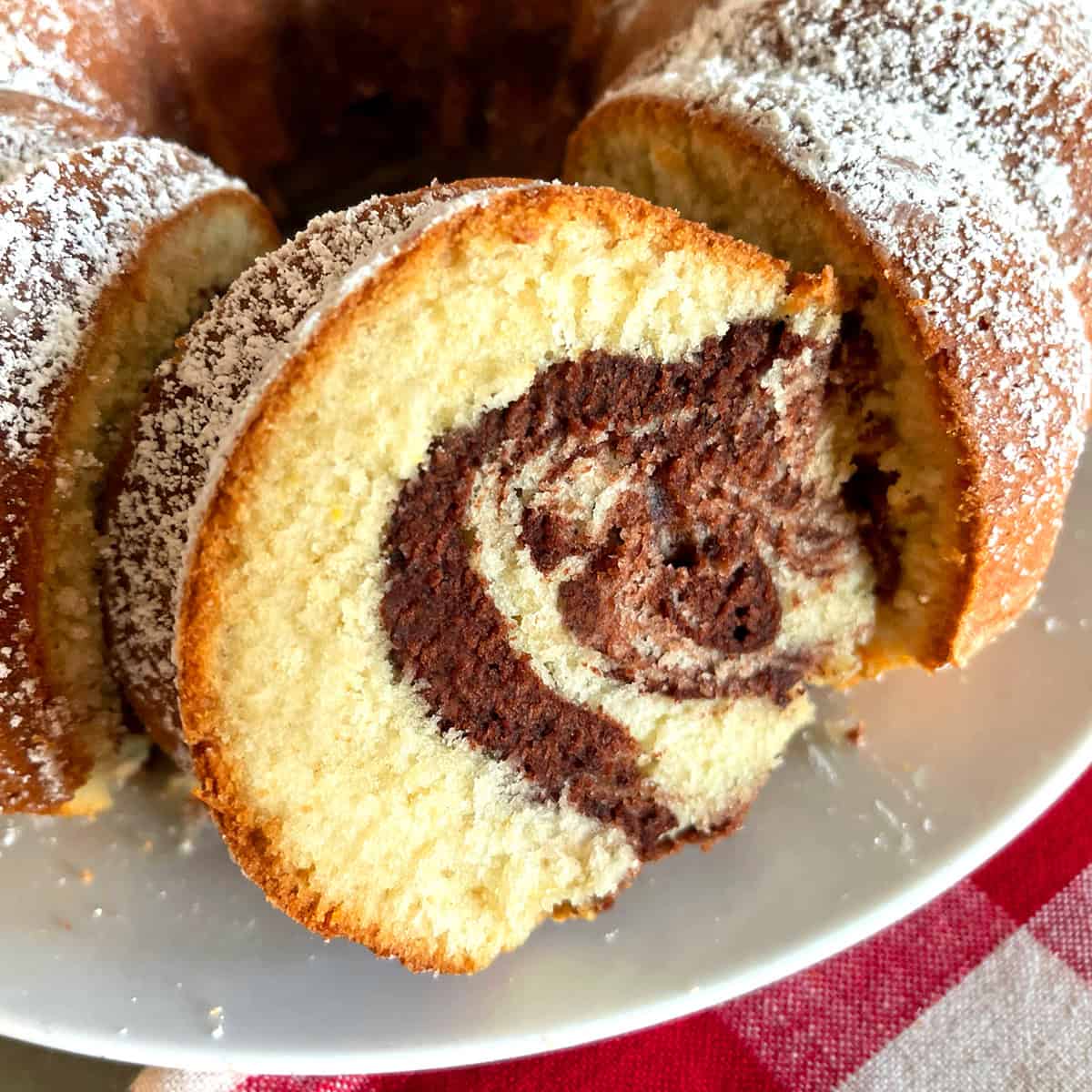
Marmorkuchen is a cake that every German child and adult has eaten at least once, if not many times. It has been enjoyed for two centuries, putting smiles on faces as lips are smacked and dropped crumbs are salvaged. It’s a simple cake that’s synonymous with simpler times. I can remember enjoying Marmorkuchen in my home in Stuttgart where my Mutti would make it, and eagerly eating a slice of it during Pause, or break time, at school. This cake is so ubiquitous that you can find it pre-packaged in any store throughout Germany, often in rectangle loaf form. But as with all food, nothing compares to homemade and that is most certainly true of German marble cake!
What is Marmorkuchen?
Marmorkuchen is a traditional German cake that’s baked in a Gugelhupf or Bundt pan and features a streaked or mottled appearance that’s created by swirling together light and dark batters, traditionally vanilla and chocolate, to create a marbled pattern. Because of it’s stripy appearance it’s also called zebra cake. It falls under the category of cakes known as as Rührkuchen, or “stirred cake”. It’s a variety of tea cake, made with all butter, so it’s rather dry and is traditionally enjoyed with a cup of tea, coffee or hot chocolate for Kaffee und Kuchen, Germany’s version of Great Britain’s afternoon tea (other examples of tea cakes include Seed Cake, Pineapple Cake, Victoria Sponge Cake, Gugelhupf, Limoncello Cake and Hazelnut Cake).
The name Marmorkuchen translates to “marble cake” and this cake originated in Germany in the 19th century where the earliest versions, known as Gugelhupf, were made with sweet yeasted bread with half of the batter made darker with spices and molasses. Later in the 19th century the yeasted batter transitioned to sponge cake and before long chocolate was incorporated to create the variation in color and flavor.
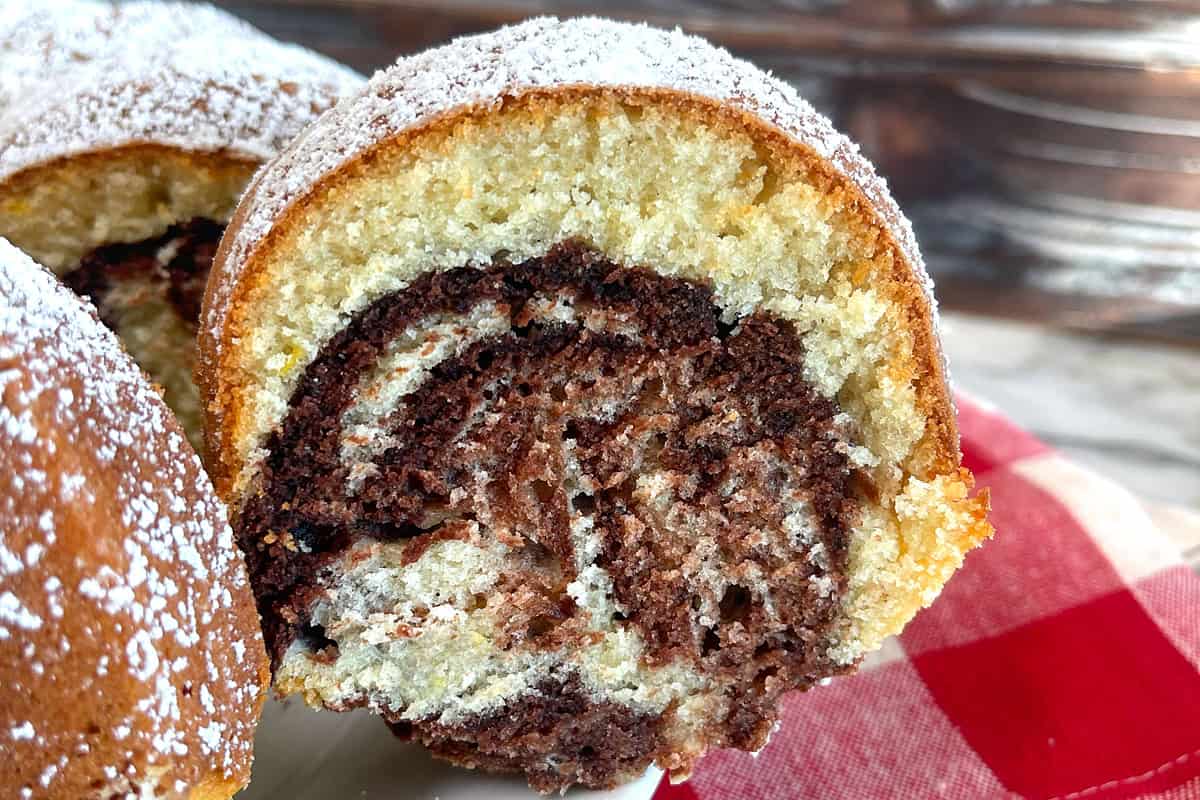
Marmorkuchen was introduced to the United States by German immigrants shortly before the Civil War and the first publication for this “marble cake” was in the Illinois State Chronicle in 1859. Other variations followed with checkerboard patterns and striped layers, with harlequin cake being one such popular descendant.
Flavor variations also ensued with things like strawberry or cinnamon. Since that time, marble cakes in all their varieties have become popular throughout the world, with the traditional chocolate-and-vanilla combo remaining a favorite standard.
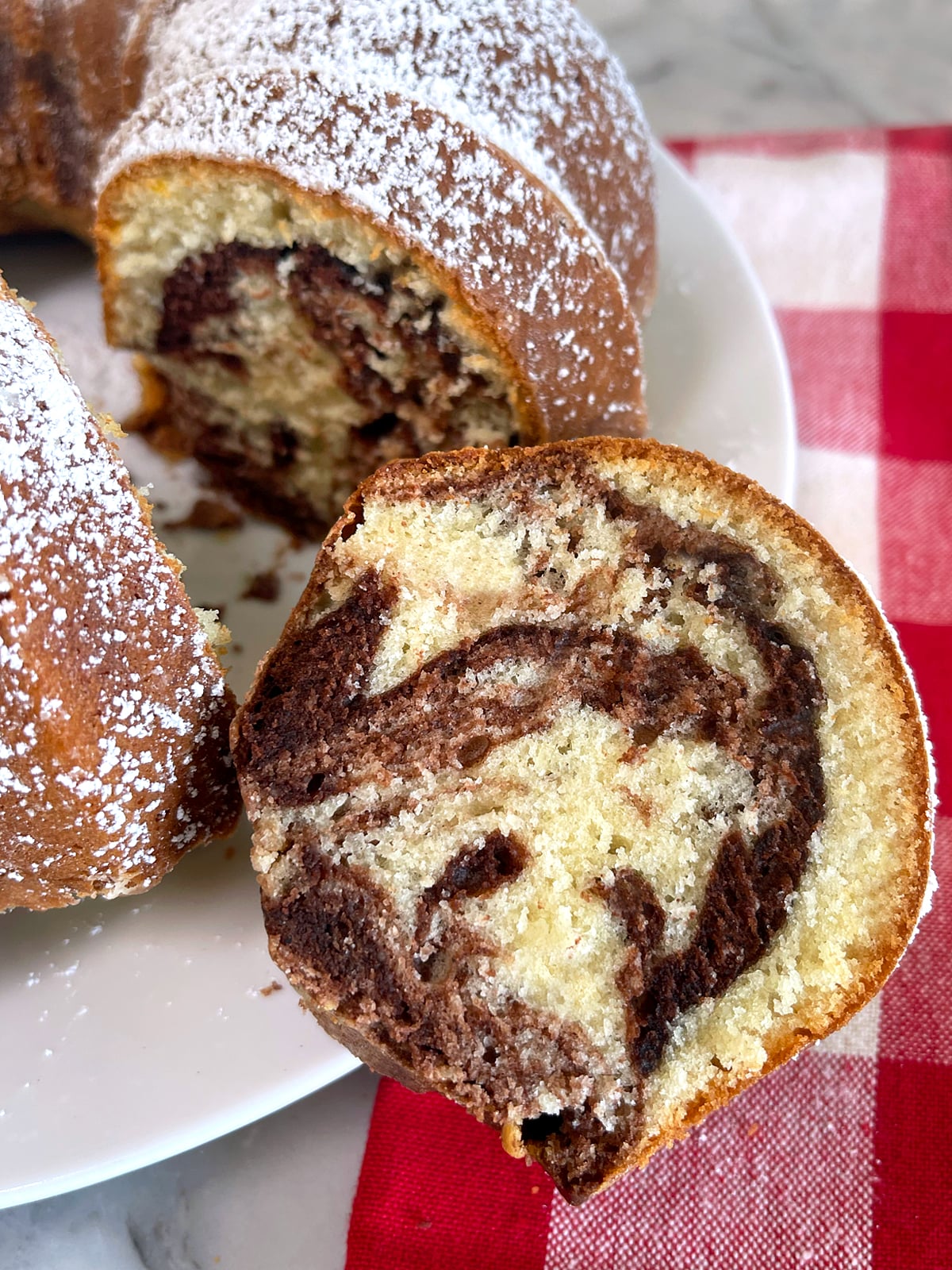
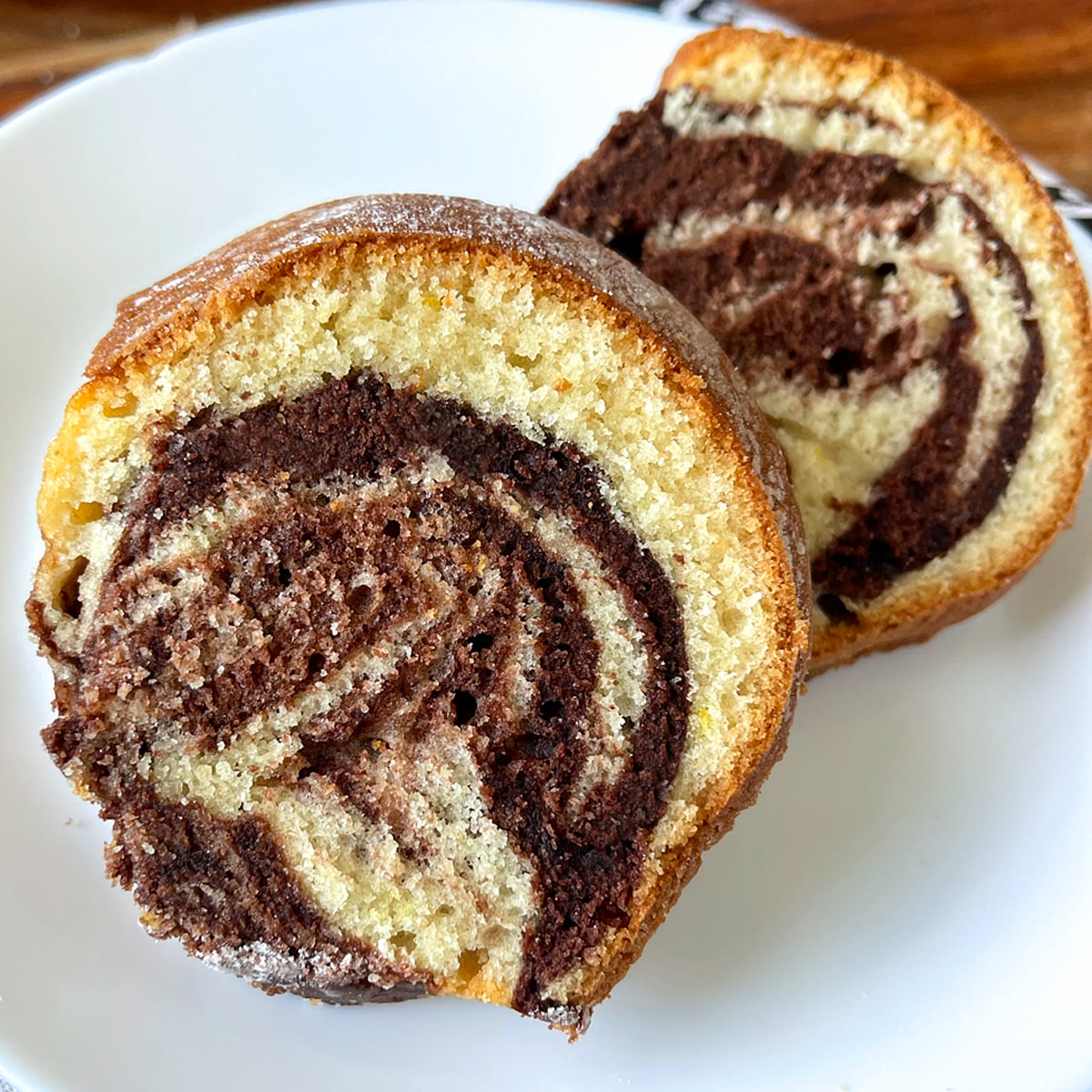
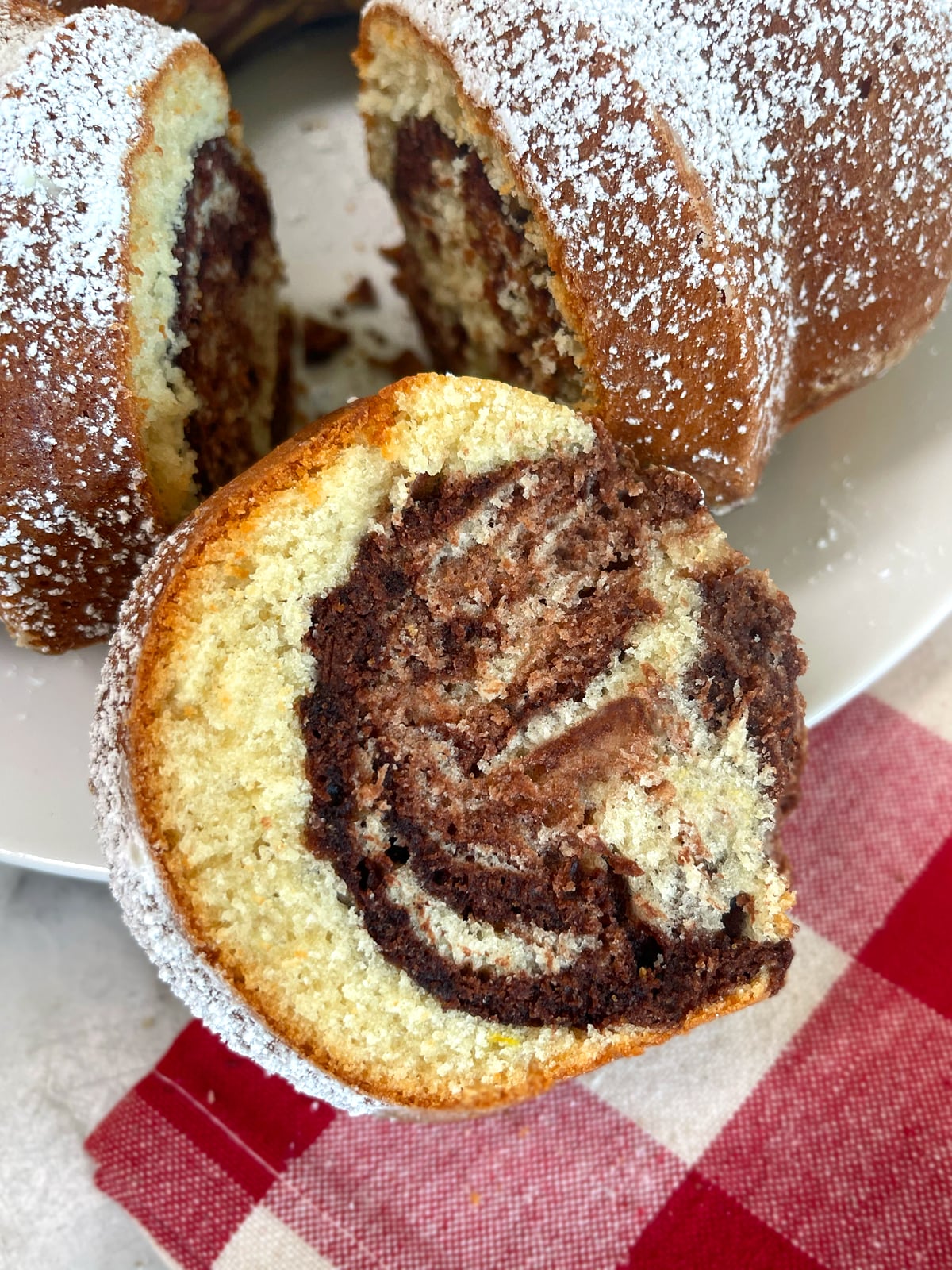
The hallmark characteristic of a marble cake is the contrasting light and dark swirls created by lightly stirring the different colored batters together.
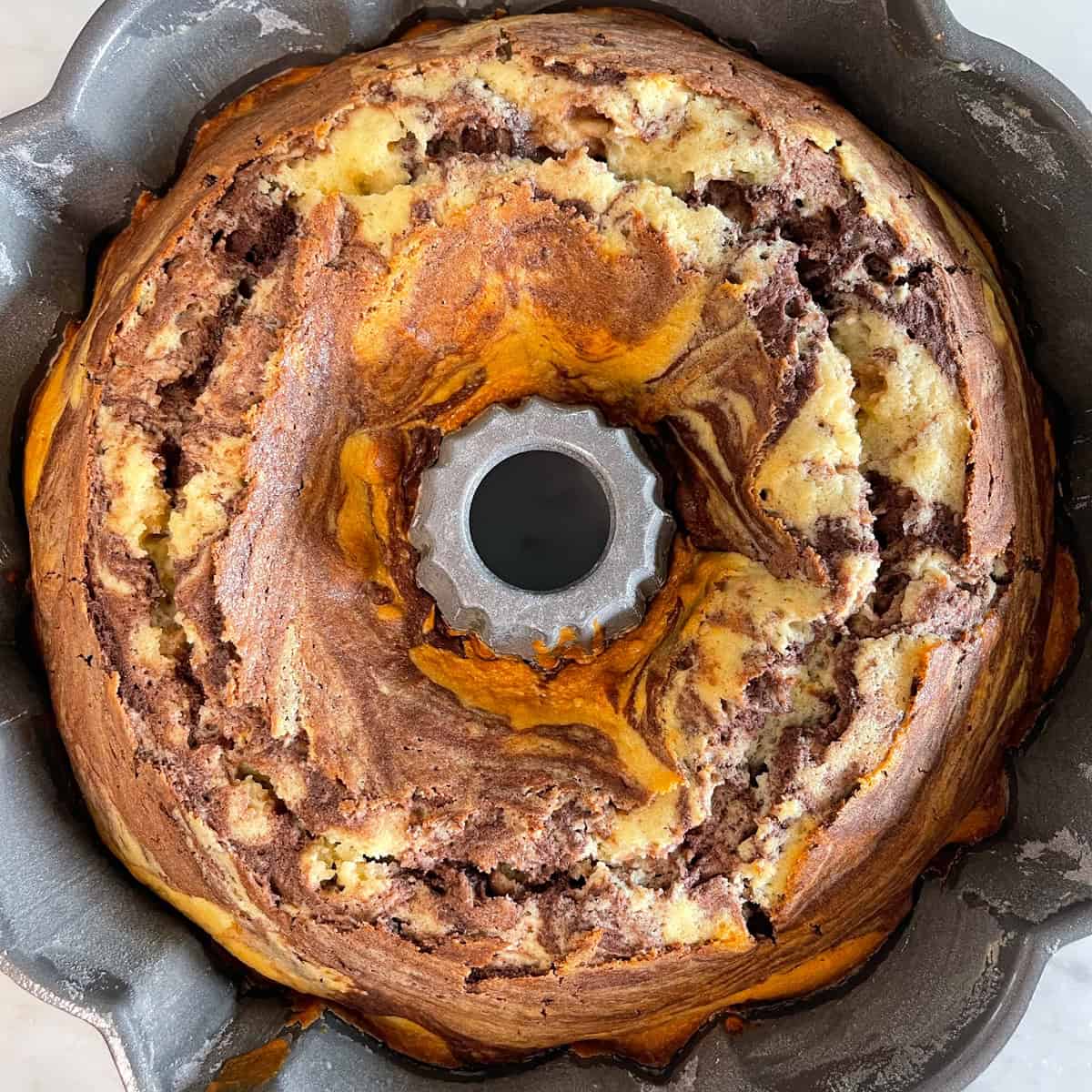
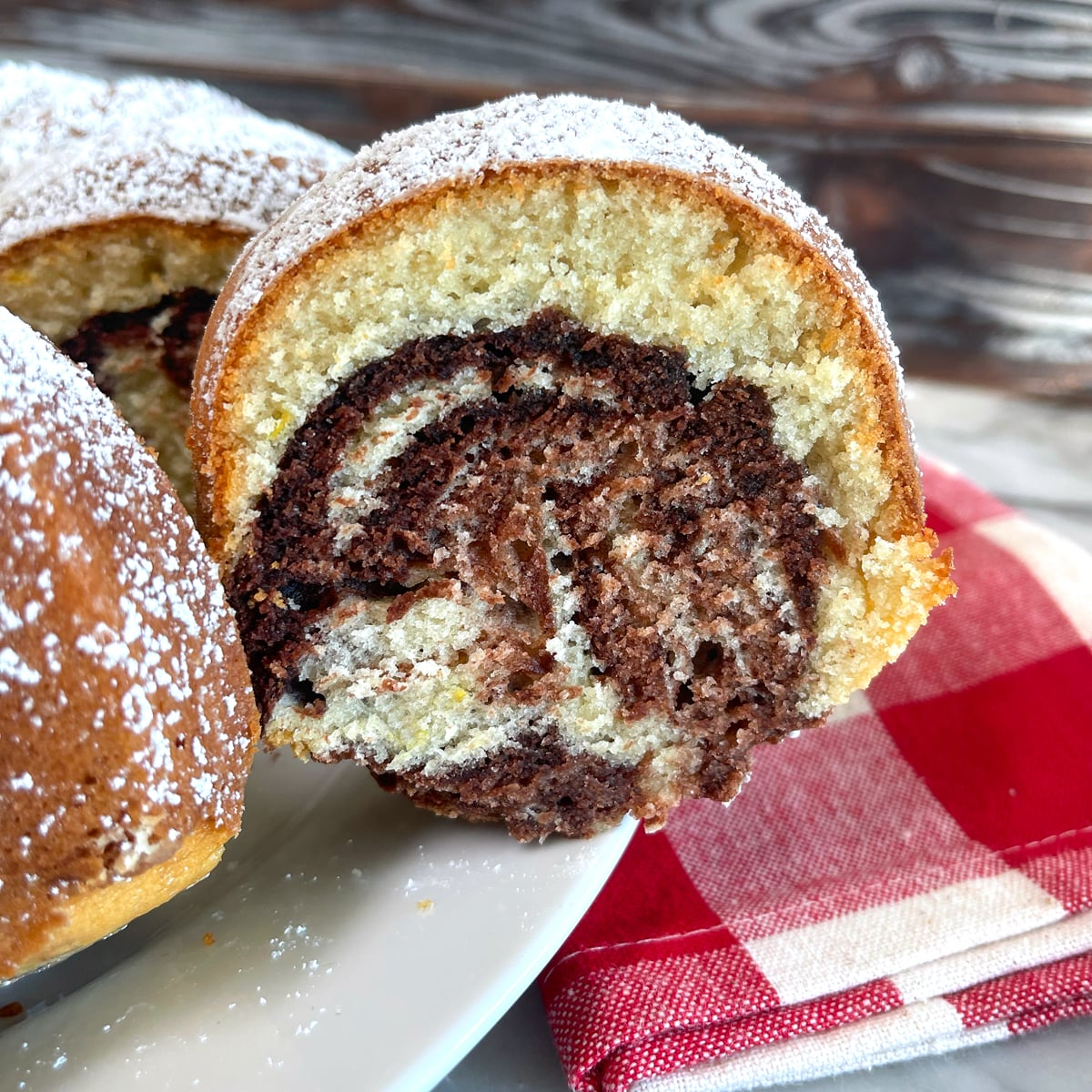
When the cake is inverted, the top becomes the bottom of the cake, with the top disguising the interior pattern until you slice into it and the marbled texture is revealed. And of course, like snowflakes, no two marble cakes are alike.
Marmorkuchen Ingredients
The ingredients are simple and ones that you most likely already have in your pantry and fridge. Here’s what you’ll need to make Marmorkuchen:
- Flour: Just your basic all-purpose flour.
- Sugar: You can use regular granulated sugar but caster sugar, or ultra fine sugar (NOT the same thing as powdered sugar), is recommended because it dissolves more quickly and creams exceptionally well with the butter. You can buy caster sugar but it’s extremely easy to make yourself simply by pulsing it in a blender or food processor a few times until it’s really fine.
- Butter: All butter is traditional for this and tea cakes in general and gives them a rich flavor, but if you’d like a slightly moister cake you can substitute a couple of tablespoons of butter for oil.
- Eggs: These are mixed into the batter one at a time.
- Milk: For best results use whole milk. For a more tender crumb, use buttermilk.
- Cocoa Powder: Use unsweetened. You can use your choice of dark or really dark (cocoa noir) and you can use a little less or more as desired.
- Baking Powder: The leavening agent.
- Salt: To balance and enhance the overall flavor.
- Vanilla: In Germany we most commonly used vanilla sugar instead of vanilla extract but you can use either. When I’m wanting that traditional “German flavor” I use the German vanilla sugar packets because they taste like home.
- Lemon Zest: A hallmark of German baking, a little fresh lemon zest goes a long ways to really giving your baked goods a flavor lift. If you want to try a chocolate-orange flavor combo, feel free to use orange zest.
- Powdered Sugar: This is for dusting the finished cake. Simple, sweet and elegant, this is the most traditional but if you prefer, you can use any chocolate glaze of your choice.
Equipment
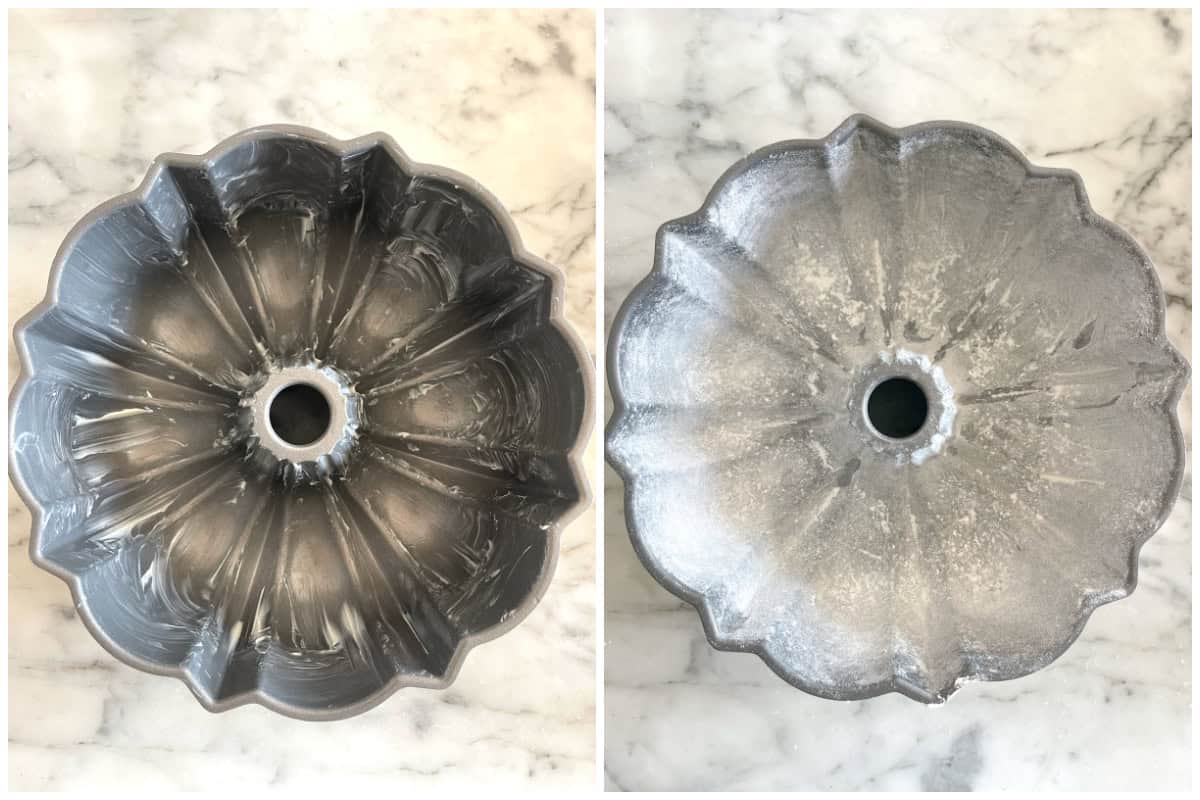
You can use either a Bundt pan or a Gugelhupf pan and you can use either a 10 or 12 cup pan. A 10 cup pan will give you a taller cake.
For reference, in the photos I am using my 12 cup Nordic Ware Bundt Pan which will give you a standard sized Marmorkuchen.
Marmorkuchen Recipe
Let’s get started!
Preheat your oven to 350 F/180 C. Butter your Bundt or Gugelhupf pan and then coat with flour, shaking out the excess. You can use either a 10 or 12 cup pan. A 10 cup pan will give you a taller Marmorkuchen. For reference, I am using my 12 cup Nordic Ware Bundt Pan.
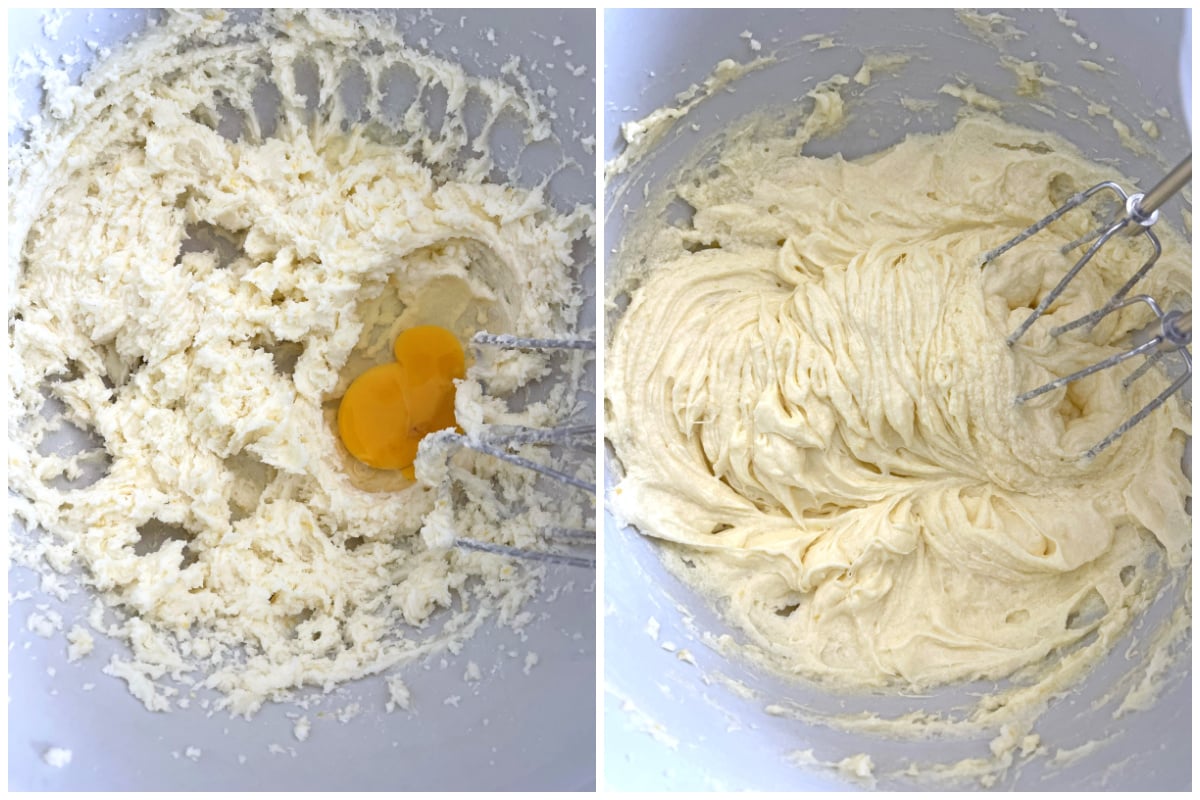
Use a hand mixer to cream the butter, sugar, vanilla sugar (if using extract add it with the eggs), and lemon zest in a large mixing bowl. Mix until it’s light and fluffy. If using, add the rum.
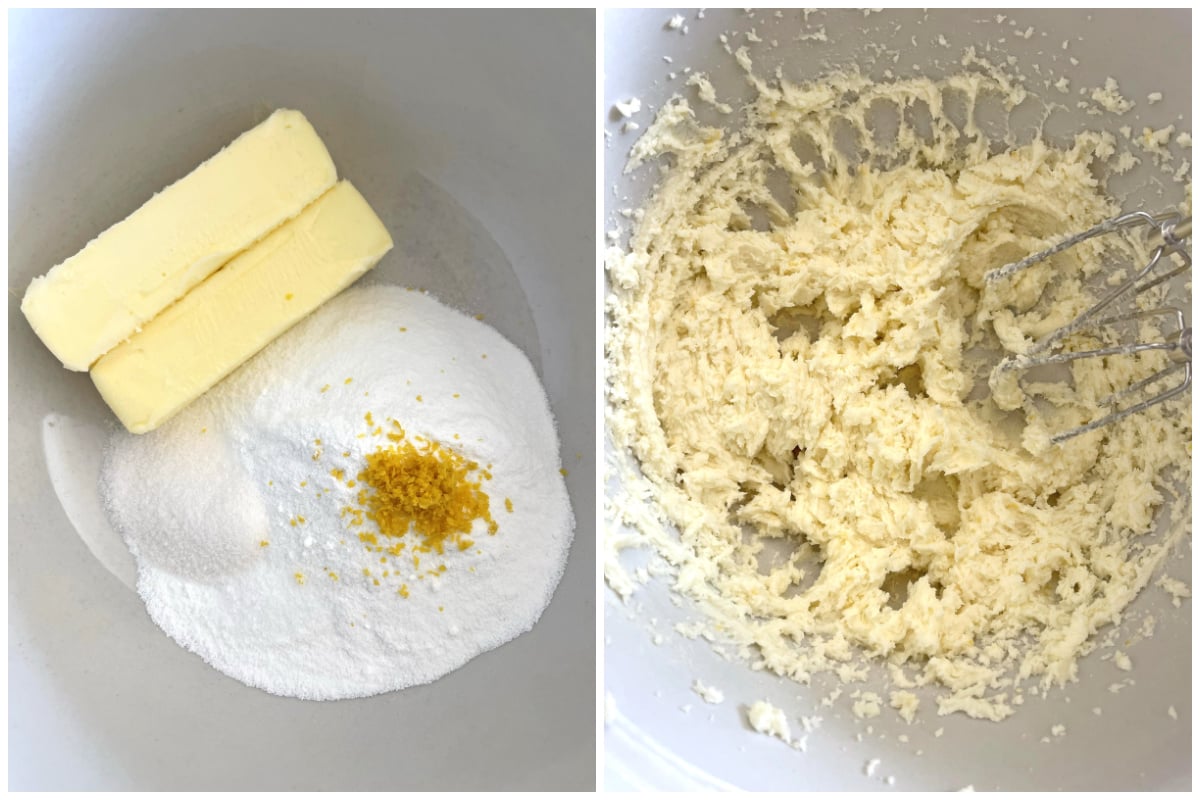
Add the eggs one at a time, mixing between additions until fully incorporated.
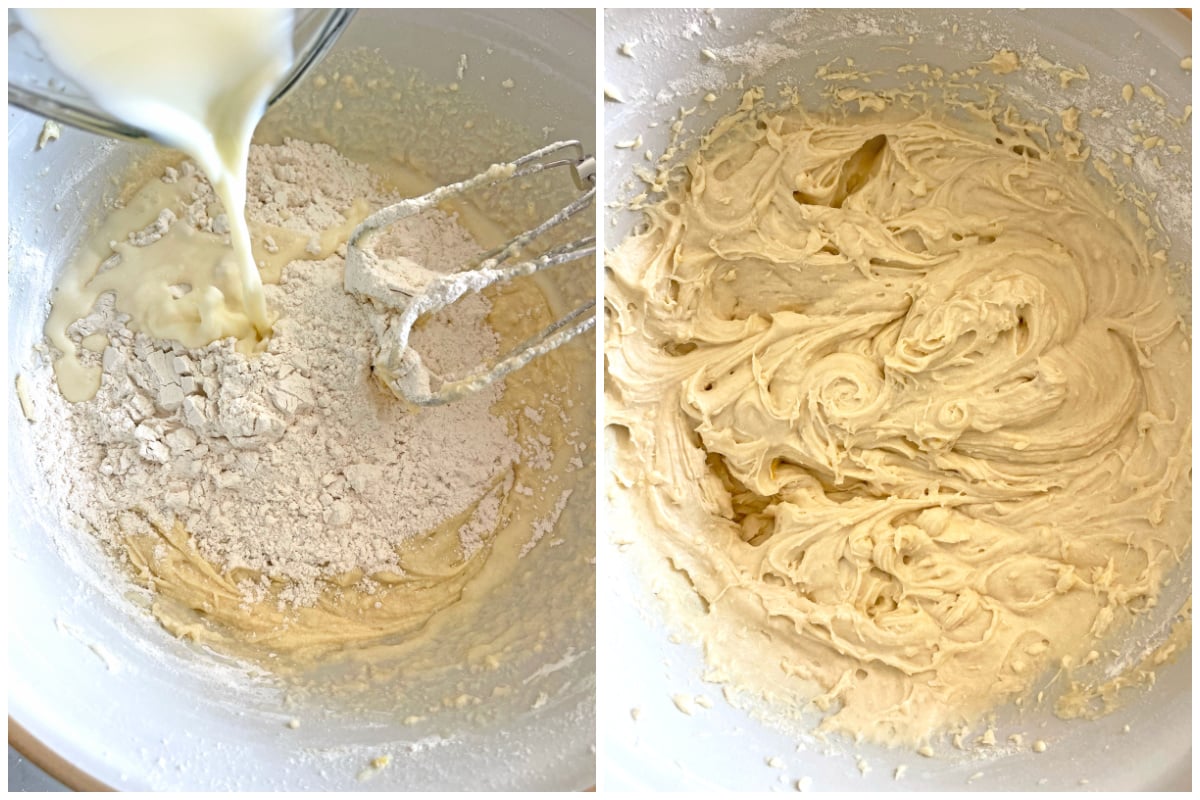
Combine the flour, baking powder and salt in a bowl.
Add a third of the flour mixture and a third of the milk and mix just until incorporated. Repeat using a third of the flour and milk at a time and mix after each addition. Be careful not to over-mix the batter or the cake will be heavy and dense.
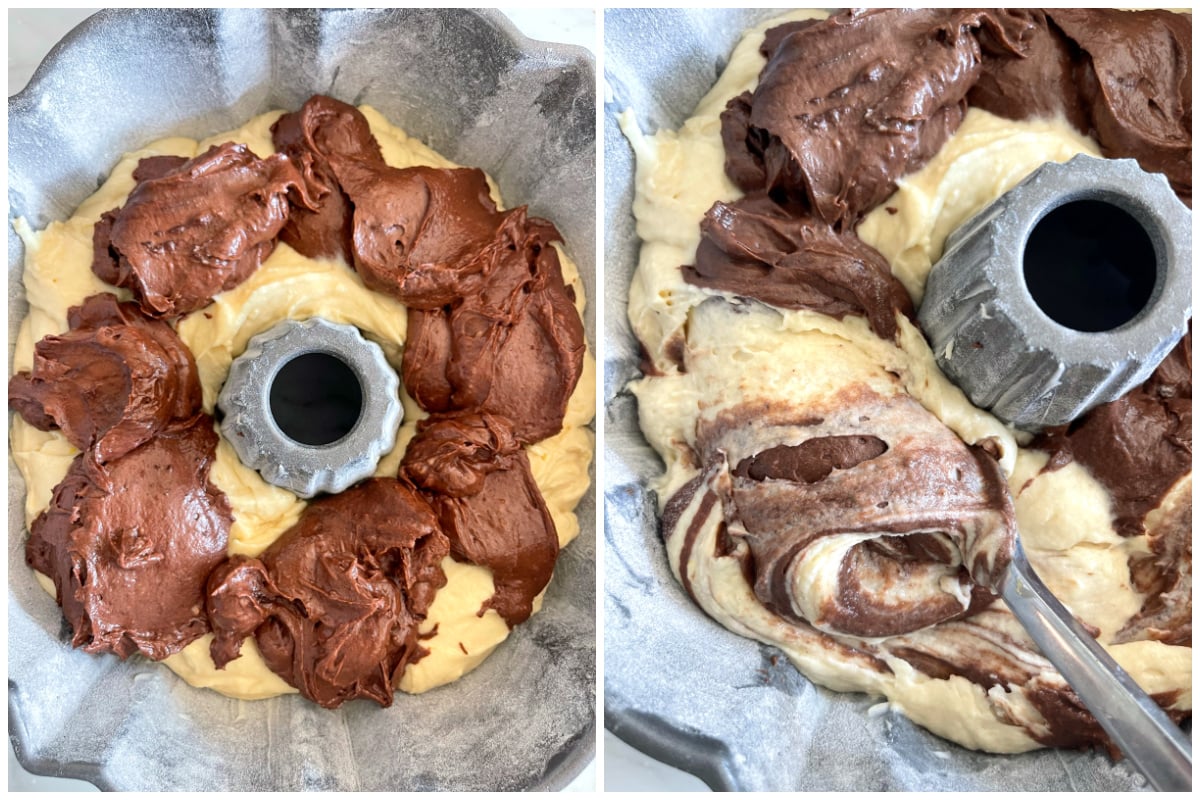
Scoop two-thirds of the batter in bottom of the prepared cake pan.
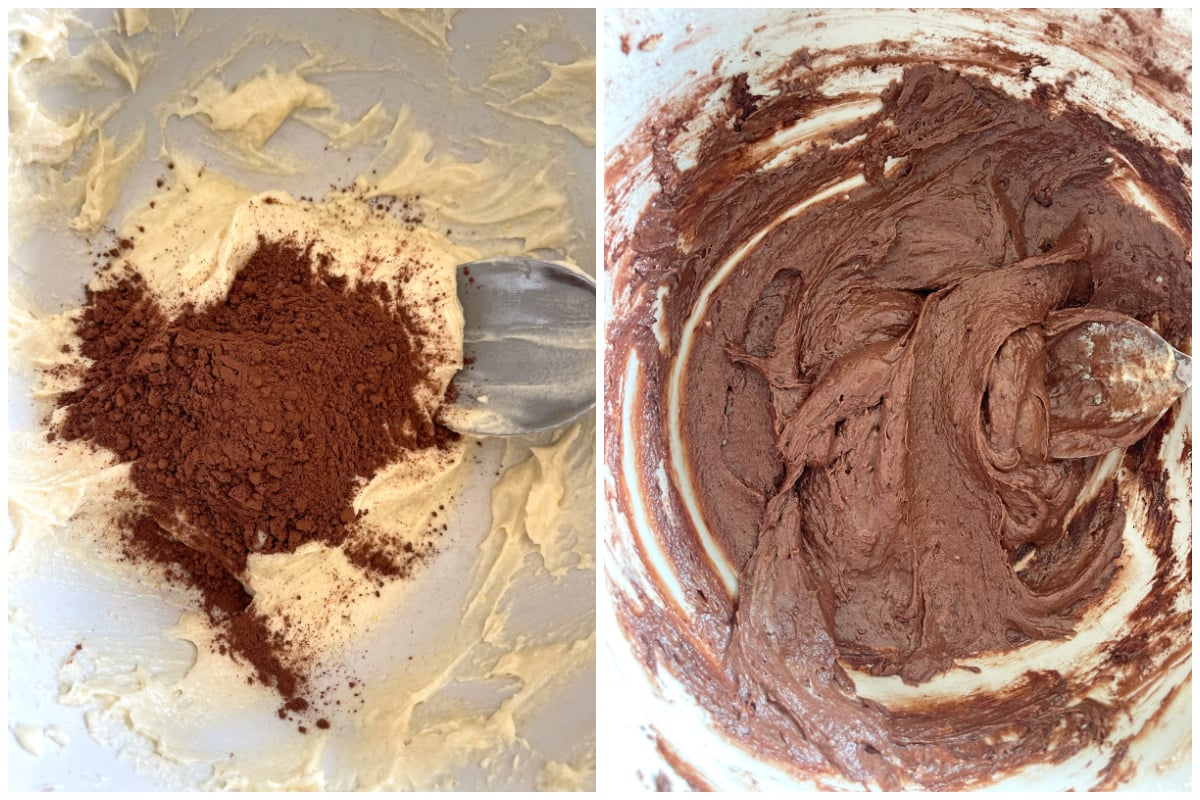
With the remaining 1/3 batter in the bowl, add the cocoa powder and an extra tablespoon of milk and stir until fully incorporated.
Scoop the chocolate batter on top of the vanilla batter.
Use a fork to stick down into the batter and pull upwards while twisting the fork to create a swirly pattern. Do this around the whole cake. Be careful not to over-swirl or you won’t get that distinct marbled pattern.
Place your cake on the middle rack of the oven and bake for 40-50 minutes or until a toothpick comes out clean. You want to see a few moist crumbs on the toothpick but no raw batter. Be careful not to over-bake the cake or it will be very dry.
Allow the cake to cool in the pan for 10 minutes.
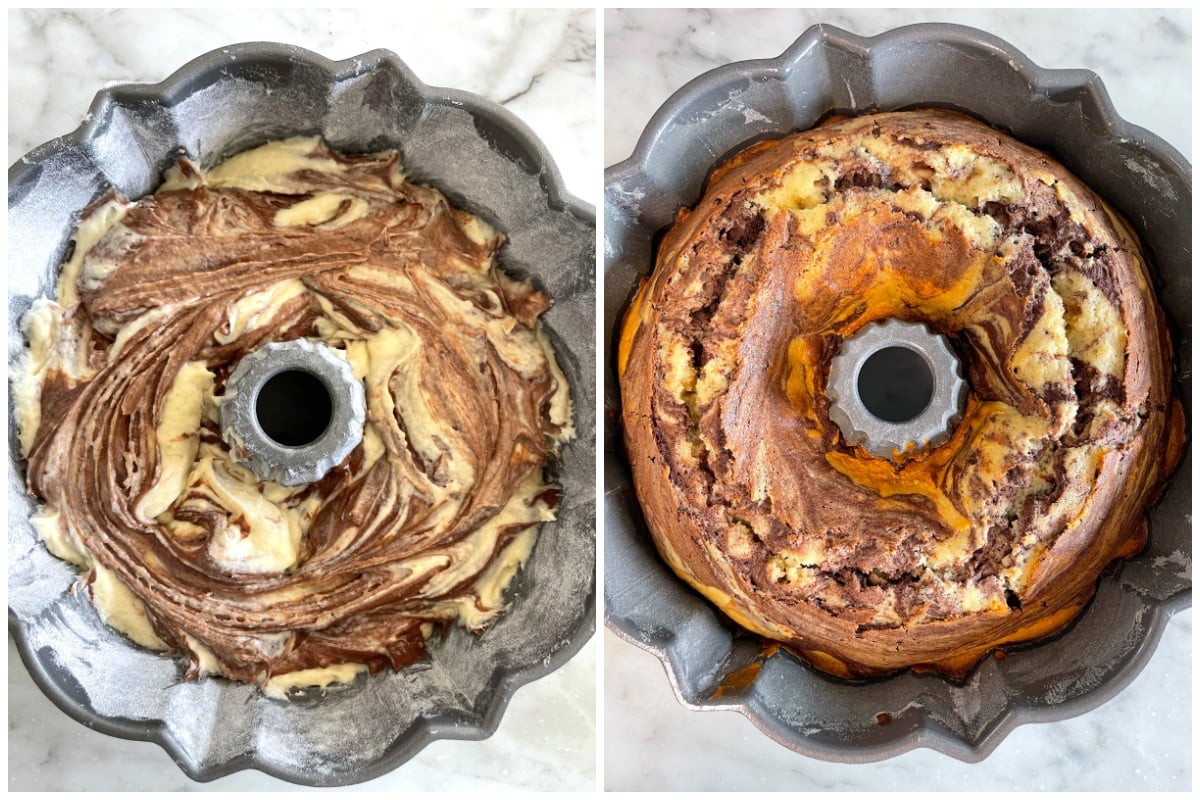
After 10 minutes, invert the cake onto a wire rack and let it cool completely.
Dust the cake with powdered/confectioner’s sugar. A simple dusting of powdered sugar is the most traditional in Germany, but if you want to spruce things up you can drizzle over a chocolate glaze of your choice.
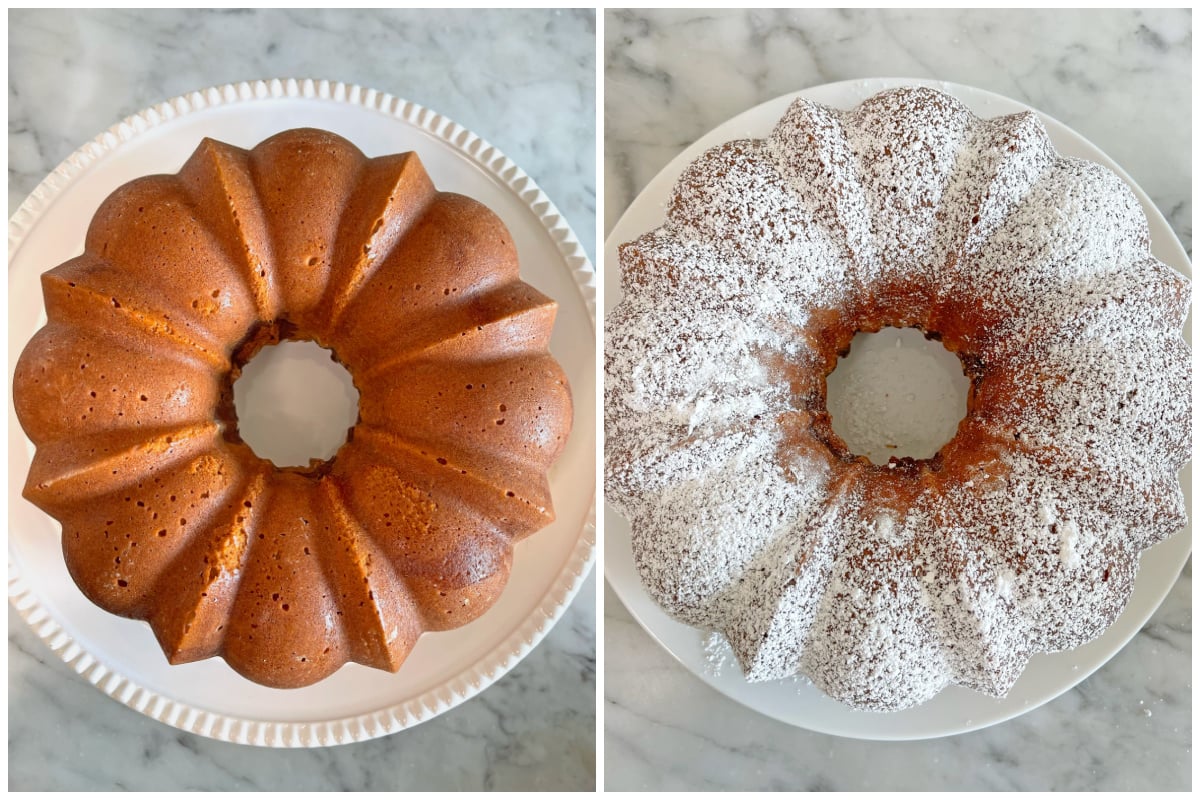
Your cake is ready to serve! But if you can muster the patience, it’s even better the next day, because stored in an airtight container at room temperature overnight it will become a little more moist and the flavors will also be better.
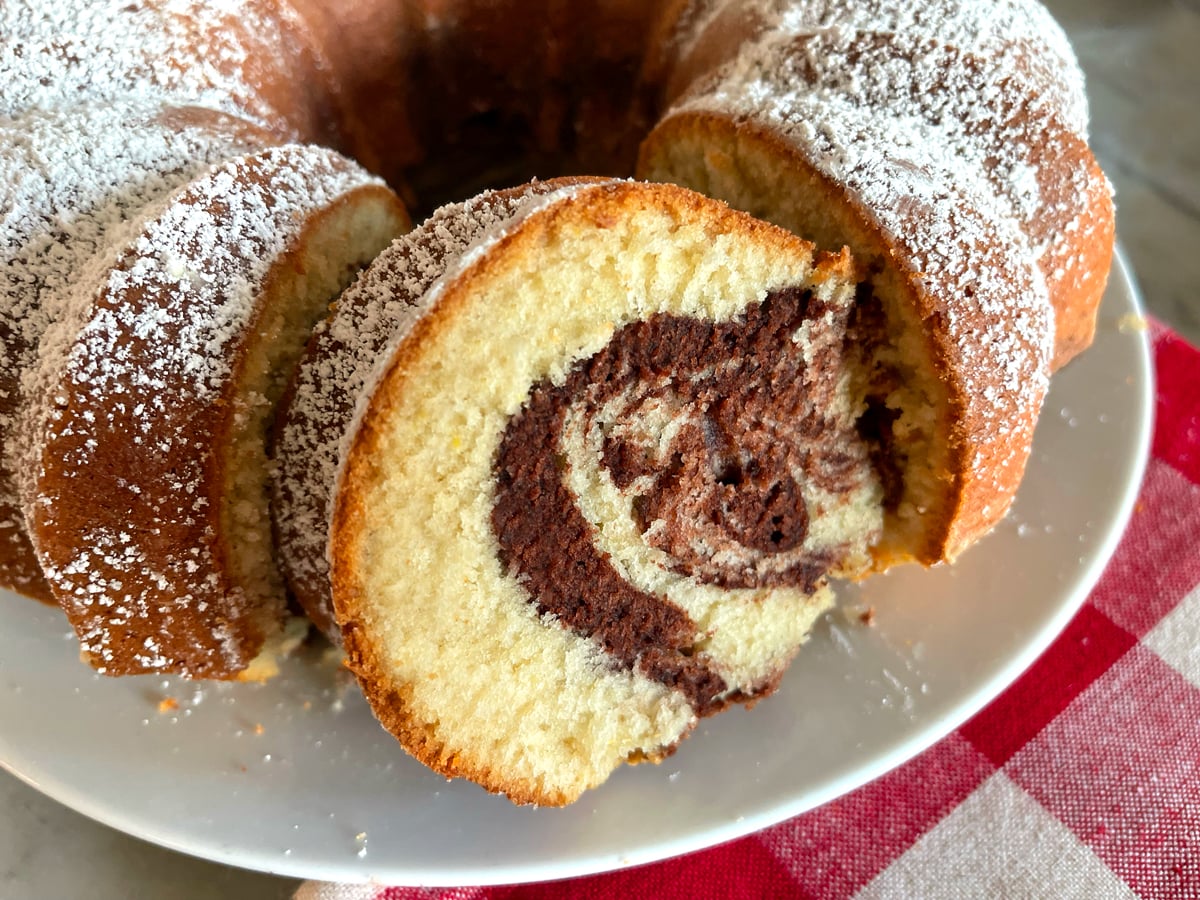
Part of the excitement is that you don’t know what the inside pattern is going to look like until you cut into it. And like snowflakes, no slice of cake is alike!
German Marble Cake Storage & Freezing
As with tea cakes in general, because they’re made with butter they dry out quickly if not stored properly. The key is to keep them well-wrapped in an airtight container. This will prevent moisture from escaping. Store your German marble cake at room temperature (the fridge will dry it out).
Marmorkuchen freezes really well. If you’re freezing it, don’t use a chocolate glaze. Let the cake cool completely and then wrap it really well in 2-3 layers of plastic wrap followed by aluminum foil. You can either freeze the cake whole or in individual slices. It can be frozen for up to 3 months.
How to Serve German Marble Cake
In Germany, Marmorkuchen is traditionally served during Kaffee und Kuchen, Germany’s version of Great Britain’s Afternoon Tea, which is an afternoon break for a sweet pick-me-up. It’s served in thick slices with a cup of coffee, tea or hot chocolate. And feel free to serve it with a generous dollop of whipped cream. Marmorkuchen is also a popular birthday cake in Germany.
Slice, serve and enjoy!
For more authentic German desserts try my:
- German Apple Cake
- German Plum Cake
- German Cheesecake
- Bee Sting Cake
- Apple Strudel
- Pineapple Cake
- Cherry Marzipan Streusel Cake
- Berliner
- Dampfnudeln
- Germknödel
- Gugelhupf
- Stollen
- Rhubarb Streusel Cake
- Pfeffernüsse
- Lebkuchen
- Zimtsterne
- Vanillekipferl
- Springerle
Save This Recipe
Marmorkuchen (German Marble Cake)
Equipment
- 10 to 12 cup Bundt or Gugelhupf pan (in the photo I used a 12 cup pan, a 10 cup will give you a taller cake)
Ingredients
- 3 1/4 cups all-purpose flour
- 3 teaspoons baking powder
- 1/2 teaspoon salt
- 1 cup butter , at room temp
- 1 3/4 cups caster sugar ** or pulse granulated sugar in a blender or food processor until extra fine
- 2 packets vanilla sugar (can substitute 2 teaspoons vanilla extract)
- 1 teaspoon fresh lemon zest
- 1 tablespoon rum (optional)
- 4 large eggs , at room temp
- 1 1/2 cups whole milk or buttermilk , at room temp (buttermilk will give you a more tender and moist crumb)
- 1/4 cup unsweetened cocoa powder
- powdered sugar for dusting
Instructions
- Preheat your oven to 350 F/180 C. Butter your Bundt or Gugelhupf pan and then coat with flour, shaking out the excess. You can use either a 10 or 12 cup pan. A 10 cup pan will give you a taller Marmorkuchen.
- Combine the flour, baking powder and salt in a bowl and set aside.Use a hand mixer to cream the butter, sugar, vanilla sugar (if using extract add it with the eggs), and lemon zest in a large mixing bowl. Mix until it's light and fluffy. If using, add the rum. Add the eggs one at a time, mixing between additions until fully incorporated.Add a third of the flour mixture and a third of the milk and mix just until incorporated. Repeat using a third of the flour and milk at a time and mix after each addition. Be careful not to over-mix the batter or the cake will be heavy and dense.Scoop two-thirds of the batter in bottom of the prepared cake pan.With the remaining 1/3 batter in the bowl, add the cocoa powder and an extra tablespoon of milk and stir until fully incorporated.Scoop the chocolate batter on top of the vanilla batter.Use a fork to stick down into the batter and pull upwards while twisting the fork to create a swirly pattern. Do this around the whole cake. Be careful not to over-swirl or you won't get that distinct marbled pattern.
- Place your cake on the middle rack of the oven and bake for 40-50 minutes or until a toothpick comes out clean. You want to see a few moist crumbs on the toothpick but no raw batter. Be careful not to over-bake the cake or it will be very dry.Allow the cake to cool in the pan for 10 minutes. After 10 minutes, invert the cake onto a wire rack and let it cool completely.Dust the cake with powdered sugar. A simple dusting of powdered sugar is traditional in Germany, but if you want to spruce things up you can drizzle over a chocolate glaze of your choice.This cake is best eaten the next day to improve both the texture and flavor. Wrap it well with plastic wrap and store it in an airtight container or cake saver at room temperature.
Notes
Nutrition

Hi, I’m Kimberly Killebrew and welcome to Daring Gourmet where you'll find delicious originals, revitalized classics, and simply downright good eats from around the world! Originally from Germany, later raised in England, world-traveled, and now living in the U.S., from my globally-influenced kitchen I invite you to tour the world through your taste buds!

















This was delicious and even though I know it’s not supposed to be a moist cake, it definitely was not too dry. Really nice texture and wonderful flavor.
I’m so glad to hear that, Courtney, thank you very much!
Yummy! I made this for our monthly book club meetup yesterday. We have a lovely older German lady that’s part of our group and she was so delighted when I brought it out. She said it was perfect and that it tasted like home :)
Oh that’s wonderful to hear, Sonja, thank you so much for the feedback! <3
My husband and I really enjoyed this. It’s not overly sweet, which is a plus and is typical for German baked goods, something that I appreciate. The crumb has a nice texture and flavor.
Thank you so much, Louise, I’m happy you both enjoyed it!
Simply delicious! I had my 9 year old granddaughter help me bake this and she had fun doing the “marbling”. It turned out beautifully and her grandfather (my husband) said she was more than welcome to make it again and very soon! Thanks much for this recipe and so many others, I’m a big fan.
Oh that’s wonderful that you recruited your granddaughter’s help, Theresa, and I’m so thrilled that it was a success! Thank you for the positive review and for your kind words <3
This was so scrummy, enjoyed it with a cup of coffee for breakfast this morning :) Really nice texture and flavor. This is truly a cake that has stood the test of time and you’ve captured it perfectly with your recipe.
This was just lovely, Kimberly, a taste of home. I made it this morning and yes, I did sample a piece (just a small one), but I will wait until tomorrow to enjoy (and share) the rest :) It is delicious and I cannot wait to have more tomorrow mit Kaffee. Liebe Grüße , Karin
Vielen Dank, liebe Karin, Ich freue mich so sehr, dass dir der Kuchen geschmeckt hat! <3
Ohhh marvelous!! This brings back so many memories. I can’t wait to make this! Danke Kimberly!