Authentic Bienenstich (German Bee Sting Cake)

This post may contain affiliate links. See my disclosure policy.
This authentic German Bee Sting Cake recipe, known as Bienenstich, features honey caramelized almonds, a tender yeast cake, and creamy vanilla filling in every bite!
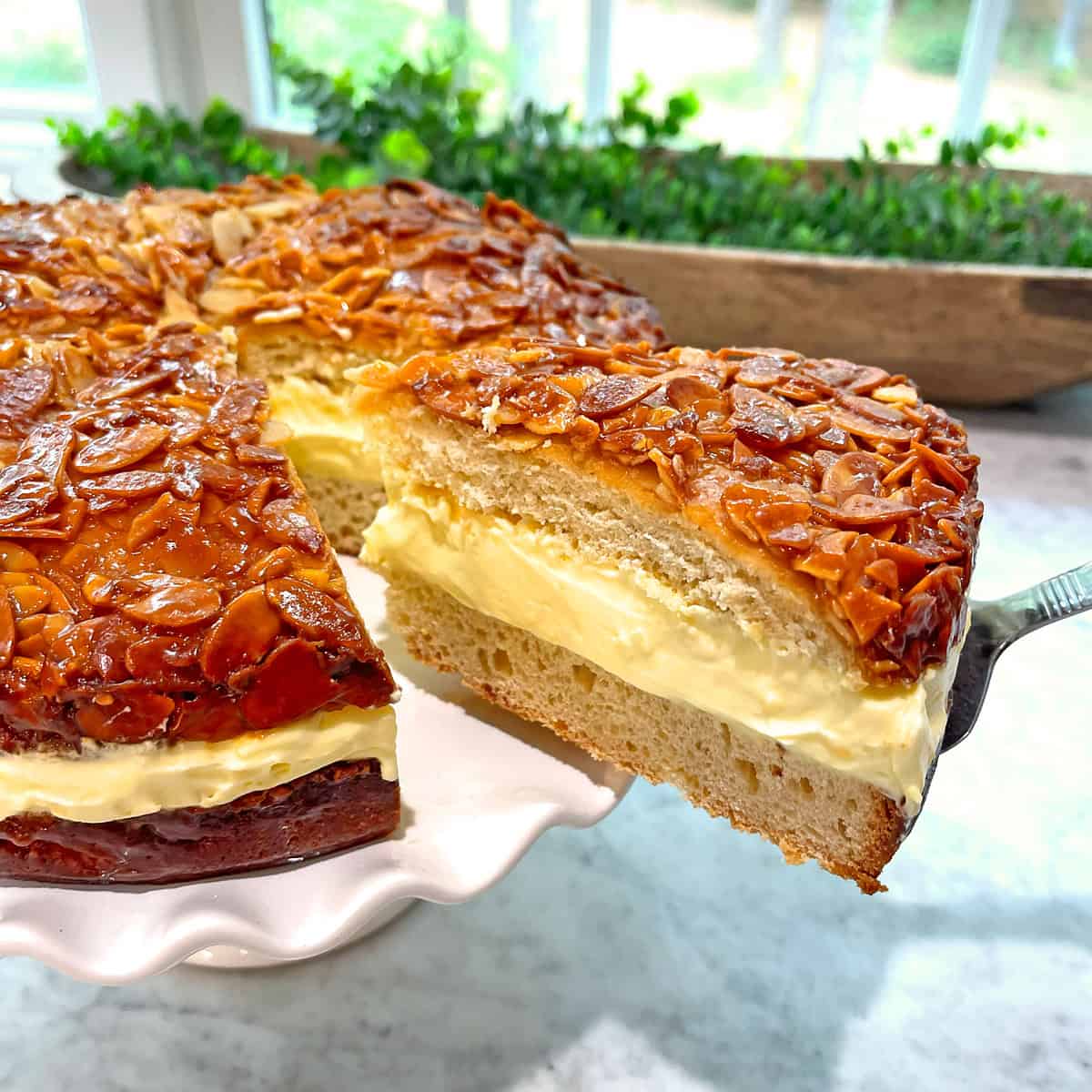
One of Germany’s most cherished cakes that has gained international recognition, this has been among my most requested German recipes. The combination of the crunchy honey caramelized almond topping, the rustic yeasted cake layers, and the luxuriously creamy vanilla filling, it’s a symphony of textures and flavors that makes every glorious bite an epic eating experience worthy of your undivided attention. I grew up enjoying this cake in my home region of Baden-Württemberg, but Bienenstich is prepared basically the same way throughout Germany (sometimes round, sometimes square) without a whole lot of variation in the recipes.
German bee sting cake isn’t hard to make, though it is a labor of love, mostly because it involves a lot of waiting, but when you break it up by preparing the filling the day before it’s very manageable. And more than worth the effort!
What is Bienenstich?
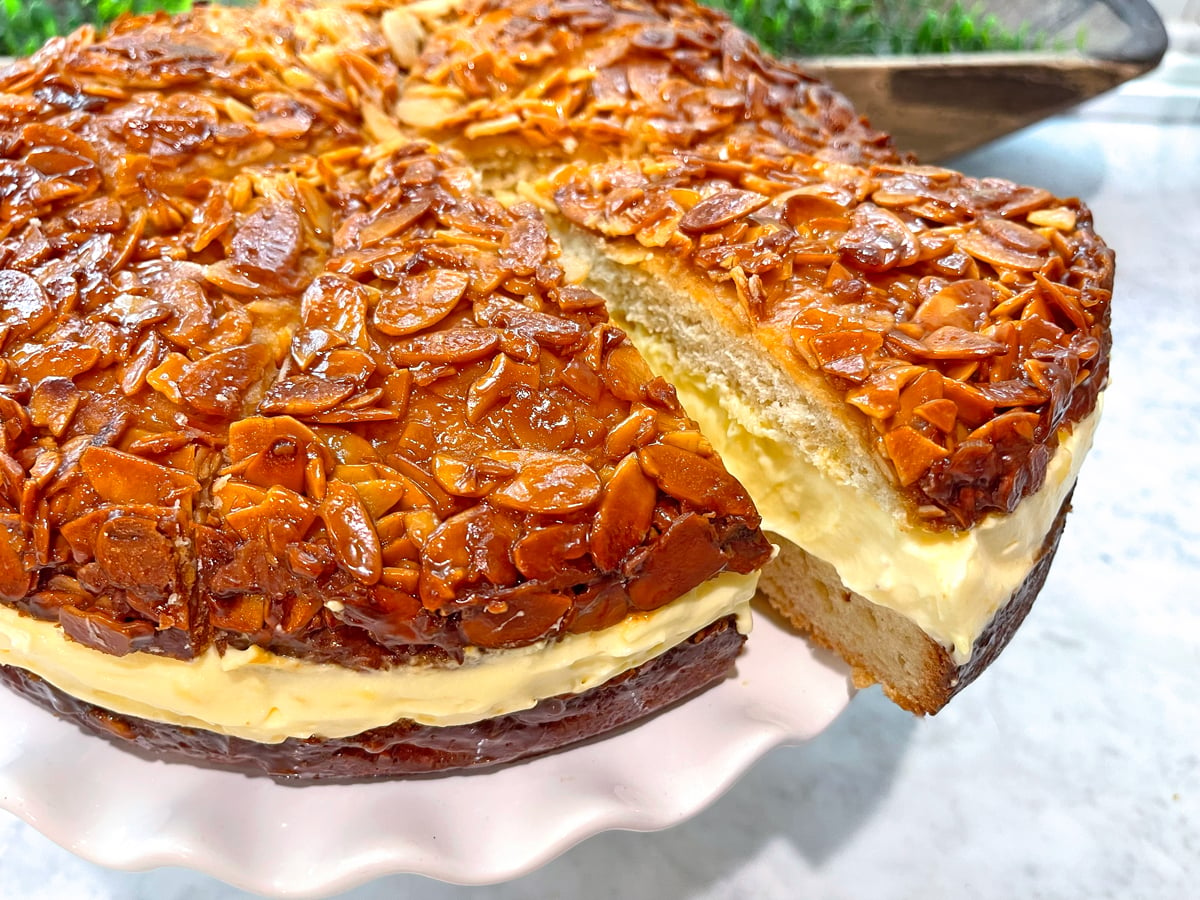
Golden, buttery, caramelized almonds are baked on lightly sweetened yeast cake with a generous layer of creamy vanilla custard – that’s Bienenstich, or German “Bee Sting Cake,” a cake that is famously both rustic and indulgent at the same time. It’s a cake I grew up with in Stuttgart, Germany and can be found in local bakeries (Bäckerei) and cafes (Kaffeehaus) across Germany throughout all four seasons. It’s most commonly as an afternoon snack or dessert for Kaffee und Kuchen (Germany’s answer to afternoon tea), is a favorite at family gatherings, for holidays, and is especially popular during the Christmas season.
Unlike many elaborate German tortes, Bienenstich has an unmistakably homey character. While classic tortes have a soft and tender cakey crumb, Bienenstich is made with an enriched yeast dough (called Hefeteig) and is something of a cross between a sweetened bread and a cake. Yeasted cakes have largely become forgotten, which is unfortunate because they’re delicious. Bee sting cake is one of the most popular surviving examples of traditional yeasted cakes. Other traditional yeasted cakes that have retained relevance and popularity include Babka, Stollen and Panettone (though some argue these are more of a sweet yeasted bread than a cake), Pandoro, Gugelhupf, King Cake, and Savarin.
The oldest versions of Bienenstich were made without the vanilla cream filling. They were baked as a Blechkuchen, or one-layer sheet cake with the honey-almond topping and cut into squares. That’s the way my Großopa (my German great-grandfather) made his Bienenstich. My Mutti grew up with him in Bavaria (and then later Stuttgart when they moved there) and Bienenstich was famously the one and only thing he ever cooked or baked. My Mutti remembers him giving her the task of removing the skins off the almonds which he would then slice. My Großopa was born in 1904 and made his Bienenstich for as long as anyone could remember. My Mutti still has his original recipe.
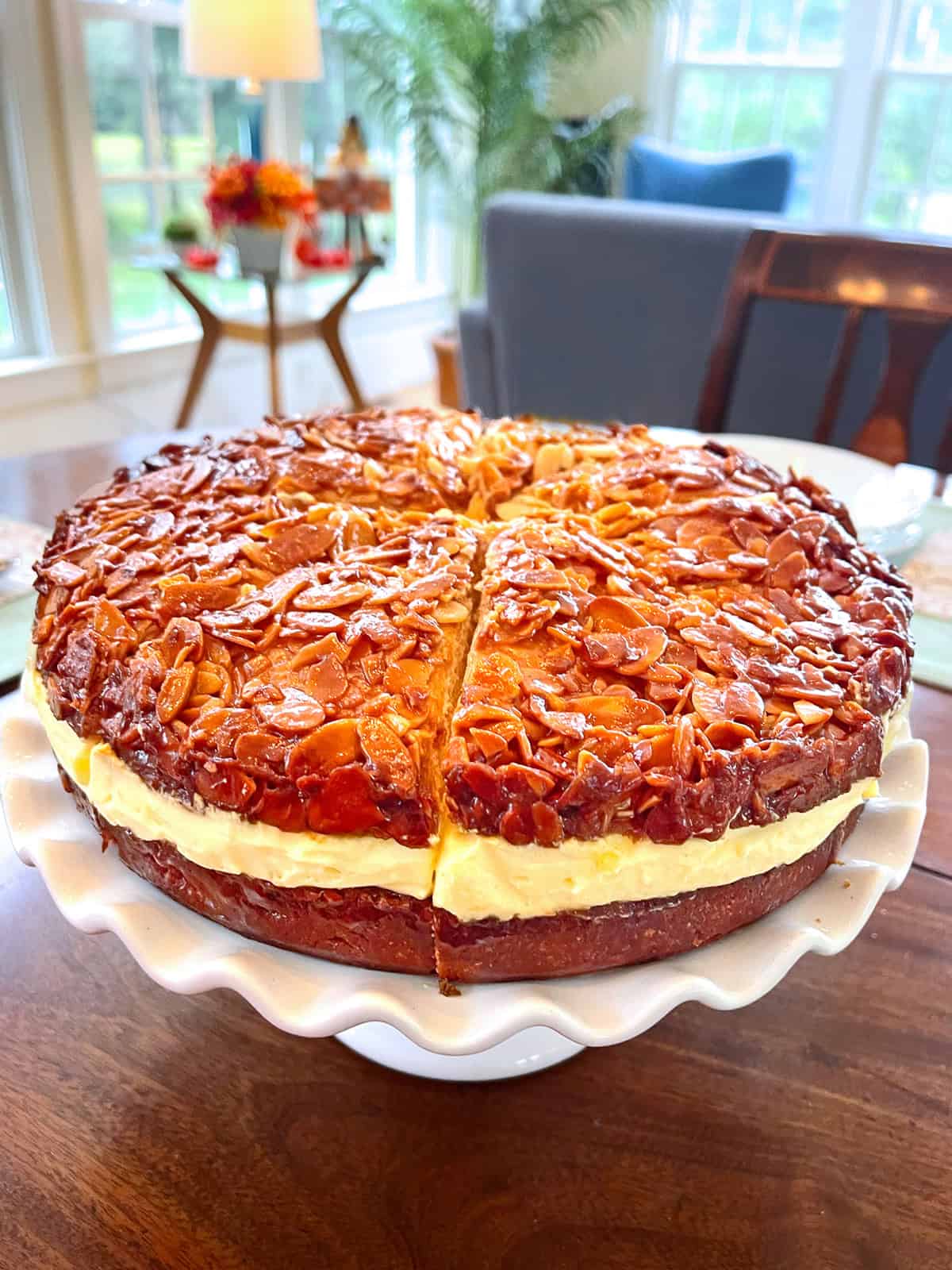
Over time, the traditional single-layer, custard-less Bienenstich evolved to include two layers of the yeasted cake with a vanilla custard filling in between, and today it’s commonly made either as a double layer Blechkuchen cut into squares, or as a round cake cut into wedges (a more elegant look for special occasions and holidays).
The History of Bee Sting Cake
Bienenstich literally translates to “bee sting.” Where did this dramatic name and cake come from? One popular legend takes us back to the late Middle Ages. According to the tale, the neighboring towns of Andernach and Linz am Rhein were involved in a dispute. When attackers from Linz approached Andernach, two apprentice bakers who were standing on the town walls spotted them. They frantically looked around them and noticed several beehives lined up along the walls. Without a moment to lose, the apprentices hurled the beehives toward the attackers, unleashing a swarm of angry bees. After the attackers retreated, the bakers celebrated their victory by creating a cake that became known as Bienenstich, or bee sting cake. How much truth is there to that story? Probably none, but it’s a fun legend nevertheless!
In actuality, historical evidence places Bienenstich much later, to the early 20th century. The earliest published reference was in a 1913 publication by the Badischer Frauenverein, the Baden women’s association, but it was a single layer cake with no filling. By 1914, Bienenstich was just starting to incorporate the vanilla cream filling, and only occasionally, as noted in Maria Lorenz’s Die Hausbäckerei. 1000 Rezepte, where she mentions that “zuweilen wird der Bienenstich auch gefüllt“, or “sometimes the Bienenstich is also filled.” Ten years later the cake was still relatively unknown. A 1925 ad by Dr. Oetker promoted “Bienenstich in Springform”, describing it as “ein noch nicht allgemein bekanntes Gebäck”, or “a pastry/cake not yet generally well known.” It’s also interesting to note that it was Germany’s Dr. Oetker who invented pre-packaged vanilla pudding powder in 1894, which, from the cake’s inception, became the traditional choice for Bienenstich’s vanilla cream filling.
By the 1950s–1960, Bienenstich became a broadly established German Kaffee und Kuchen classic. Along with Marmorkuchen (German marble cake) and Schwarzwälder Kirschtorte (Black Forest cake), Bienenstich has maintained its place as one of Germany’s three most popular cakes and has become internationally renowned.
Traditional Bienenstich Ingredients
Bienenstich is first and foremost a yeasted cake. There are versions online that call for making it with baking powder instead, like regular cake, but that isn’t remotely traditional or how it’s made in Germany. It’s the sweetened yeasted dough that specifically sets bee sting cake apart from other cakes and makes it so memorable and uniquely delicious. Here is what you’ll need to make an authentic Bienenstich:
- Flour: The foundation of the yeast dough, giving bee sting cake its tender but substantial structure. Regular all-purpose flour is all you need.
- Yeast: The yeast is what gives German bee sting cake its characteristic soft, slightly bread-like crumb. I’m using instant yeast but you can also use active dry yeast if you prefer (you’ll need to dissolve it in the lukewarm milk and let it sit for 10 minutes until frothy before adding it to the flour mixture along with the melted butter). I love the flavor of fresh yeast and really miss using it in Germany where it was readily available everywhere. Now that I live in the U.S. it’s very difficult to find. If you have access to fresh yeast and prefer to use that, use 21 grams and crumble it into the lukewarm milk with a teaspoon of sugar and let it sit for about 10 minutes until nice and frothy, then add it to the flour mixture with the melted butter.
- Milk: Adds richness and tenderness to the dough. Use whole milk. I like to use the technique of scalding the milk first: it denatures the whey proteins and in doing so helps yeast bread dough rise higher and achieve a softer, fluffier texture. Does it make a massively noticeable difference in this particular cake? No, not massive, but if you have the time, it does contribute a little to a softer crumb.
- Butter: An essential part of the yeast dough’s richness and flavor. Butter is also used for the caramelized almond topping.
- Sugar: Provides gentle sweetness to the dough. Bienenstich is not an overly sweet cake, which is characteristic of German baked goods. Sugar is also added to the caramelized almond topping.
- Egg: Enriches the yeast dough and adds moisture that tenderizes the crumb.
- Lemon Zest: A hallmark of German baking, adding lemon zest to the dough really elevates the flavor.
- Vanilla: Vanilla sugar is most commonly used in Germany for adding vanilla flavor, but I’m using pure vanilla extract instead. If you opt for vanilla sugar, use one packet and you can reduce the amount of granulated sugar by about 2 teaspoons.
- Salt: Balances the sweetness and enhances the overall flavor.
- Bavarian Cream or Vanilla Pudding Mix: This serves as the filling for the bee sting cake and you have a couple of options. You can make homemade Bavarian Cream or you can use a vanilla pudding mix. Believe it or not, the pudding mix is actually the traditional way of making Bienenstich! (See below for more on that.) You can either use 2 packets of Dr. Oetker’s vanilla pudding mix (which is what we use in Germany) or one family-size 4.6 ounce box of Cook and Serve Jell-O vanilla pudding (NOT instant, it will not work!). Preparation instructions are different depending on which product you chose and those details are in the recipe.
- Heavy Cream: This is whipped with some additional powdered sugar to provide stability and is then folded into the vanilla pudding to create a rich and silky smooth vanilla custard filling for the center of the cake.
- Honey: This is added to sugar, butter and heavy cream to make the caramelized almond topping. The honey adds flavor and creates a beautiful glossy finish.
- Blanched Sliced Almonds: The defining ingredient of the topping. As they bake with butter, sugar, and honey, the almonds become toasted, crisp, and caramelized. Blanched sliced almonds are traditionally used because they’ve had their skins removed and make for a nicer presentation. If you don’t mind the look, you can use non-blanched sliced almonds instead.
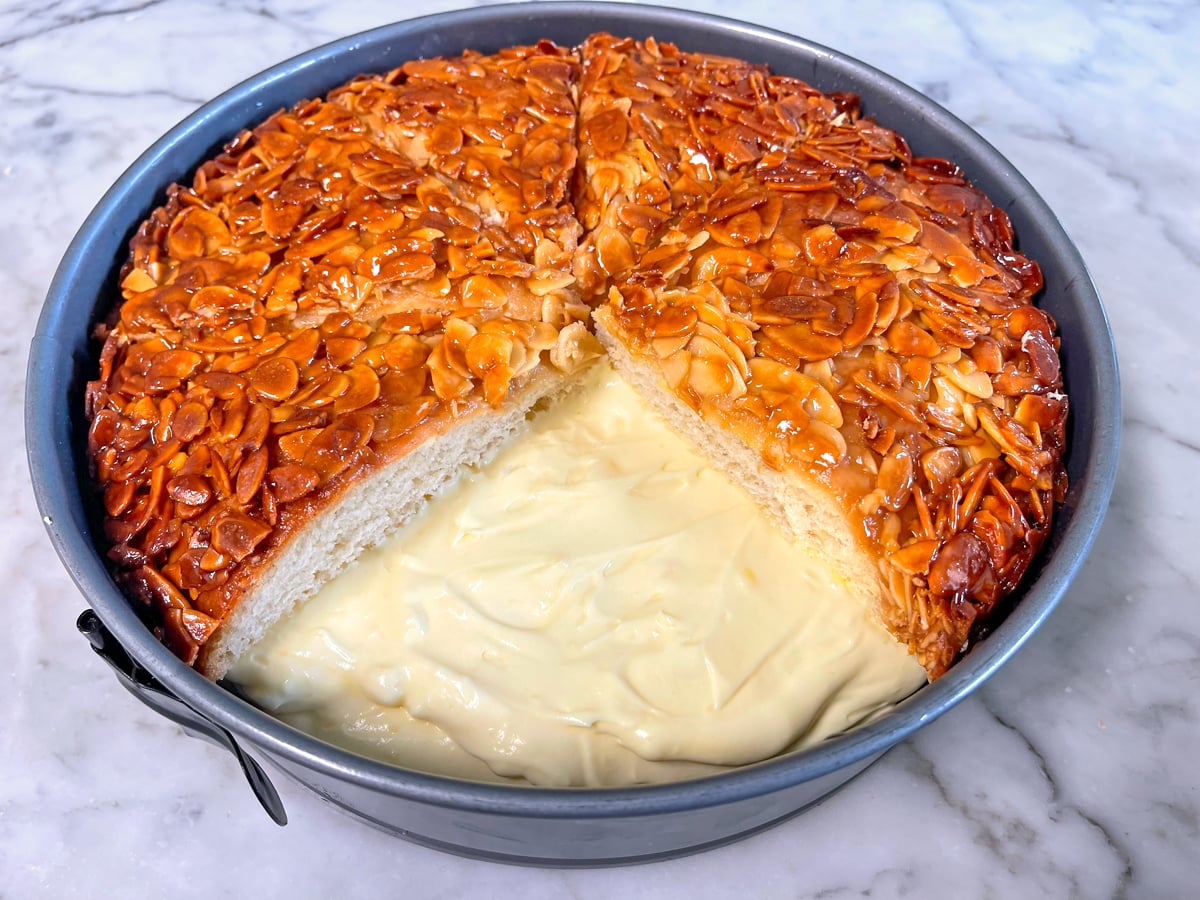
Homemade vs. Vanilla Pudding Mix
I know some will ask why I’m even giving pre-packaged pudding mix as an option on my otherwise from-scratch recipe site. The reason is that, funnily enough, using a vanilla pudding mix is actually the “traditional” way to prepare Bienenstich! As I discuss in the section above, The History of Bienenstich, despite its Middle Age folklore, Bienenstich is an early 20th century invention with close ties to Dr. Oetker who invented pre-packaged vanilla pudding powder mix. Even the earliest recipes for Bienenstich call for using Dr. Oetker’s pudding mix to make the vanilla cream filling and that’s how virtually every German home cook and commercial bakery in Germany continues to make it today. So it’s completely your choice. You can either use the vanilla pudding mix or you can make a classic Bavarian Cream. If there’s some alternative creamy vanilla filling you want to use, you can do that too as long as it’s the proper consistency. Texture-wise, Bienenstich filling shouldn’t be firm, it should be loose and creamy and just firm enough to stay put without oozing out of the cake.
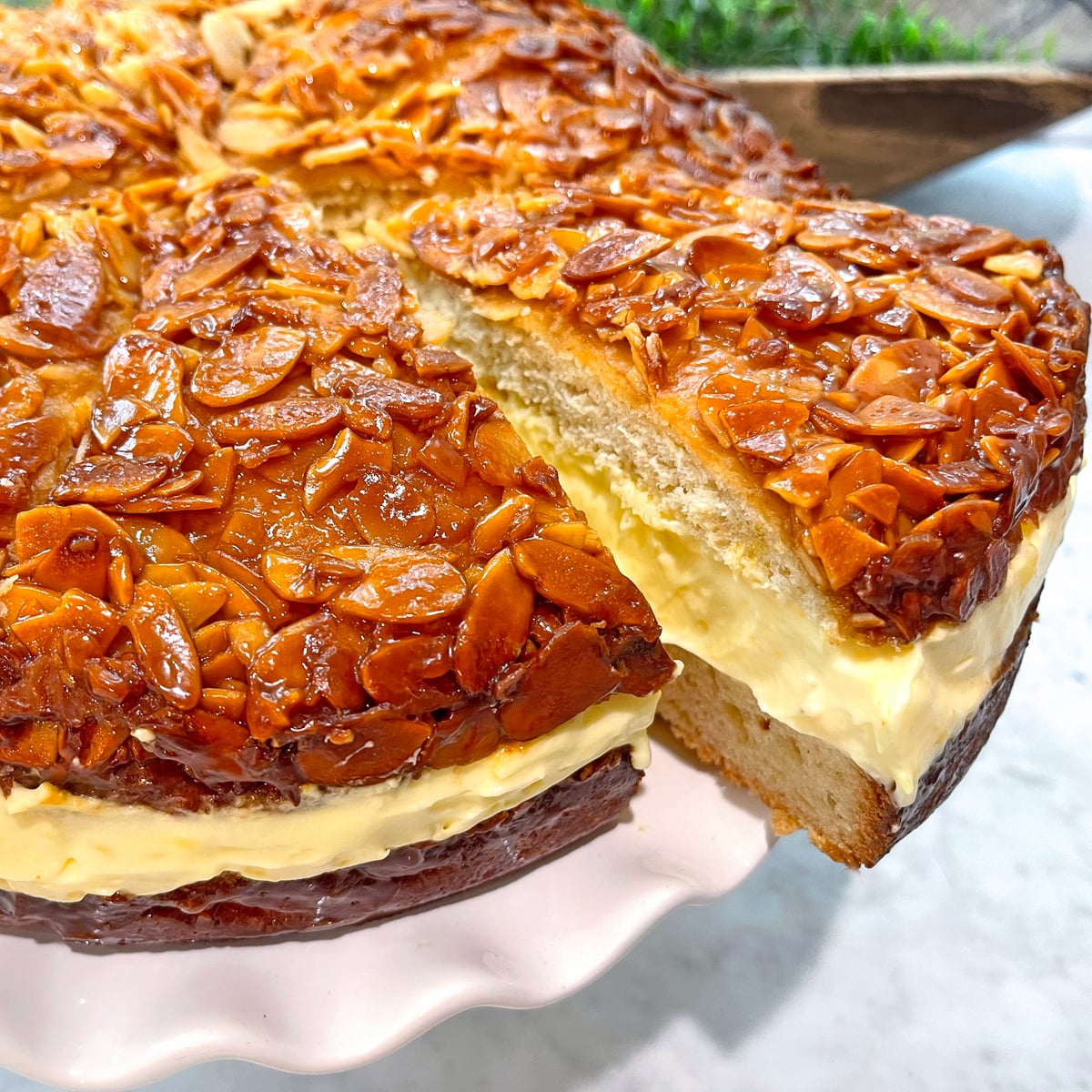
Bienenstich Recipe
Let’s get started!
*If you’re making your own filling from scratch, see my recipe for Bavarian Cream.
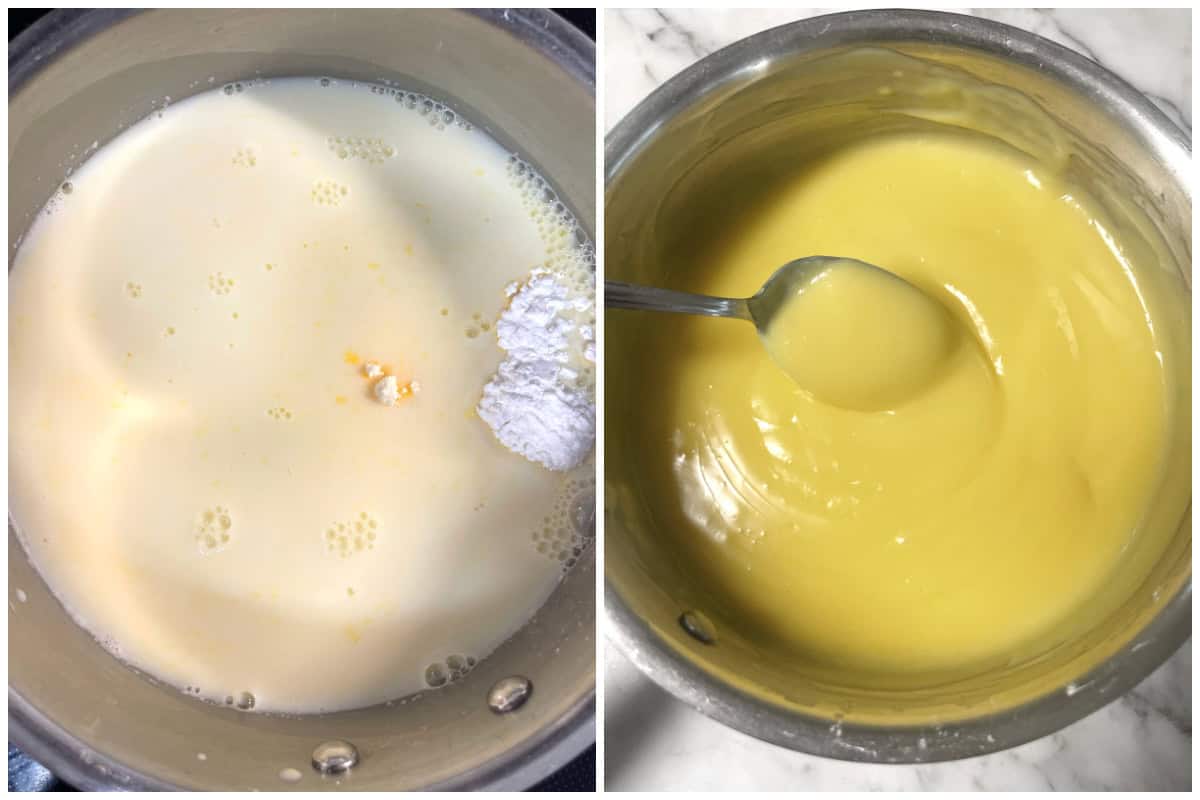
Make the filling in advance because it will need to chill to set. This can be done a day in advance. If you’re using a vanilla pudding mix you can either use 2 packets of Dr. Oetker’s vanilla pudding mix or one family-size 4.6 ounce box of Cook and Serve Jell-O vanilla pudding (NOT instant, it will not work!). If using the Jell-O brand, add 2 teaspoons cornstarch to the powder mix. If using the Dr. Oetker brand do not add cornstarch but add 1/3 cup sugar (the mix isn’t pre-sweetened). Cook the pudding according to the package’s method, but use only 2 cups of milk total for either brand you choose. Let it cool and then chill for at least an hour, pressing plastic wrap on the surface of the pudding to prevent a skin from forming.
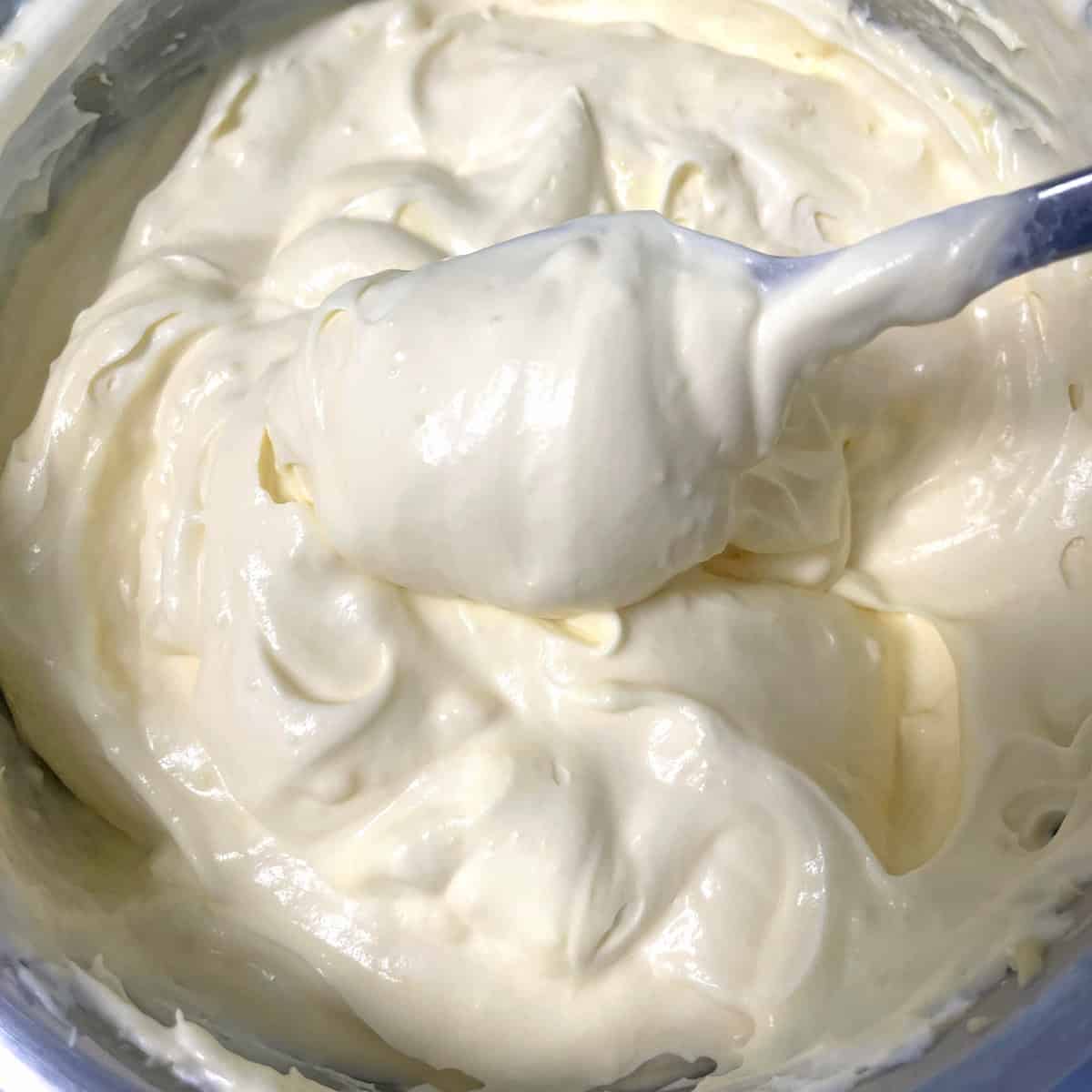
After the pudding has chilled it will be very thick. Use an electric beater to loosen it up.
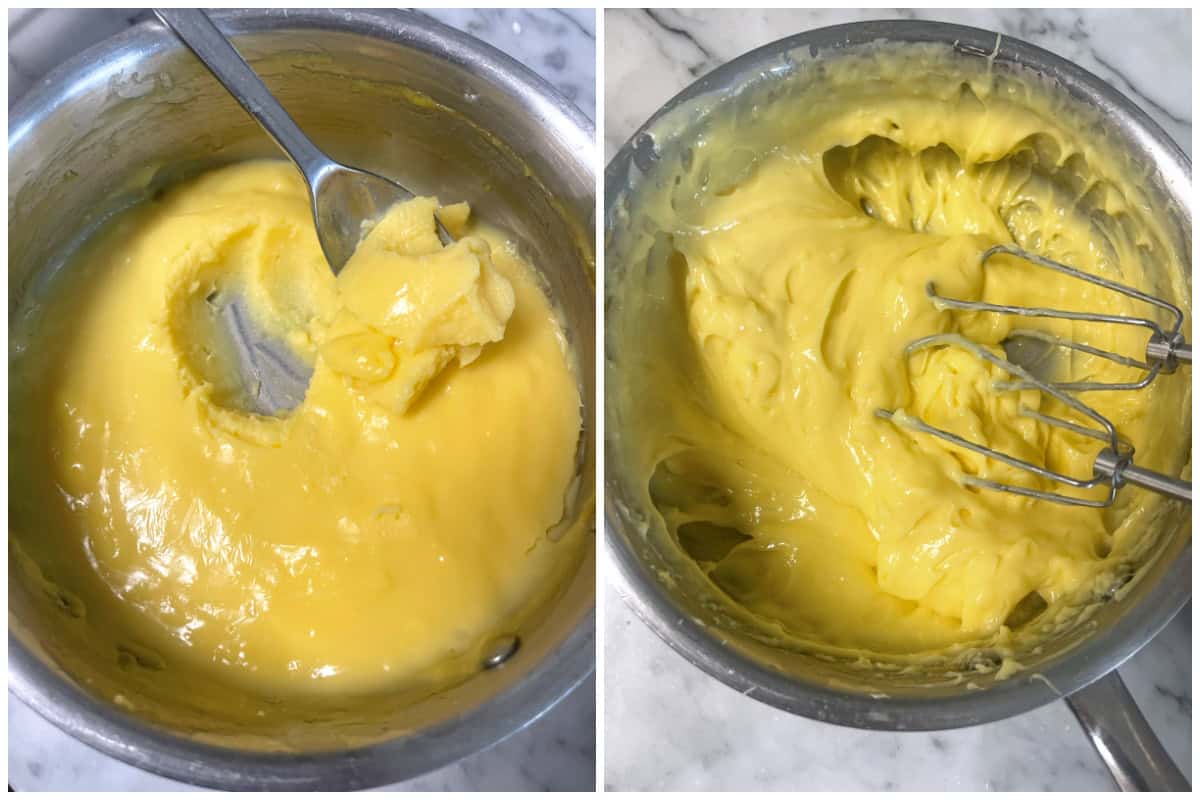
In a large bowl, add the cold heavy cream and powdered sugar and beat until stiff peaks form (be careful not to over-beat). Fold the whipped cream into the pudding. Cover and chill for at least 2 hours or overnight.
To make the cake: The first step is to scald the milk. This step is optional, but it’s a technique that I like to use with yeast doughs to produce a softer crumb. Pour the milk into a small saucepan and heat it over medium heat, stirring frequently. Heat the milk until tiny bubbles appear around the outer rim of the saucepan. Do not let it boil. The milk is scalded when it reaches a temperature of 180-185 F. I highly recommend using an instant read thermometer.
Add the butter to milk to melt it and let the mixture cool to room temperature.
In the bowl of a stand mixer, add the flour, sugar, yeast, salt, and lemon zest.
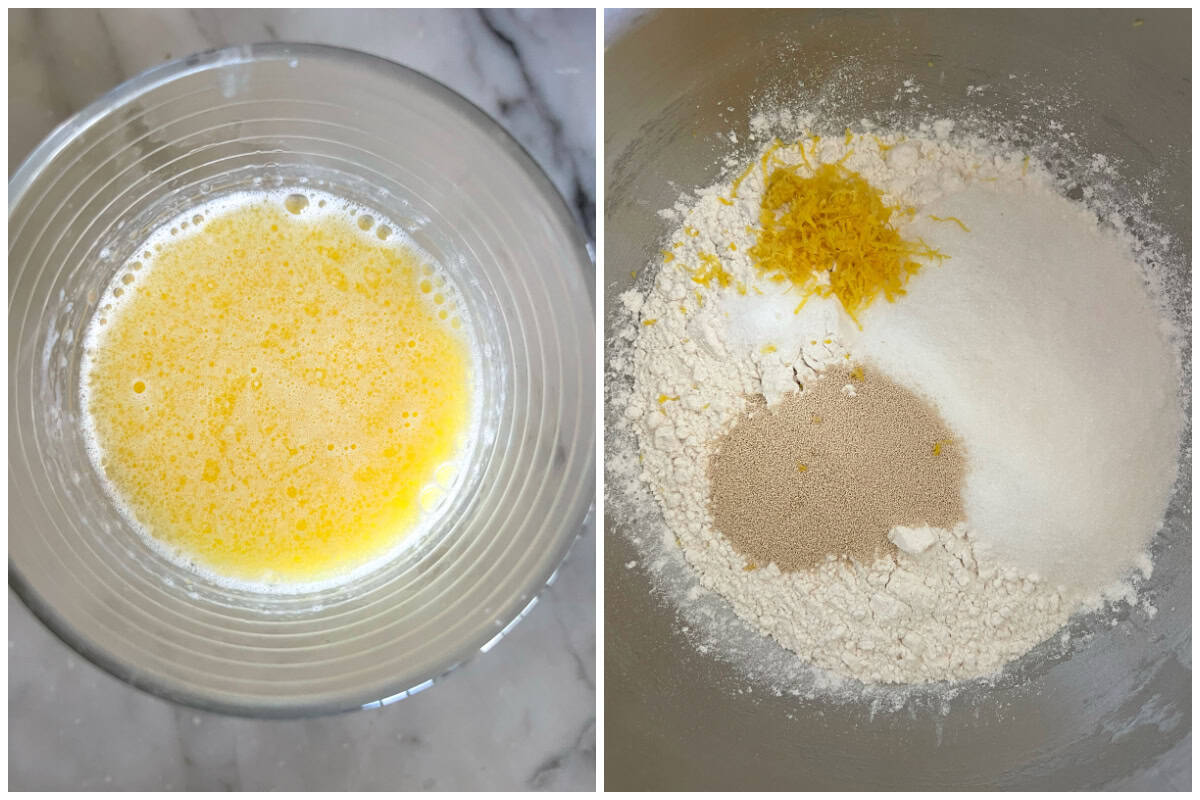
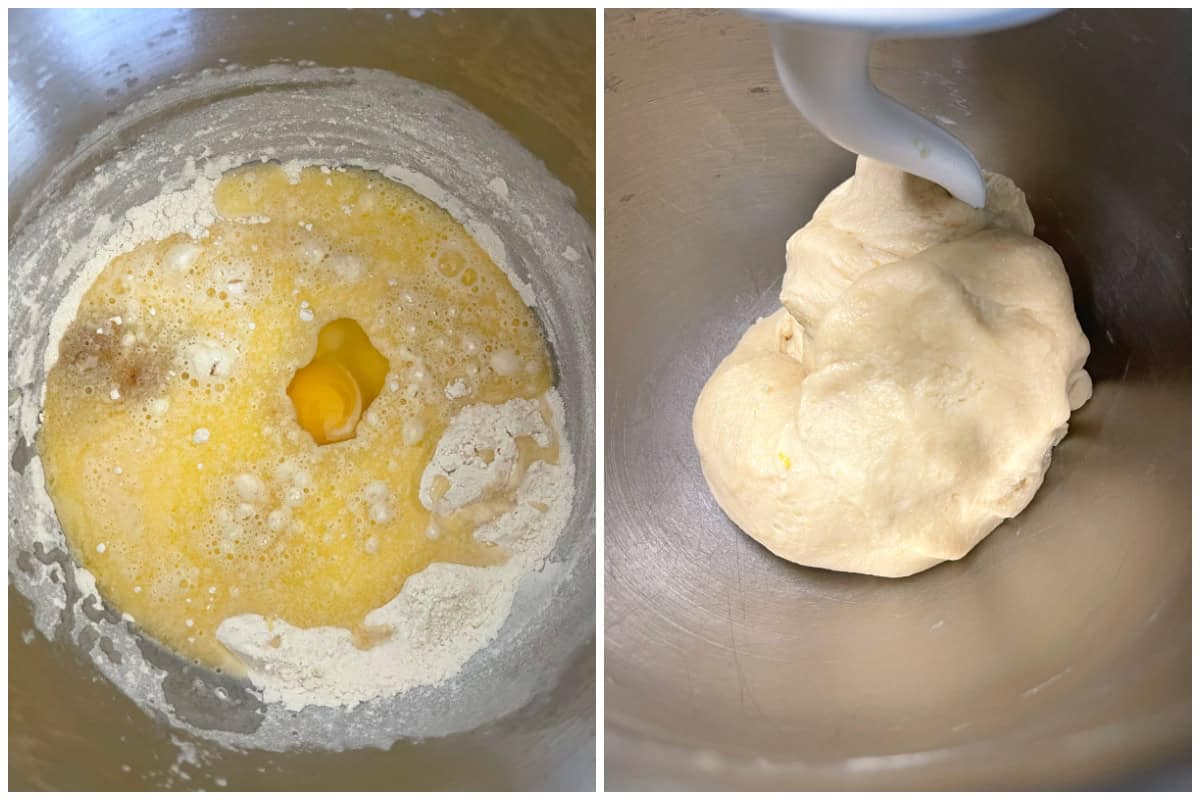
Add the milk mixture, egg, and vanilla extract.
Use the dough hook attachment and knead the dough on “2” (medium speed) until the mixture comes together. Once a dough has formed, continue to knead for a full 10 minutes. The dough should be smooth and soft and slightly tacky.
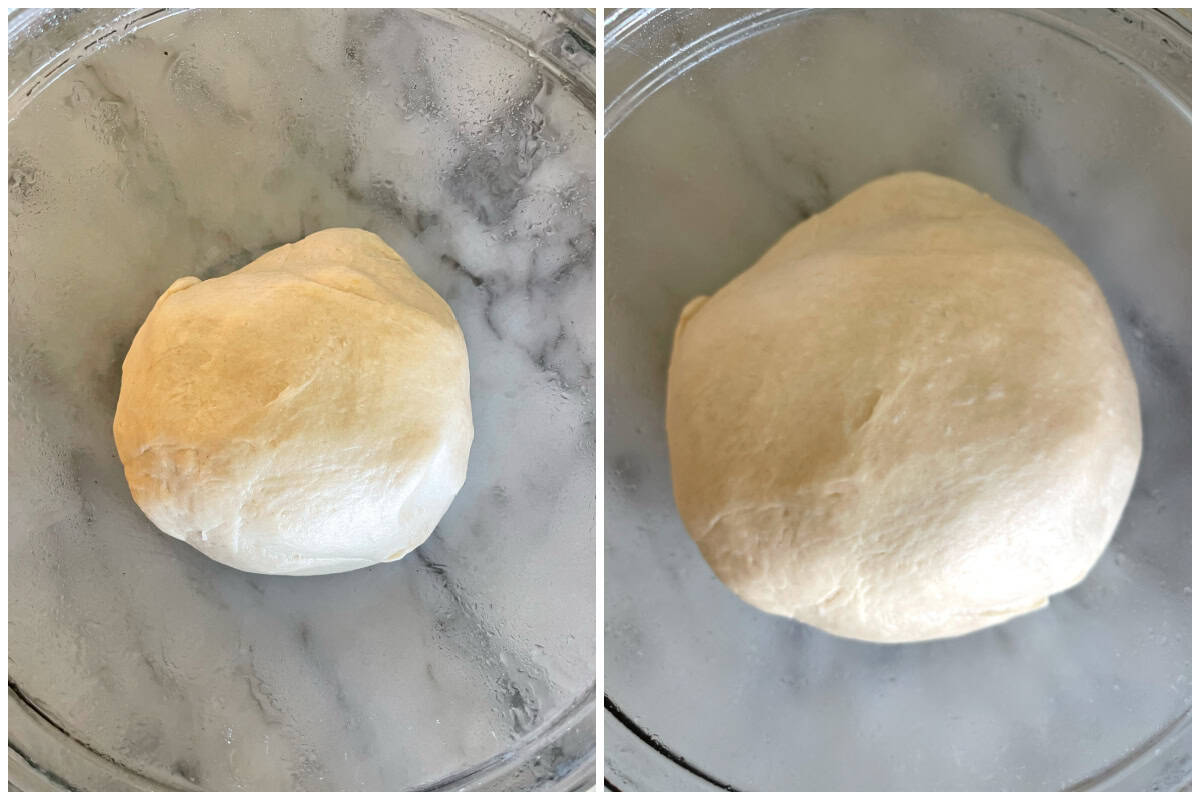
Lightly spray a medium sized bowl with oil, form the dough into a ball, and place it in the bowl.
Cover with plastic wrap and let it rise in a warm place until nearly doubled in size. How long this takes will vary according to your room temperature. But since this is an enriched dough, plan on minimum 90 minutes and as long as 2 1/2 hours. Don’t go by the length of time, go by the size of the dough.
Place the risen dough on a clean work surface and roll it into a circle the same diameter as your springform pan. In this case, a 10 inch circle.
Note on Springform Size: Use at least a 10 inch springform pan. Any smaller than this and you’ll have thick layers of yeasted cake, which will make for a pretty dry mouthful. Use either 10 inch or you can also use an 11 inch springform pan. That will give you thinner layers, which is perfectly fine, it just takes careful skill to cut the layers in half.
I like to place a large piece of parchment paper on the bottom of my springform pan and then snap the rim in place, so that the parchment paper is sticking out around the pan and forms a barrier to catch any of the caramelized liquids. Grease the parchment paper and the springform pan. Place the round circle of dough into the springform pan.
Cover the pan with plastic wrap and let the dough rise again in a warm place for 30 minutes. It’s not going to rise very noticeably but will become a little puffier.
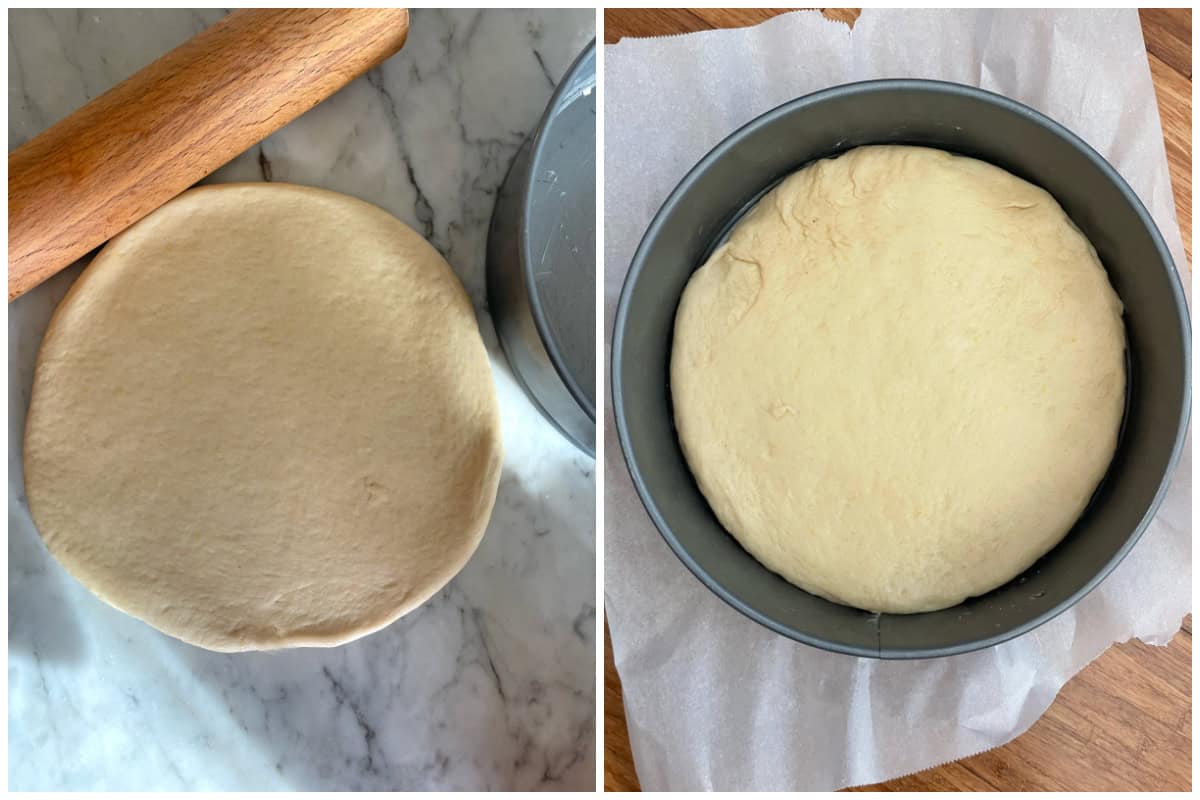
While the dough is rising a second time, preheat the oven to 350 F/180 C and prepare the honey almond topping.
Melt the butter, cream, sugar and honey in a small saucepan over medium high heat, stirring constantly until the sugar is dissolved. Bring it to a simmer and let it simmer for 2 minutes, stirring occasionally to prevent from burning.
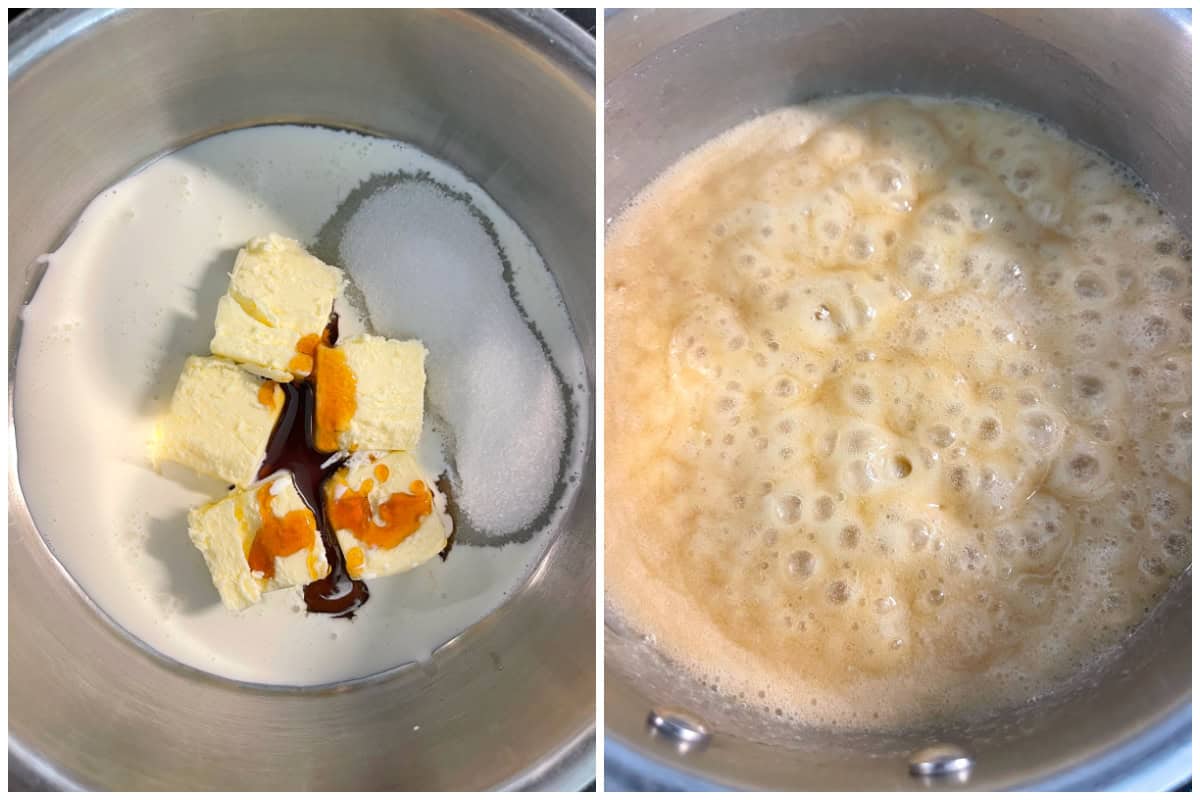
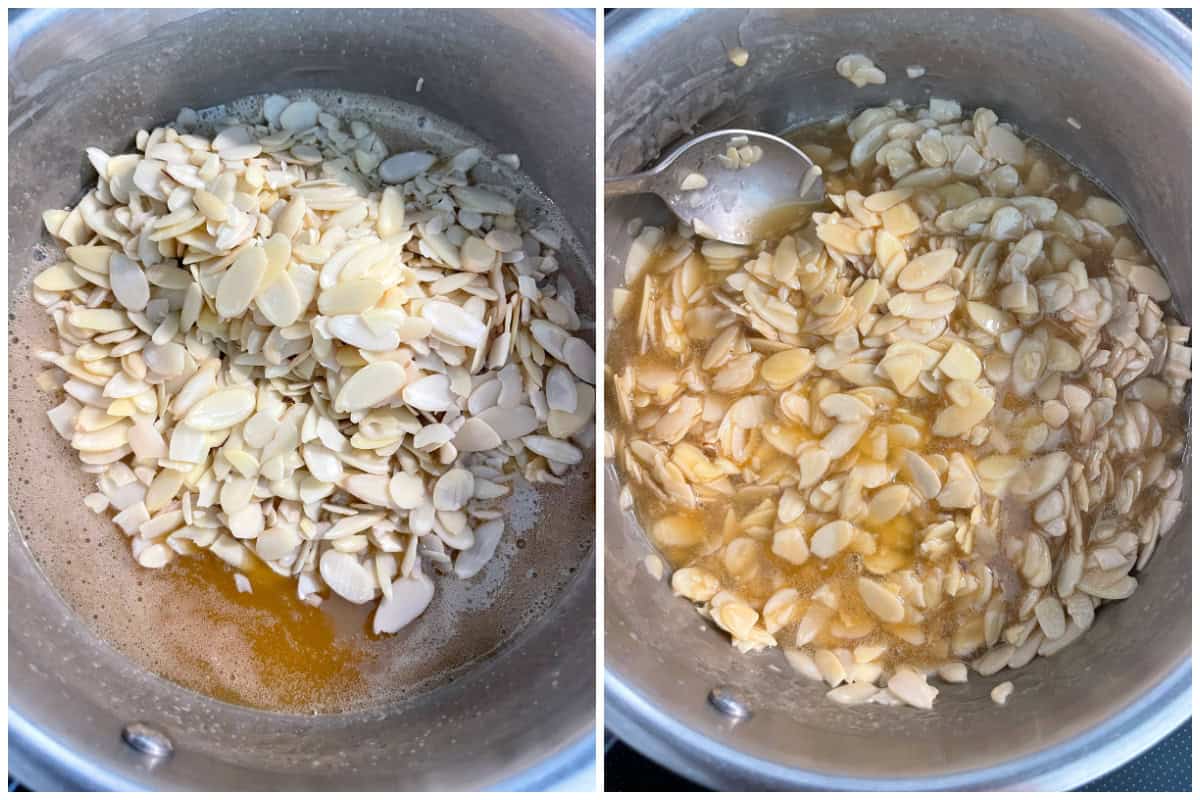
Turn off the heat and stir in the almonds. Stir them to evenly coat them.
Let the mixture cool for about 5 minutes (you don’t want it to be so hot that it kills the yeast when you place it on the dough).
Spoon all of the almond mixture and sauce on top of the dough in the springform.
Spread the mixture out evenly over the entire surface of the dough, just to edges, doing your best to avoid letting it drip down the sides.
Let the dough sit for 15 minutes.
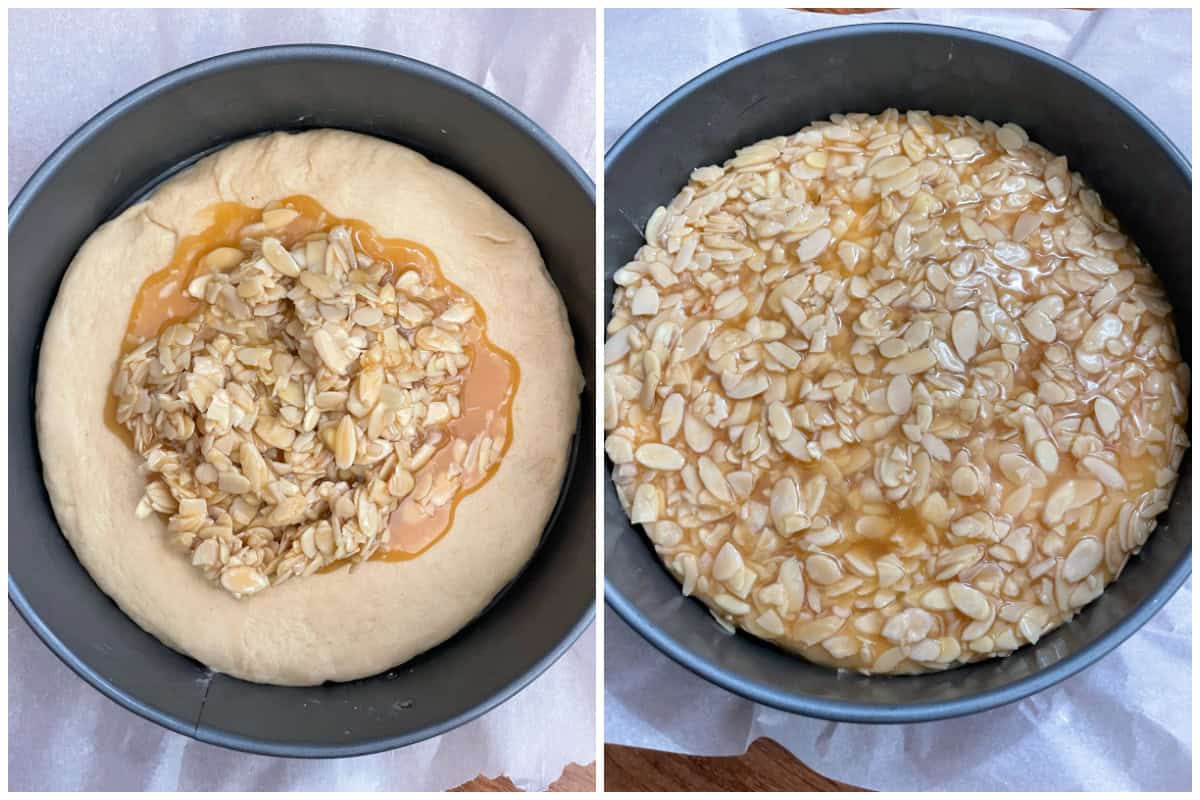
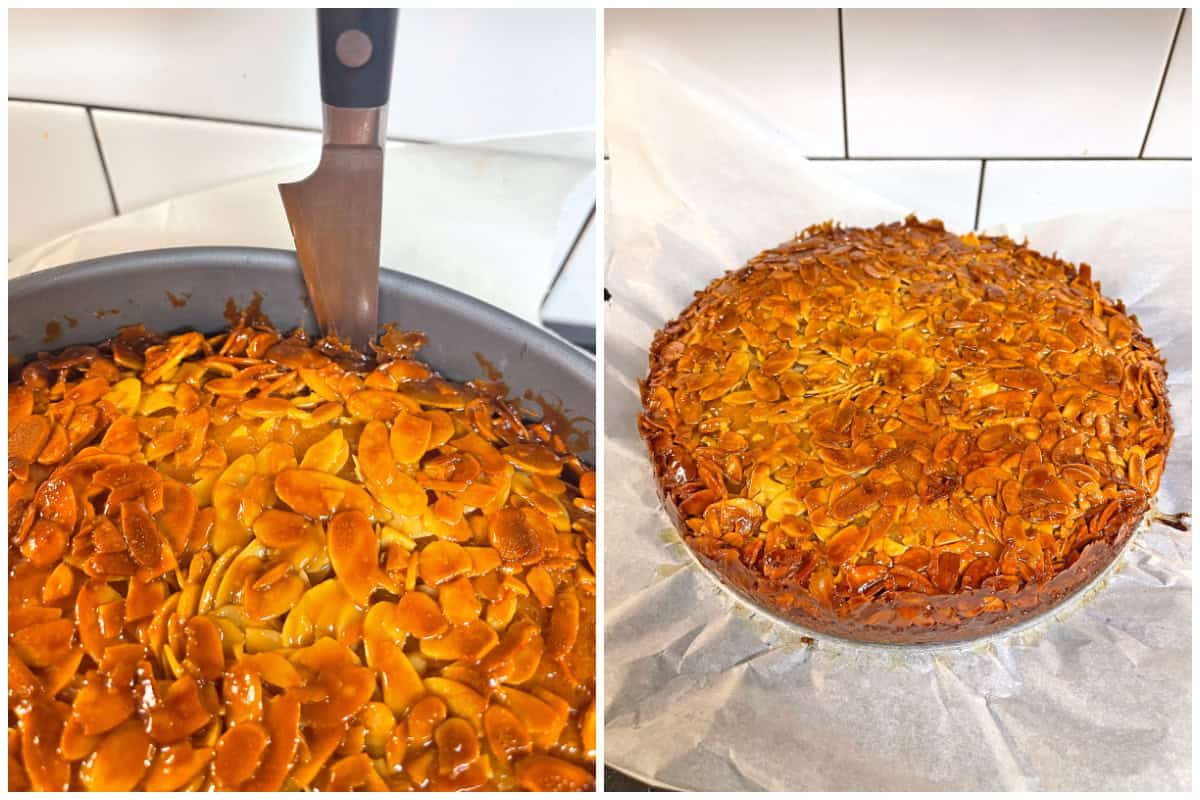
Bake the bee sting cake on the middle rack for 30 minutes or until it is a rich golden brown. Be careful not to over-bake it or the dough will be very dry.
Allow the cake to cool in the pan for 5-10 minutes and then use a sharp knife to loosen the caramelized edges from the sides of pan. Remove the side of the springform pan and let the cake cool completely.
Once the cake has completely cooled, use a large, sharp serrated knife to carefully cut through the middle of the cake, to create two layers.
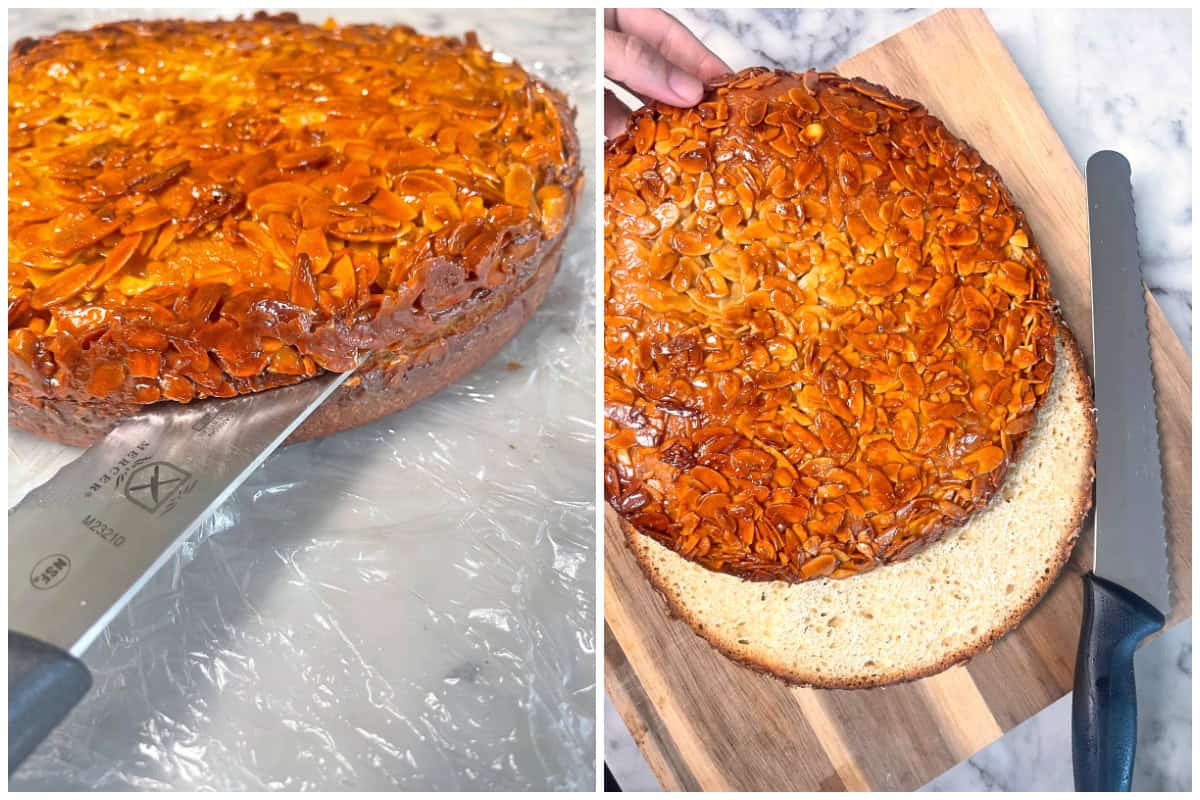
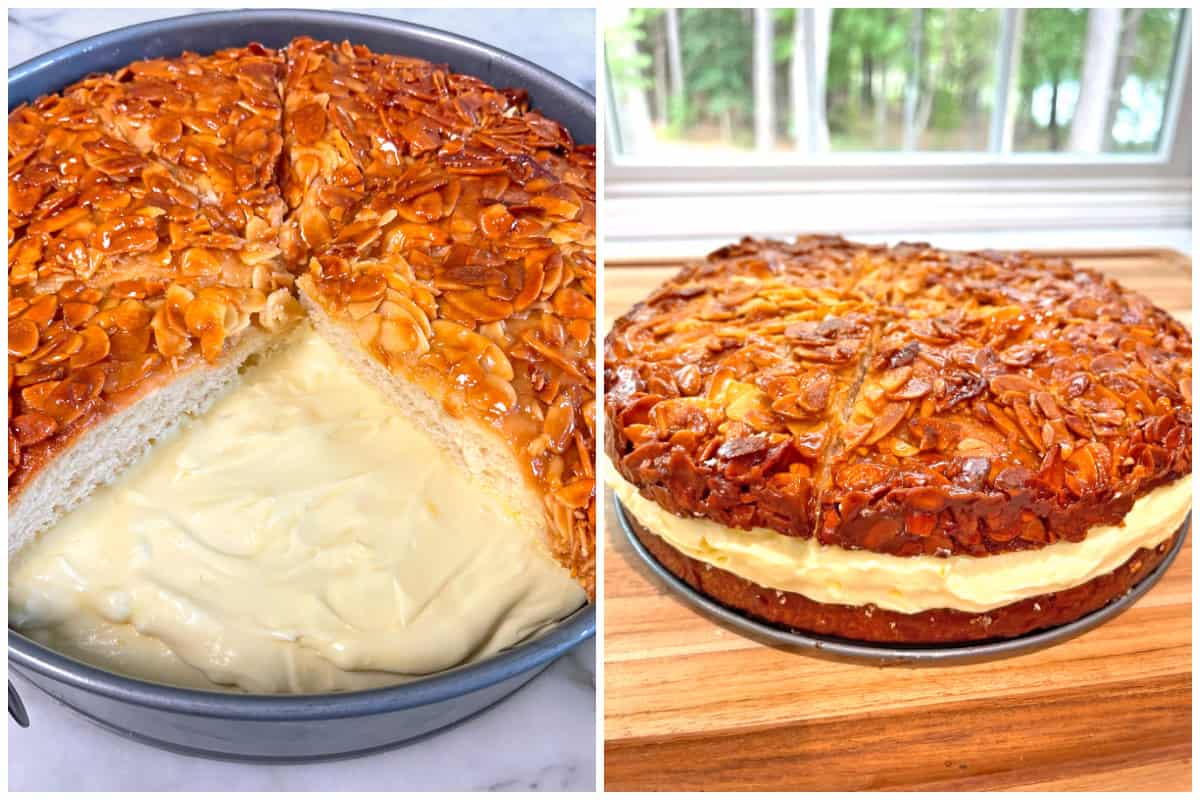
Place the bottom layer back in the springform pan.
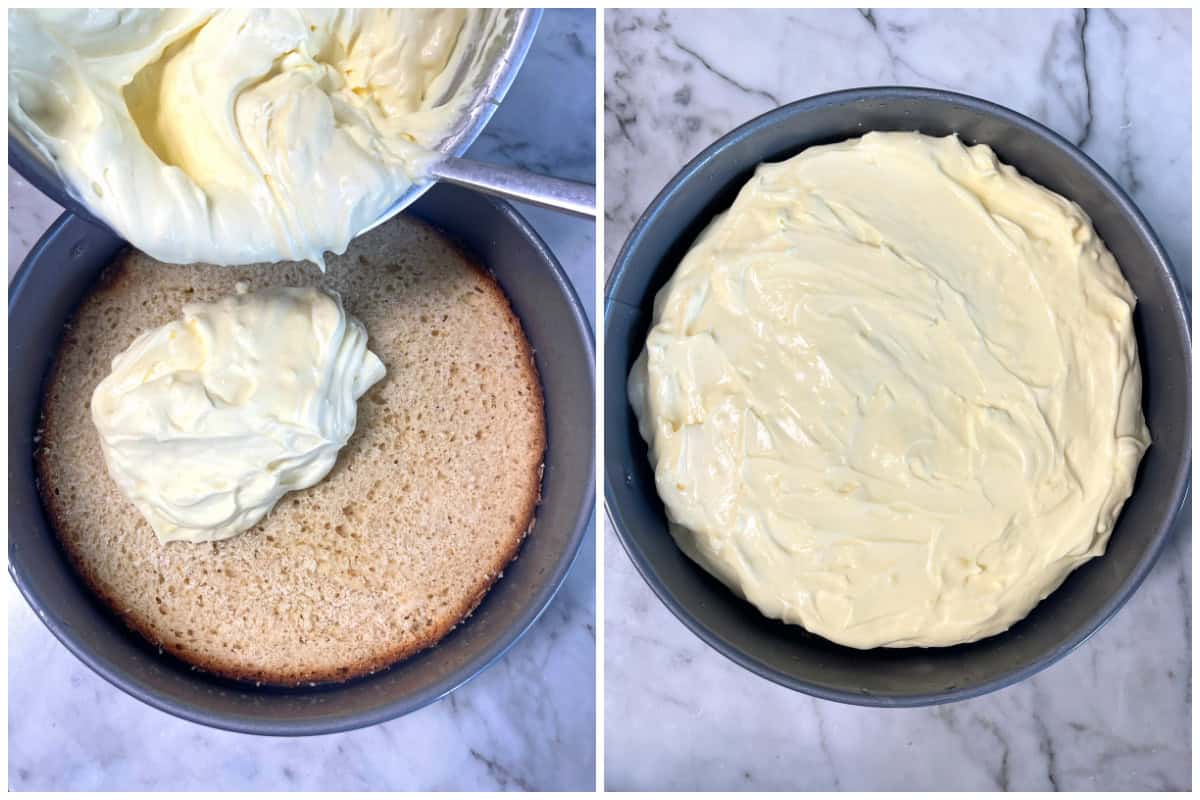
Now it’s time to add the filling. Scoop all of it onto the bottom layer of the cake in the springform pan and smooth it out across the whole surface of the layer.
Next is a critical step: You must pre-slice the top layer of the cake. If you skip that step and then try slicing a piece of the cake, the pressure from pushing down on the top will cause the center filling to squish out.
Place the top layer on a cutting board and cut it evenly into 8 equal triangular wedges.
Next lay the pieces on top of the filling in the same order.
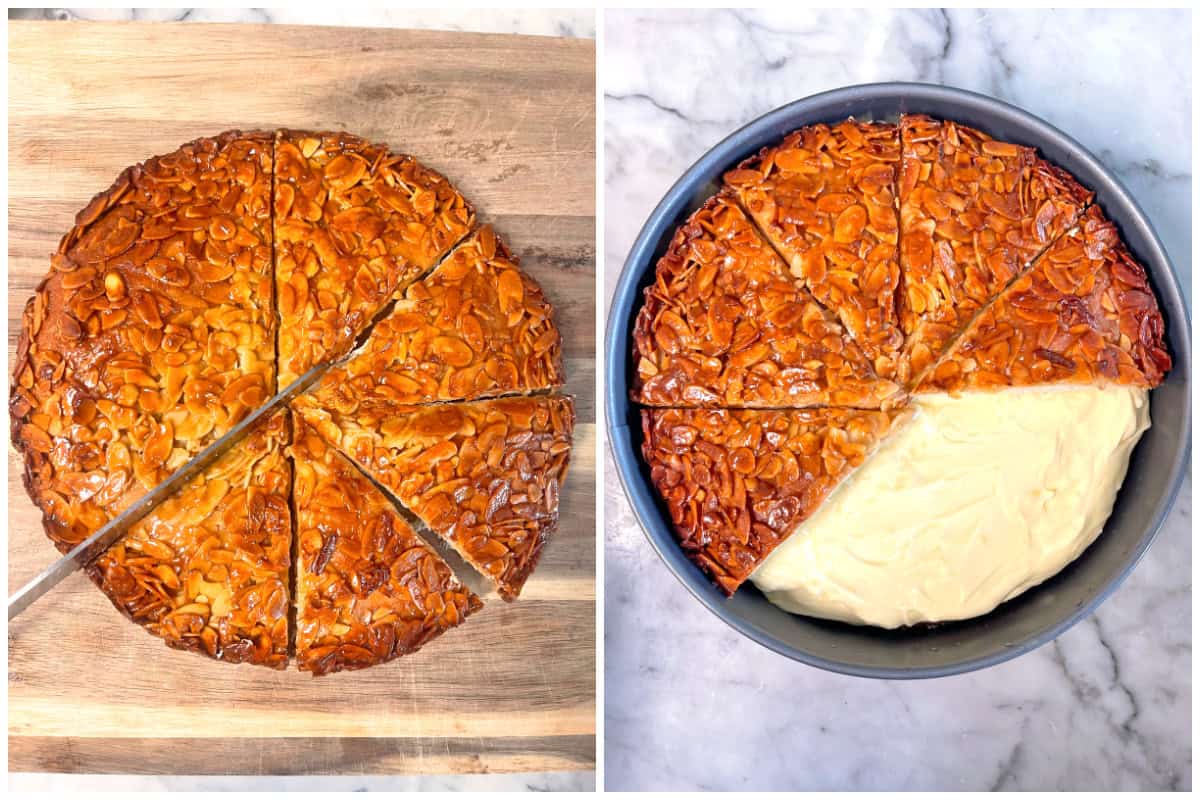
Once you’ve placed the pieces of the top layer on the cake, cover it well with plastic wrap (lightly spray with oil to prevent it from sticking) or place it in an airtight cake saver, and refrigerate for at least one hour to give the filling time to set.
Some people (though I’ve never seen a fellow German do it) give the cake a dusting of powdered sugar, but there’s no good reason to do that – you want to see the beautiful glossy, caramelized honey topping that is the hallmark of Bienenstich!
Remove the cake from the fridge, remove it from the springform, and transfer it to a serving plate or platter. Let the cake sit for about 30 minutes at room temperature before serving.
How to Serve Bee Sting Cake
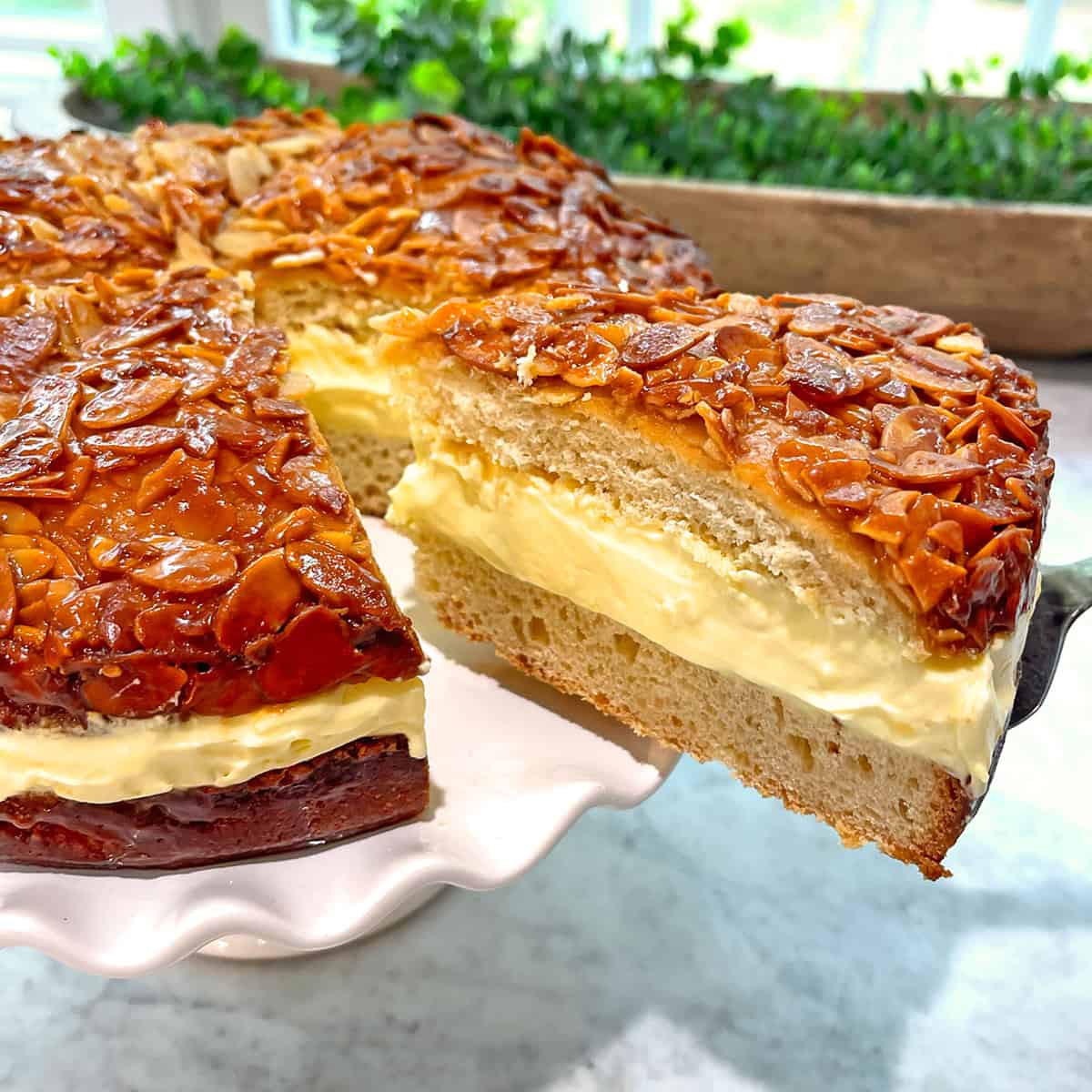
Even with the copious amount of vanilla custard as the filling, as a yeasted cake, Bienenstich is a dry cake and as such is traditionally served with a cup of coffee or tea. Hot chocolate certainly works too. So grab a cup of your favorite hot beverage and sit down to a slice of this heavenly bee sting cake! (For more tea cakes see my Marmorkuchen, Gugelhupf, Seed Cake, Hazelnut Cake, Victorian Sponge Cake, Pineapple Cake, Lemon Drizzle Cake, Limoncello Cake).
How to Store Bee Sting Cake & Advance Preparation
Once assembled, Bienenstich is best enjoyed the same day. The filling requires refrigeration, and even if the cake is stored in a sealed container, yeast dough dries out in the fridge. If you don’t have time to make and eat the cake the same day, make the cake, let it cool and wrap it well (lightly spray the plastic wrap with oil so it doesn’t stick), store it at room temperature, and then cut and assemble it the next day to serve. The filling can likewise be made a day ahead and stored in the fridge (press plastic wrap down on its surface to prevent a skin from forming).
After storing any leftover assembled Bienenstich in the fridge, remove it from the fridge and let it sit at room temperature for about 30 minutes before serving.
Bee sting cake does not freeze well because the whipped cream and custard will separate when thawed. The cake would have to be frozen without the filling and have the filling added once thawed.
Enjoy!
For more authentic German desserts try my:
- German Apple Cake
- German Plum Cake
- German Cheesecake
- Marmorkuchen
- Apple Strudel
- Pineapple Cake
- Cherry Marzipan Streusel Cake
- Berliner
- Dampfnudeln
- Germknödel
- Gugelhupf
- Stollen
- Rhubarb Streusel Cake
- Pfeffernüsse
- Lebkuchen
- Zimtsterne
- Vanillekipferl
- Springerle
Save This Recipe
Authentic Bienenstich (German Bee Sting Cake)
Equipment
- 10 inch springform pan (no smaller than this or the layers will be too thick)
- OR an 11 inch springform pan (thinner layers)
Ingredients
- For the Filling:
- 2 packets Dr. Oetker's vanilla pudding mix (**add 1/3 cup sugar when cooking the pudding, it's not pre-sweetened)
- OR 4.6 ounce box Jell-O Cook and Serve vanilla pudding mix (NOT instant, it won't work!) PLUS 2 teaspoons cornstarch when cooking the pudding
- 2 cups whole milk
- 1 cup heavy cream
- 2 tablespoons powdered sugar
- **OR homemade Bavarian Cream (click link for recipe; you'll use one batch for the cake)
- For the Cake:
- 1/2 cup plus 1 tablespoon whole milk
- 5 tablespoons butter , at room temperature
- 2 3/4 cups all-purpose flour
- 1/3 cup granulated sugar
- 2 1/4 teaspoons instant yeast
- 1/4 teaspoon salt
- 1 large egg , at room temperature
- 1 teaspoon pure vanilla extract
- zest of one lemon
- For the Honey Almond Topping:
- 1/2 cup heavy cream
- 5 tablespoons butter
- 1/4 cup granulated sugar
- 1 1/2 tablespoons honey
- 1 cup blanched sliced almonds
Instructions
- Make the filling in advance because it will need to chill to set. This can be done a day in advance. If you're making your own filling from scratch, see my recipe for Bavarian Cream.If you're using a vanilla pudding mix you can either use 2 packets of Dr. Oetker's vanilla pudding mix or one family-size 4.6 ounce box of Cook and Serve Jell-O vanilla pudding (NOT instant, it will not work!). If using the Jell-O brand, add 2 teaspoons cornstarch to the powder mix. If using the Dr. Oetker brand do not add cornstarch but add 1/3 cup sugar (the mix isn't pre-sweetened). Cook the pudding according to the package's method, but use only 2 cups of milk total for either brand you choose. Let it cool and then chill for at least an hour, pressing plastic wrap on the surface of the pudding to prevent a skin from forming.After the pudding has chilled, add the cold heavy cream and powdered sugar to a large mixing bowl and beat until stiff peaks form (be careful not to over-beat). The chilled pudding will be very thick; use the electric beater to loosen it up. Fold the whipped cream into the pudding. Cover and chill for at least 2 hours or overnight.
- To make the cake: Scald the milk. This step is optional, but it's a technique used with yeast doughs to produce a softer crumb. Pour the milk into a small saucepan and heat it over medium heat, stirring frequently. Heat the milk until tiny bubbles appear around the outer rim of the saucepan. Do not let it boil. The milk is scalded when it reaches a temperature of 180-185 F. I recommend using an instant read thermometer. Add the butter to milk to melt it and let the mixture cool to room temperature.In the bowl of a stand mixer, add the flour, sugar, yeast, salt, and lemon zest. Add the milk mixture, egg, and vanilla extract.Use the dough hook attachment and knead the dough on "2" (medium speed) until the mixture comes together. Once a dough has formed, continue to knead for a full 10 minutes. The dough should be smooth and soft and slightly tacky.Lightly spray a medium sized bowl with oil, form the dough into a ball, and place it in the bowl.Cover with plastic wrap and let it rise in a warm place until nearly doubled in size. How long this takes will vary according to your room temperature. But since this is an enriched dough, plan on minimum 90 minutes and as long as 2 1/2 hours. Don't go by the length of time, go by the size of the dough.
- Place the risen dough on a clean work surface and roll it into a circle the same diameter as your springform pan. In this case, a 10 inch circle. See Note below about springform sizes.I like to place a large piece of parchment paper on the bottom of my springform pan and then snap the rim in place, so that the parchment paper is sticking out around the pan and forms a barrier to catch any of the caramelized liquids. Grease the parchment paper and the springform pan. Place the round circle of dough into the springform pan.Cover the pan with plastic wrap and let the dough rise again in a warm place for 30 minutes. It's not going to rise very noticeably but will become a little puffier.
- While the dough is rising a second time, preheat the oven to 350 F/180 C and prepare the honey almond topping.Melt the butter, cream, sugar and honey in a small saucepan over medium high heat, stirring constantly until the sugar is dissolved. Bring it to a simmer and let it simmer for 2 minutes, stirring occasionally to prevent from burning.Turn off the heat and stir in the almonds. Stir to evenly coat them.Let the mixture cool for about 5 minutes (you don't want it to be so hot that it kills the yeast when you place it on the dough).Spoon all of the almond mixture and sauce on top of the dough in the springform.Spread the mixture out evenly over the entire surface of the dough, just to edges, doing your best to avoid letting it drip down the sides.Let the dough with the almond topping sit for 15 minutes.
- Bake the Bienenstich on the middle rack for 30 minutes or until it is a rich golden brown. Be careful not to over-bake it or the dough will be very dry.Allow the cake to cool in the pan for 5-10 minutes and then use a sharp knife to loosen the caramelized edges from the sides of pan. Remove the side of the springform pan and let the cake cool completely.Once the cake has completely cooled, use a large, sharp serrated knife to carefully cut through the middle of the cake, to create two layers.
- Place the bottom layer back in the springform pan.Add the filling: Scoop all of the vanilla pudding cream filling onto the bottom layer of the cake in the springform pan and smooth it out across the whole surface of the layer.The next step is critical: You must pre-slice the top layer of the cake. If you skip that step and then try slicing a piece of the cake, the pressure from pushing down on the top will cause the center filling to squish out.Place the top layer on a cutting board and cut it evenly into 8 equal triangular wedges. Next lay the pieces on top of the filling in the same order.Once you've placed the pieces of the top layer on the cake, cover it well with plastic wrap (lightly spray with oil to prevent it from sticking) or place it in an airtight cake saver, and refrigerate for at least one hour to give the filling time to set.Some people (though I've never seen a fellow German do it) give the cake a dusting of powdered sugar, but there's no good reason to do that – you want to see the beautiful glossy, caramelized honey topping that is the hallmark of Bienenstich!Remove the cake from the fridge, remove it from the springform, and transfer it to a serving plate or platter. Let the cake sit for about 30 minutes at room temperature before serving.
- Once assembled, Bienenstich is best enjoyed the same day. The filling requires refrigeration, and even if the cake is stored in a sealed container, yeast dough dries out in the fridge. If you don't have time to make and eat the cake the same day, make the cake, let it cool and wrap it well (lightly spray the plastic wrap with oil so it doesn't stick), store it at room temperature, and then cut and assemble it the next day to serve. The filling can likewise be made a day ahead and stored in the fridge (press plastic wrap down on its surface to prevent a skin from forming).
Notes
Nutrition

Hi, I’m Kimberly Killebrew and welcome to Daring Gourmet where you'll find delicious originals, revitalized classics, and simply downright good eats from around the world! Originally from Germany, later raised in England, world-traveled, and now living in the U.S., from my globally-influenced kitchen I invite you to tour the world through your taste buds!