
Rotkohl (German Red Cabbage)

This post may contain affiliate links. See my disclosure policy.
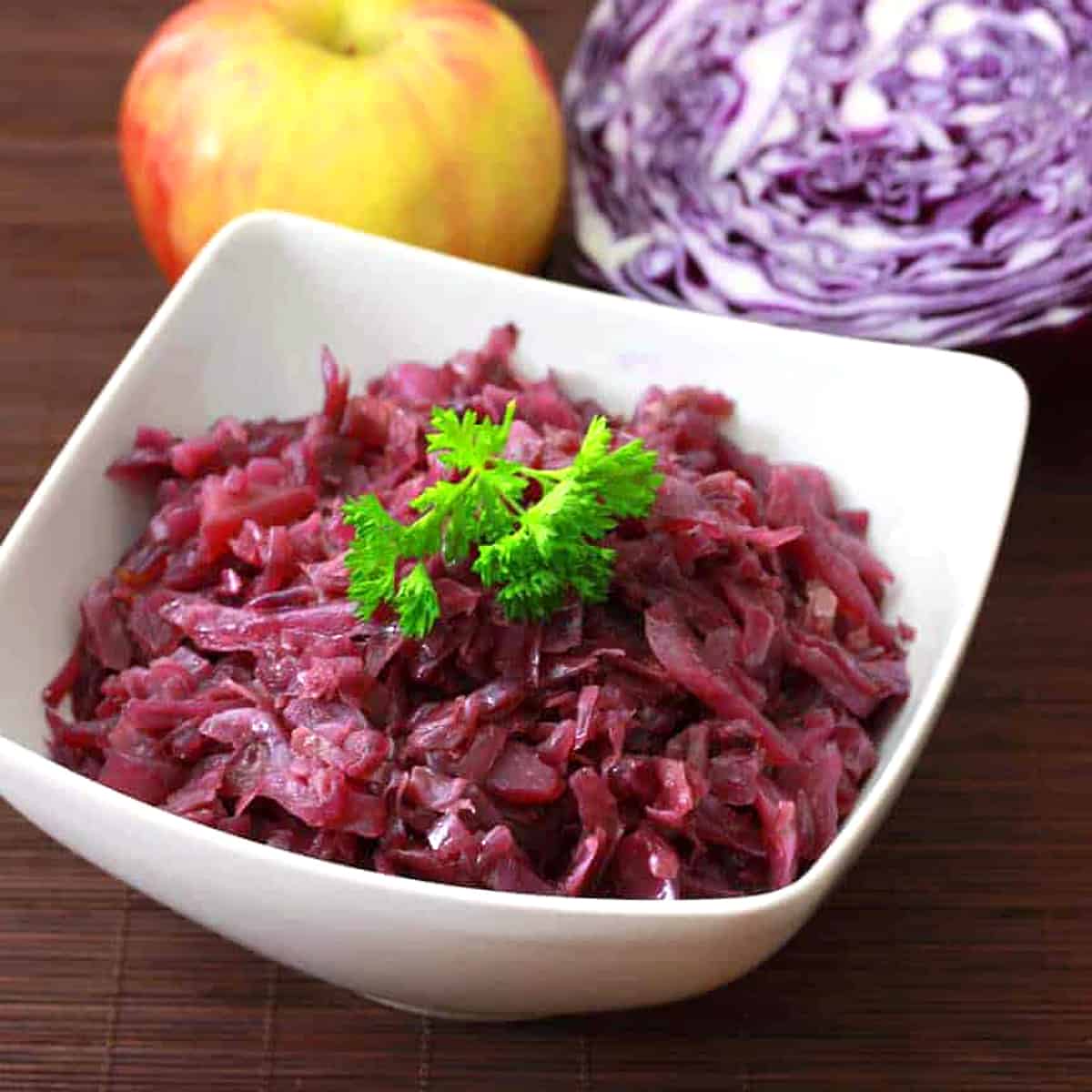
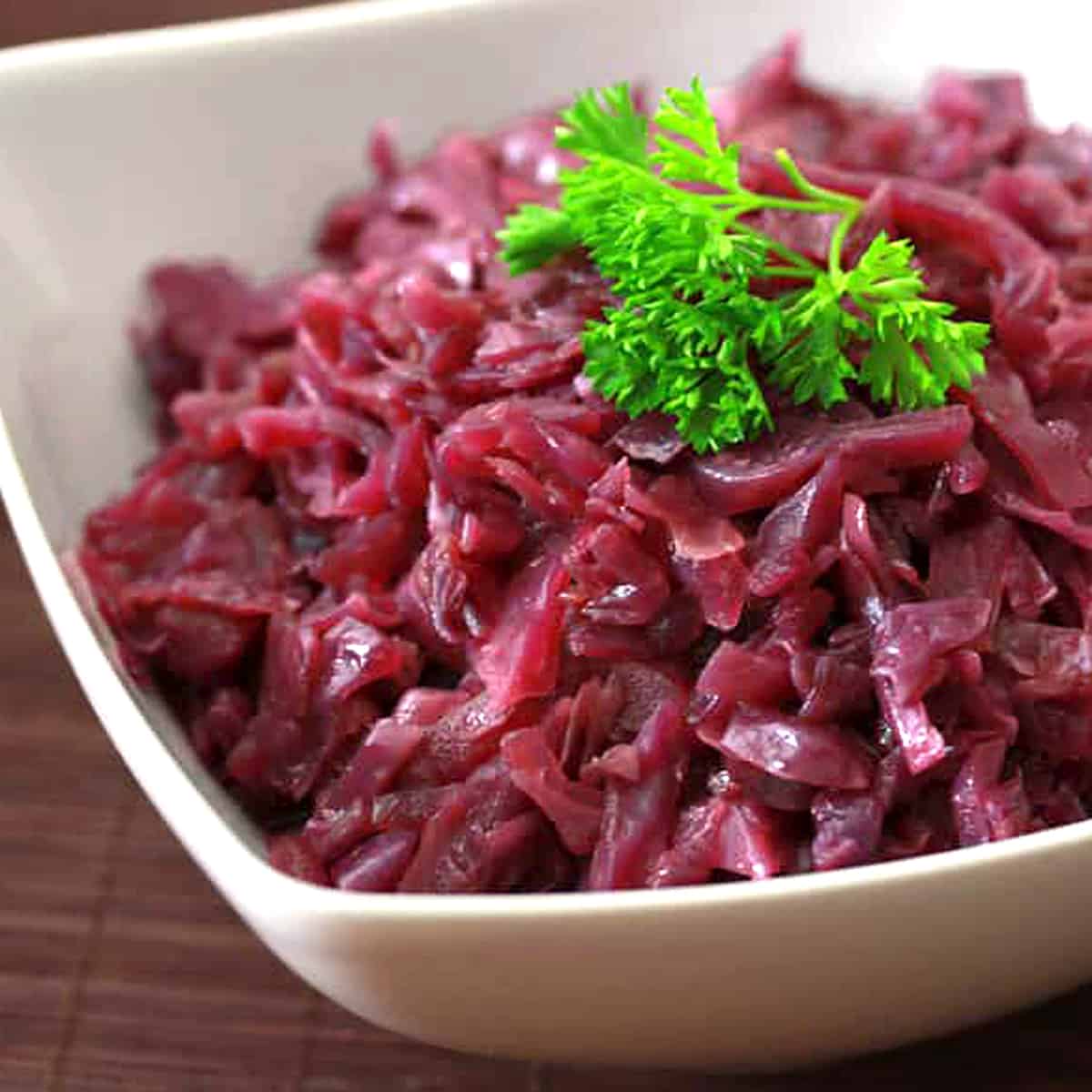
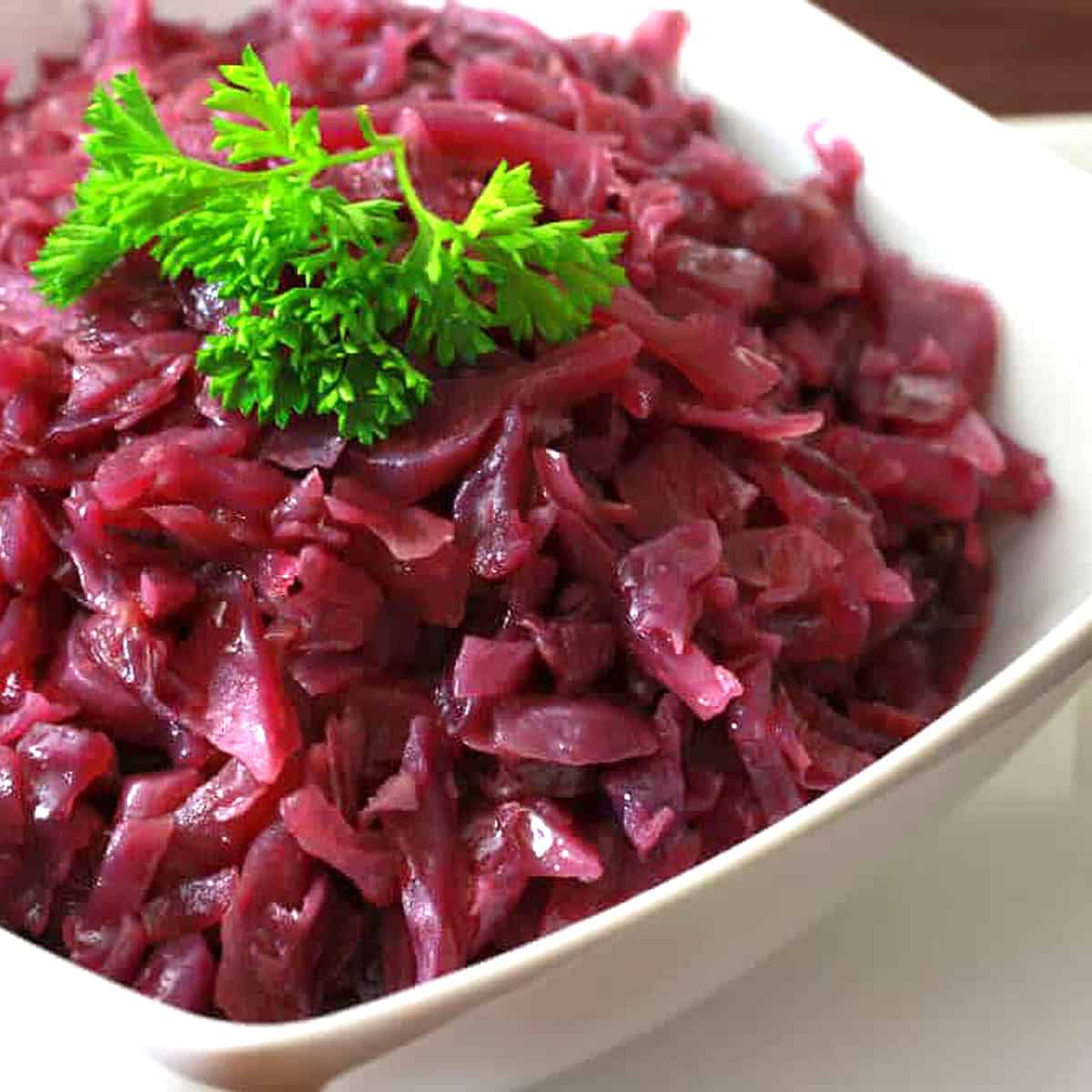
A quintessential and popular German side dish, Rotkohl (braised German red cabbage) is the perfect accompaniment to your Sunday roast, beef rouladen, brats and more! This traditional Rotkohl recipe is the way my Mutti and Oma made it and is easy to prepare, can be made in advance, and can even be frozen!
What is Rotkohl?
Known as Rotkohl, Blaukohl or Blaukraut in Germany, depending on the region, this braised red cabbage is a staple side dish that is served throughout Germany. It has a distinct sweet and sour flavor profile achieved by braising the red cabbage with apples, vinegar, and spices. A traditional accompaniment for beef dishes in particular, I grew up in Germany enjoying Rotkohl on a regular basis served with our Sunday roasts, Sauerbraten, and Rouladen.
This sweet and sour red cabbage has been around for, well, seemingly forever. And that’s how it usually works, doesn’t it? Great dishes stand the test of time. And Rotkohl takes the humble red cabbage and transforms it into something wonderful. If you’ve traveled to Germany or have sampled traditional German food, you’re likely familiar with Rotkohl. And this authentic German red cabbage recipe will transport you back to your favorite German dinner tables with memories of your favorite German meals.
Rotkohl Ingredients
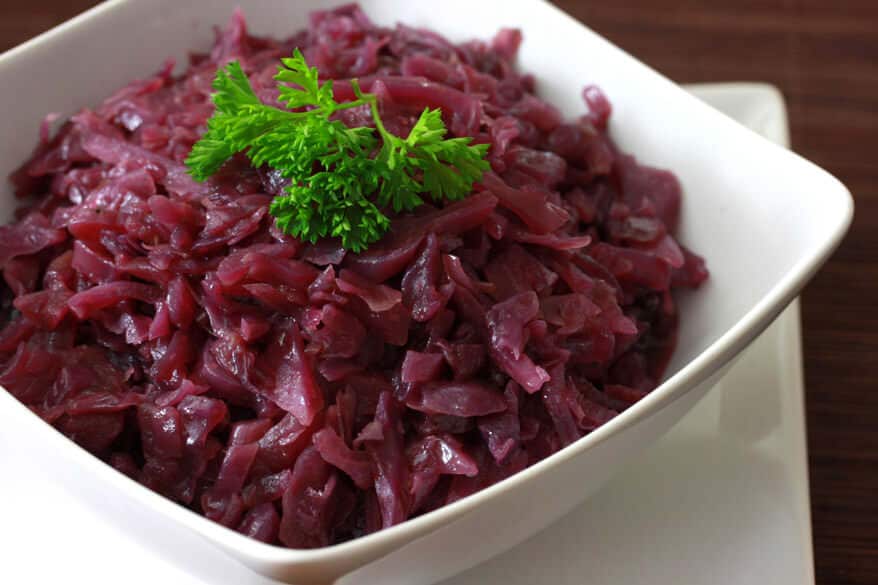
Butter, apples, vinegar, red currant jam, bay leaves, cloves and juniper berries are some of the ingredients that mingle together to create this delicious braised sweet and sour red cabbage. Just be sure to make time for the slow cooking process. It’s that long simmering process that’s key to the final outcome. The other key is to be sure to include all of the ingredients called for, including the spices, in order to achieve that authentic German Rotkohl flavor.
This traditional Rotkohl recipe is simple to prepare and can slowly cook with minimal attention while you’re preparing the other dishes or going about your daily business. It’s a great make-ahead dish because the flavor is even better the next day. Feel free to double or triple the batch because this sweet and sour cabbage also freezes well. Simply let it thaw and gently reheat it on the stovetop or in the microwave.
Rotkohl Recipe
Let’s get started!
Finely chop the red cabbage. Achieving exact uniformity isn’t necessary so you can do this either by hand or with a mandolin or food processor.
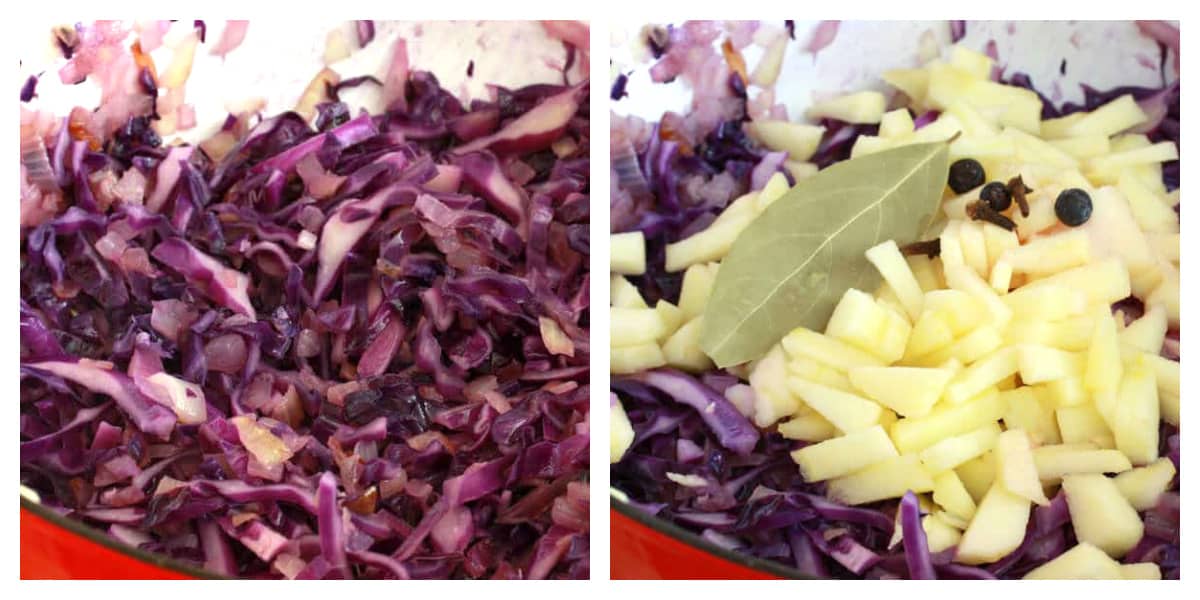
In a Dutch oven over medium-high heat, melt the butter and cook the onions until lightly caramelized, 7-10 minutes.
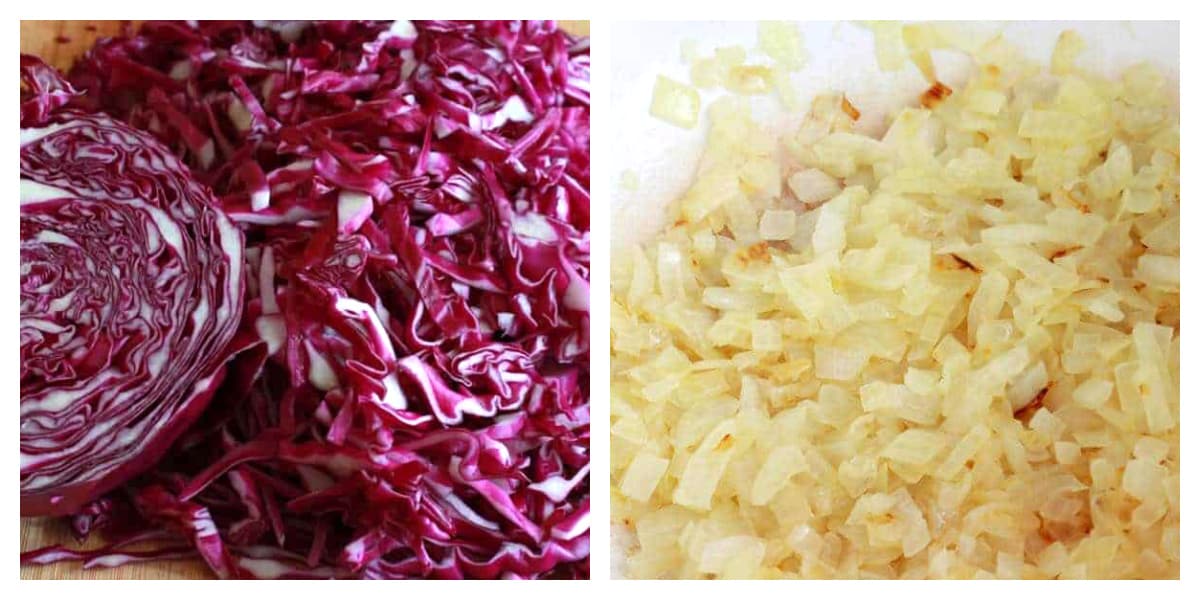
Add the red cabbage and cook for 5 minutes.
Add the diced apple along with the broth, bay leaf, whole cloves, juniper berries, red wine vinegar, sugar and salt. Bring to a boil, reduce the heat to low, cover and simmer for 2 hours, stirring occasionally. Add more broth if needed. Mix a tablespoon of flour with 2 tablespoons of water until dissolved and stir it into the cabbage. Add salt, sugar and vinegar to taste.
Enjoy!
Serving Suggestions
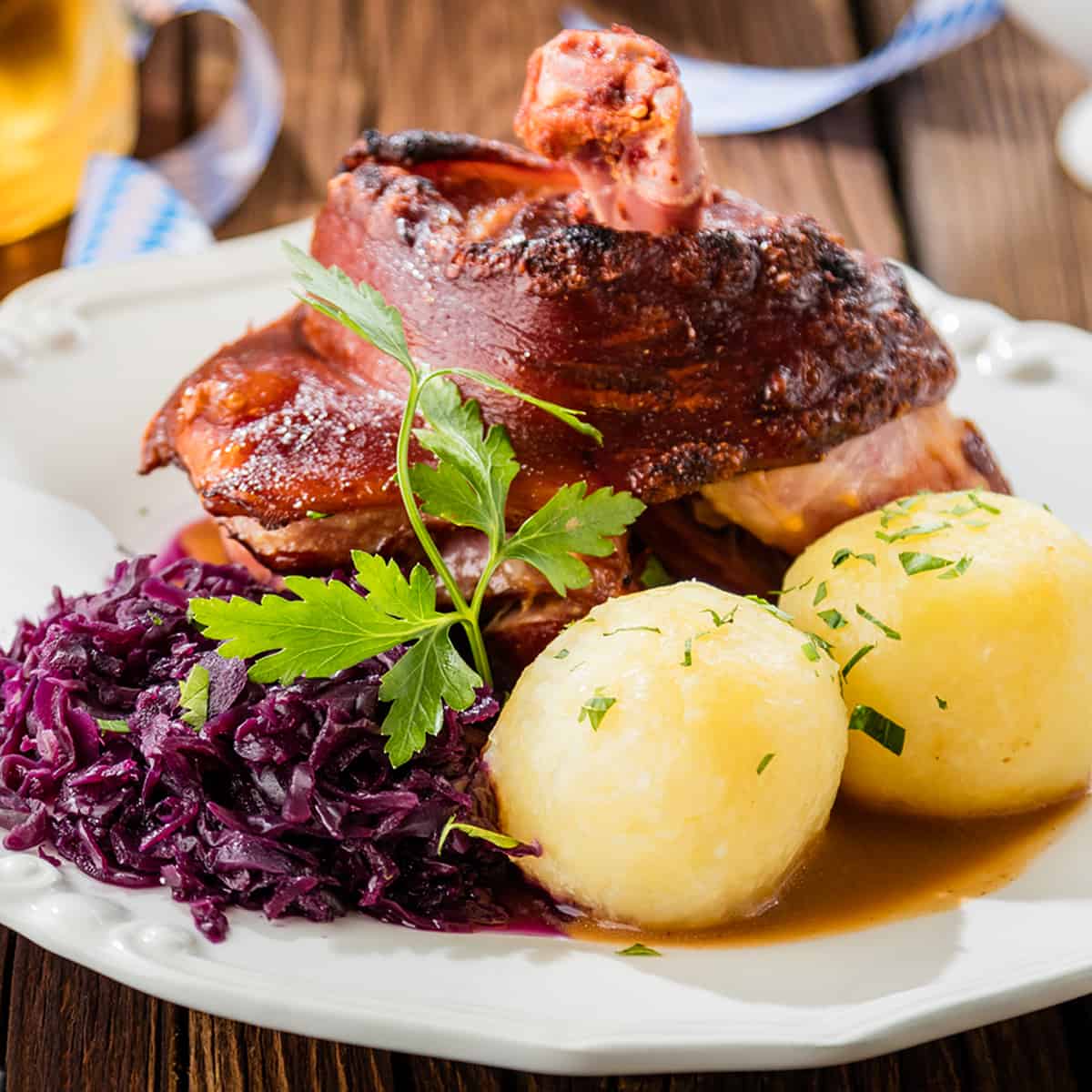
In Germany, Rotkohl is the quintessential side to serve with roasts and a variety of meat dishes along with a carb of choice. Here are few dishes you’ll commonly see served with Rotkohl in Germany:
- Sauerbraten
- Rouladen
- German Goulash
- Schweinshaxe
- Spätzle
- Bread Dumplings (Semmelknödel)
- German Potato Dumplings (Kartoffelklöße)
For more traditional German dishes be sure to try my:
- Spätzle
- Käsespätzle
- Rouladen
- Sauerbraten
- German Goulash
- Schweinshaxe
- Maultaschen
- Schnitzel
- Königsberger Klopse
- German Potato Dumplings (Kartoffelklöße)
- Bread Dumplings (Semmelknödel)
- Zwiebelkuchen
- German Bread (Vollkornbrot)
- Bratwurst
- Currywurst
- Swabian Potato Salad
Save This Recipe
Rotkohl (German Red Cabbage)
Ingredients
- 1 1/2 pounds red cabbage , very thinly sliced
- 1 large yellow onion , finely diced
- 1 large Granny Smith or other semi-tart apple , peeled, cored and diced
- 1/4 cup butter (vegan: substitute oil)
- 2 tablespoons red currant jam or jelly , this is traditional but can substitute cherry jam
- 2-3 tablespoons red wine vinegar
- 1/2 cup vegetable broth
- 1 bay leaf
- 3 whole cloves
- 3 juniper berries
- 1 teaspoon sugar
- 1 teaspoon salt
- 1 tablespoons all-purpose flour (gluten free: omit)
- 2 tablespoons water
Instructions
- Melt the butter in a Dutch oven over medium-high heat and cook the onions until just beginning to brown, 7-10 minutes. Add the cabbage and cook for 5 minutes. Add the apple, broth, bay leaf, cloves, juniper berries, red currant jam, red wine vinegar, sugar and salt. Bring to a boil, reduce the heat to low, cover and simmer for 2 hours, stirring occasionally. Add more broth if needed. Combine the flour and water until dissolved and stir into the Rotkohl. Simmer for another minute. Add more salt, sugar and vinegar to taste. Discard the juniper berries, cloves and bay leaf (this is easier to do if they are placed in a sachet or some cheesecloth before they're added).
- Traditionally served with roasts, Rouladen, and Sauerbraten along with potatoes, Spaetzle, German Potato Dumplings, or German Bread Dumplings.
Nutrition
Originally published on The Daring Gourmet July 23, 2014

Hi, I’m Kimberly Killebrew and welcome to Daring Gourmet where you'll find delicious originals, revitalized classics, and simply downright good eats from around the world! Originally from Germany, later raised in England, world-traveled, and now living in the U.S., from my globally-influenced kitchen I invite you to tour the world through your taste buds!

















Hey Kim,
Jim, from Minnesota here. (I asked you about the last name / Twins thing a few years back. . .) Anywho, just wanted to say that I make this a lot, and my German friend said it reminds her of home! I have a double batch going right now. I have frozen it a few times. No troubles with that. We were eating at the Bavaria Haus in New Westminster, B.C. and I said to myself, what is that awesome purple stuff and how do they make it? That’s how I ended up on your site. Thanks again. Still yummy
That’s wonderful, Jim, thanks so much for checking in with that feedback, I appreciate it!
Hello to a fellow Canadian! I’m in Alberta but always interested in hearing about German restaurants elsewhere!
Any tips on making this in a slow cooker?
Can I use caraway seeds instead of juniper berries? Also could I use blackberry jam instead of red currant jam?
Hi Melissa, caraway and juniper isn’t really interchangeable as they have starkly different flavors. Caraway is commonly used in sauerkraut but I would not use it in Rotkohl. I’d simply omit the juniper berries if you don’t have them. Blackberry jam is fine. Happy cooking!
Hmmm. My German mom and Oma always used caraway in Rotkohl, and it’s in all the other recipes I’ve ever seen in German cookbooks. Always considered it a key ingredient.
It may be a regional thing or just a personal variation. I’m from Swabia, my mother is from Bavaria, and having grown up there I have not encountered it in either region. Google “Rotkohl Rezept” and look at the recipes on actual German websites – virtually none call for it (“Kümmel” in German). That’s not to say that nobody uses it, it’s just not common. And it may be that some regions use it more than others.
You use whole juniper berry and whole cloves along with bay leaves, but no mention of bothering to remove any of them. No need to crush before hand? Or need bother plucking out the bay leaves?
Hi Roy, yes this calls for whole spices and bay leaf. You can leave them in if you wish but it’s not a pleasant experience to bite into them ;)
I see some in jars in shops . Can this recipe be bottled to use later. Would only use small quantities.
Hi Mearal, it would have to be pressure canned but I don’t know what the specific parameters would be.
Can Rotkohl be kept in a fridge after making & if so, How long would you suggest be a maximum please?
Hi Geoff, absolutely. It will keep for 3-5 days in the fridge.
Hi Kimberly,
A couple of questions:
1 – can Raspberry jam be substituted? I haven’t been able to find Red Current or Cherry
2 – can leftovers be frozen?
3 – I’ve seen in the comments that this can be made a day or so in advance, what is your recommendation on reheating?
I’m looking forward to pairing this with Sauerbrauten!!
Hi Jeff, yes you can use raspberry jam. I haven’t personally tried freezing this but a few readers said they’ve done so successfully. Yes, this can be made ahead and either reheated on the stovetop or in the microwave. Happy cooking! :)
Can this be frozen?