
German Plum Cake (Zwetschgenkuchen)

This post may contain affiliate links. See my disclosure policy.
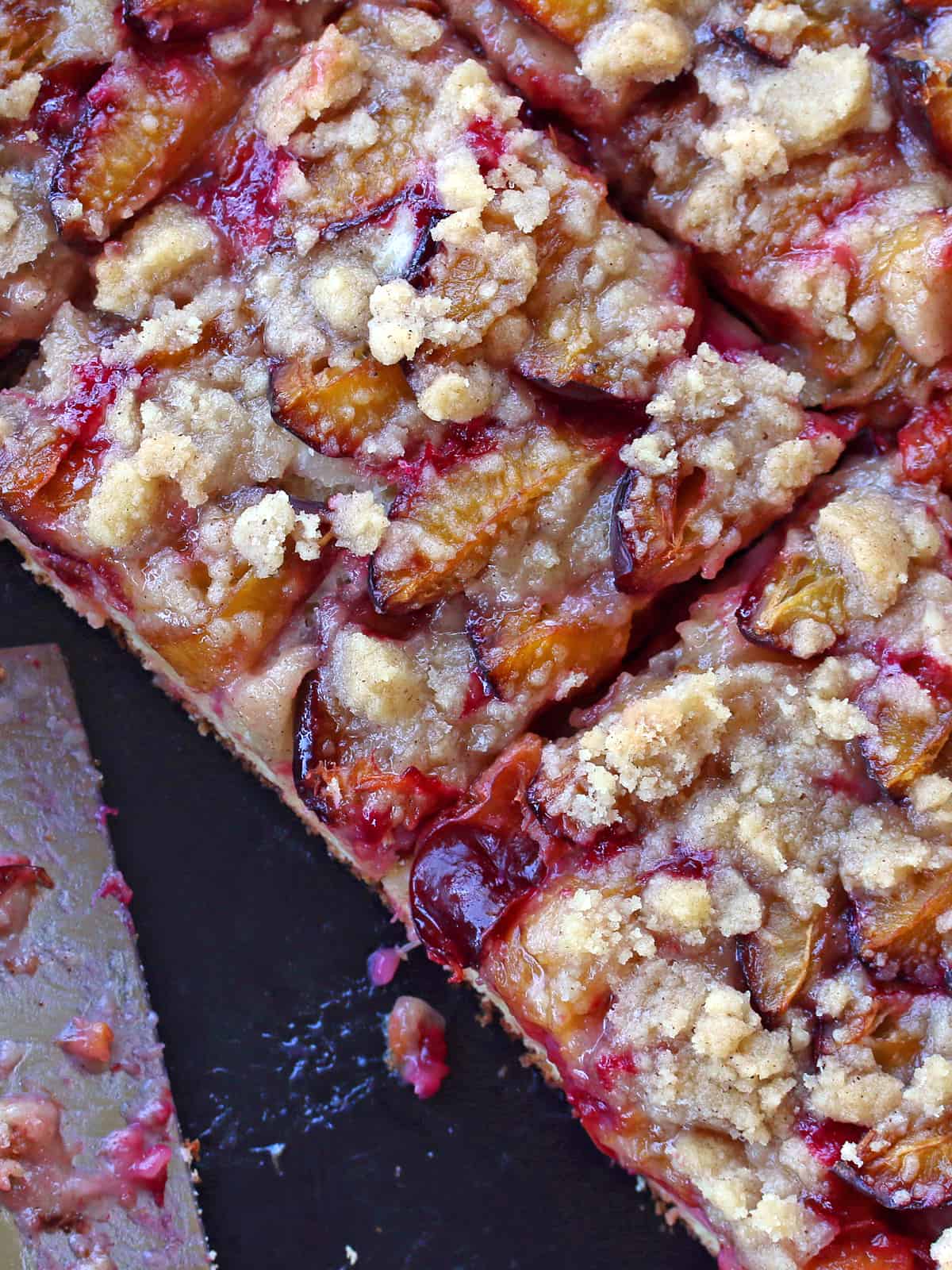
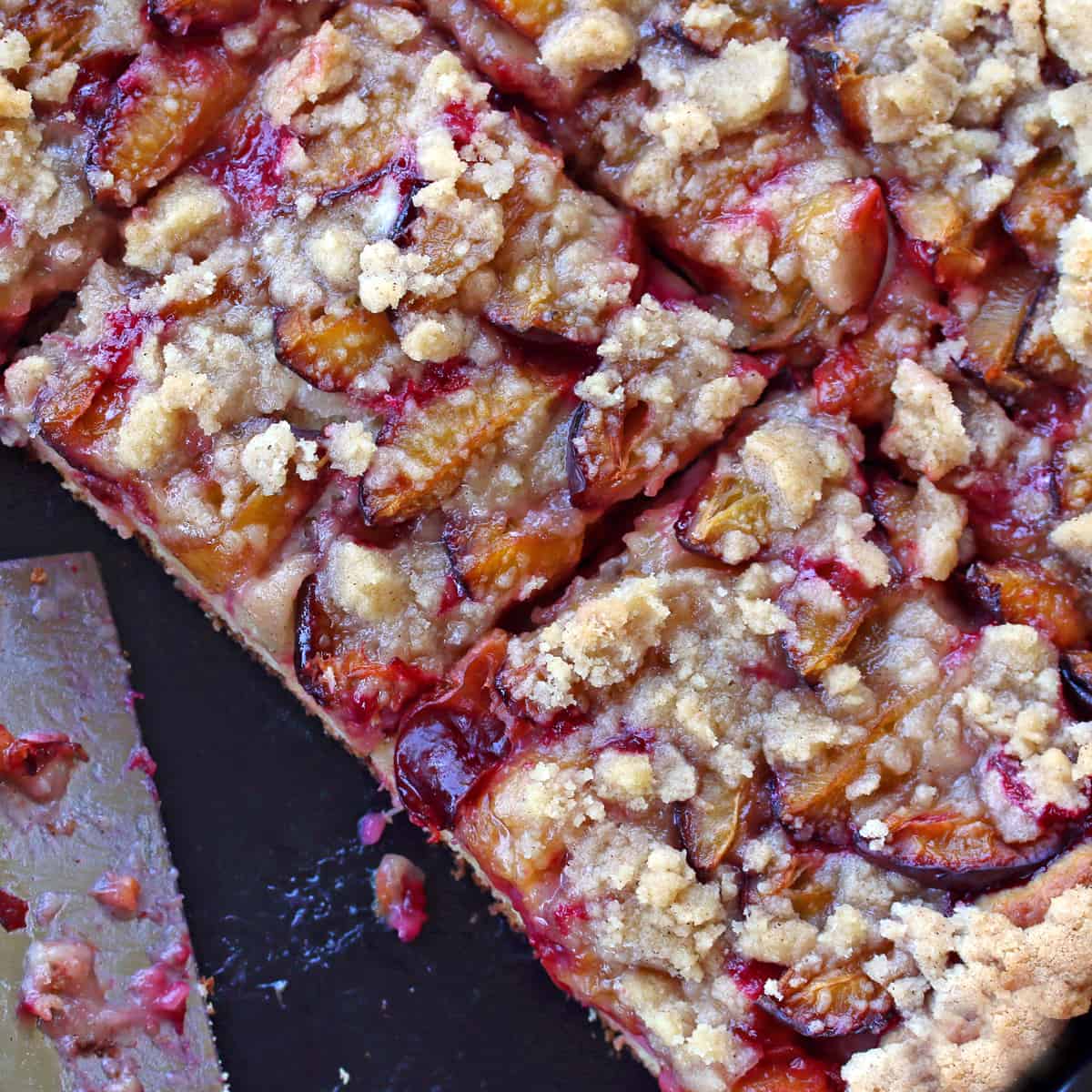
This authentic German Plum Cake recipe, known as Zwetschgenkuchen or Zwetschgendatschi, is made just the way you know and love it from Germany! A yeast-based cake with juicy plums and a sweet streusel topping, this extraordinarily delicious cake is one of my very favorites and is the way my Mutti and Oma made it!
What is Zwetschgenkuchen?
Depending on which region of Germany you’re in, German plum cake goes by a variety of names including Zwetschgenkuchen, Zwetschgendatschi, Quetschekuche or Pflaumenkuchen. I know, they’re all tongue-twisters! :)
Variations exist throughout the regions of Germany with some versions using a yeast dough while others use a shortcrust pastry known as Mürbteig. Some have a streusel topping while others omit it. And some people make them round and taller while others make them rectangular in the style known as “Blechkuchen” (sheet pan cake). But whichever pastry crust is used, with or without streusel, and whether it’s round or rectangular, all of these versions showcase the plump, juicy, sweet European plums known as Italian plums.
Which Plums Do I Need to Make German Plum Cake?
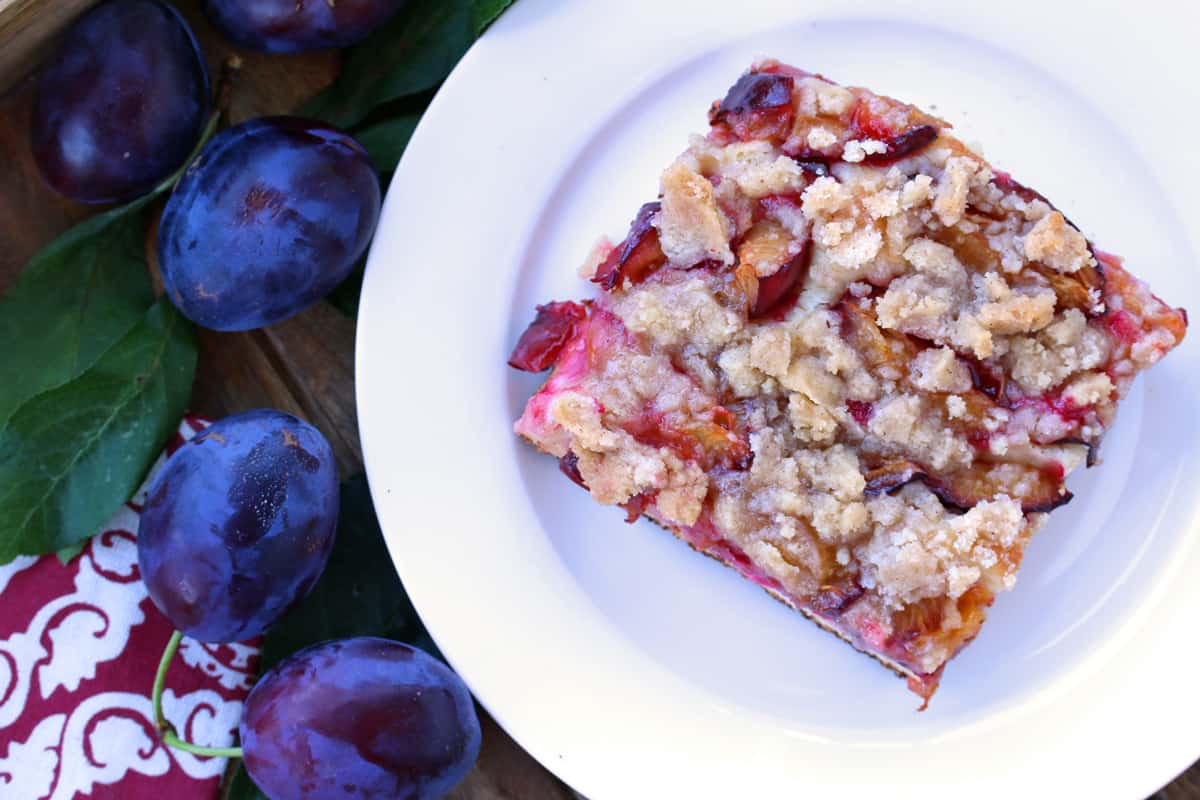
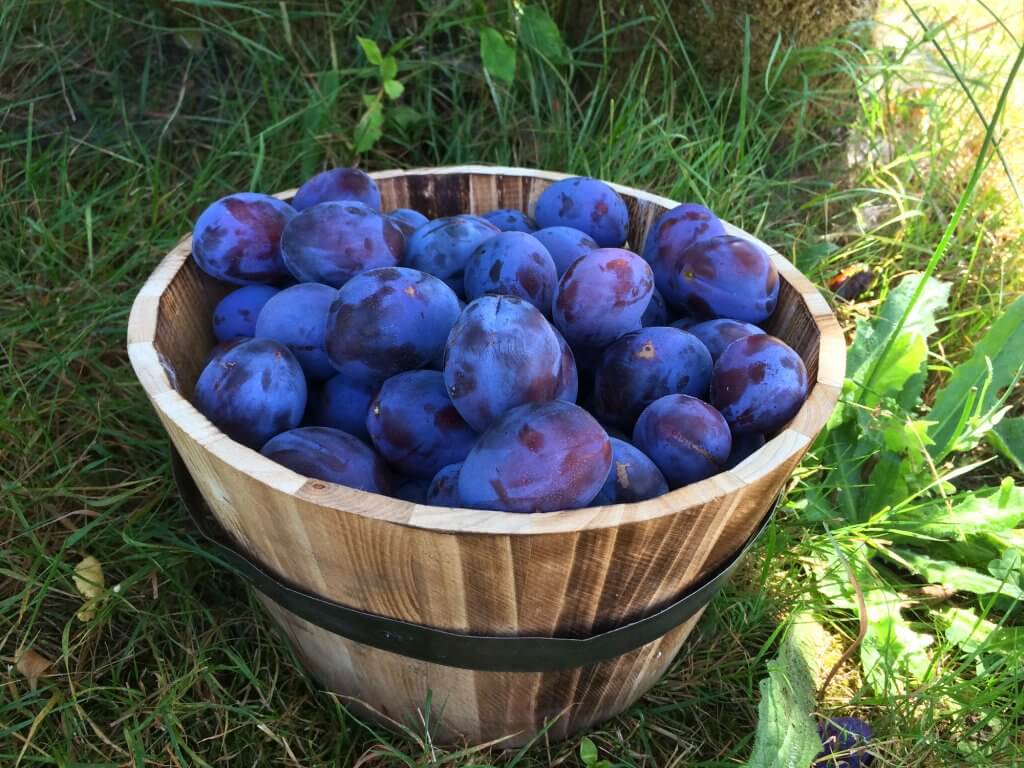
To make proper German plum cake you really need Italian plums. These are small and oval-shaped and are far meatier than their Asian plum cousins. Fleshier with a lower moisture content is important because you want to have a moist cake, not a mushy cake. Italian plums are considered the most ideal for cooking and baking not only because of their texture but also because their flavor becomes more complex and delicious through cooking. Italian plum season is short, usually from September through early October, and Germans know how to seize the opportunity when it’s there. So wait patiently for plum season and then hit your local farmer’s markets for some Italian plums. Alternatively you can also use frozen Italian plums; just be sure to thaw and very thoroughly drain them before using them.
We were so lucky to have our own Italian plum trees when we lived in Washington State. When we moved to Virginia a few years ago we immediately got to work planting an orchard of fruit trees, including some Italian plums. They’re not yielding a lot of fruit yet, but they’re getting there and I’ll be ready for them!
The version of German Plum Cake that we’re making today is my personal favorite. It’s made with yeast dough, which is more time-consuming than the simpler Mürbteig (shortcrust pastry) versions, but it’s far superior in my opinion. This traditional version is also sprinkled with a streusel topping. This Zwetschgenkuchen recipe is the way my Mutti and Oma made it and is typical of where I’m from in Baden-Württemberg, though this version is popular throughout Germany. This type of Zwetschgenkuchen is typically made on a Backblech (a baking sheet) versus in a round springform and cut into squares for serving.
Like most German cakes, this German plum cake is not overly sweet. It has a nice balance between sweet and tart with just a touch of warmth from the cinnamon. The riper the plums the sweeter the cake will be.
This German plum cake will keep for 2-3 days. And although the streusel will get soft, the cake tastes even better the day after baking as the juices from the plums have time to penetrate the dough.
Can I Use Other Fruits?
You sure can! This recipe is also delicious using other stone fruits like apricots, peaches and nectarines.
Can You Freeze German Plum Cake?
Yes, you can. I generally recommend eating it within a couple of days but if you have more leftovers than you can manage, this can be wrapped and put in a freezer container for up to a month. Let it thaw in the fridge overnight.
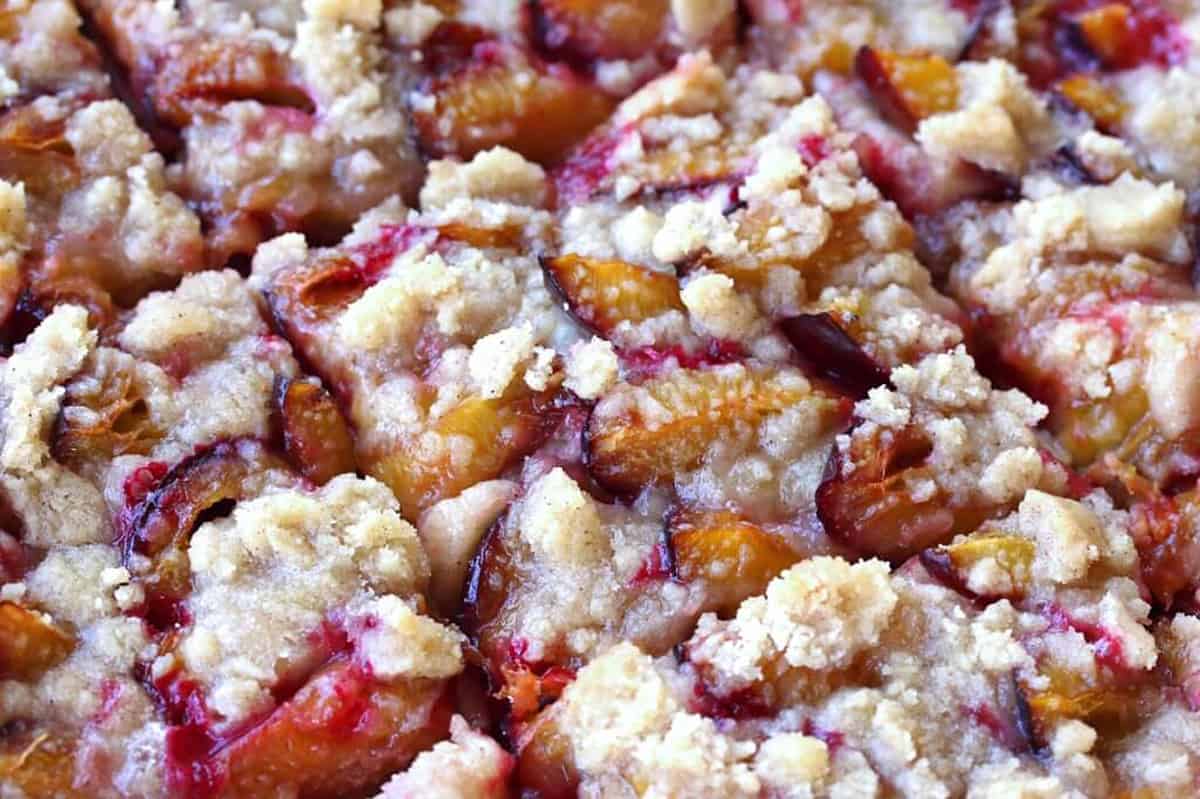
German Plum Cake Recipe
Let’s get started!
Dissolve the yeast into the warm milk and let is sit for 5-10 minutes until frothy.
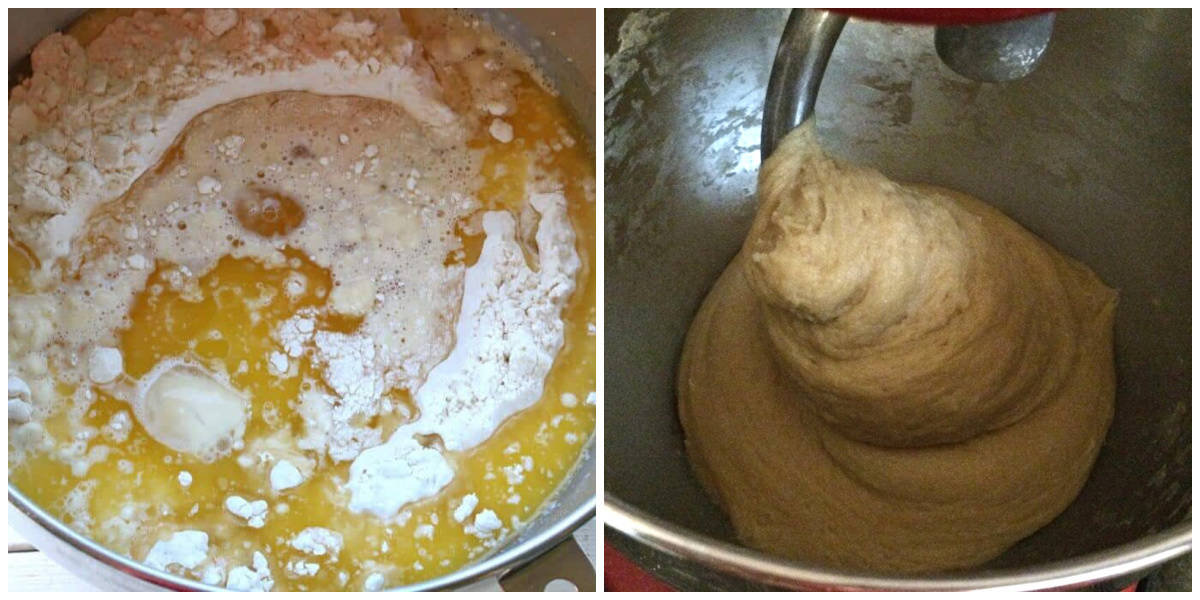
Place the flour, sugar and salt in the bowl of a stand mixer and pour in the yeast mixture, melted warm (not hot) butter, eggs and vanilla extract. Give it an initial stir to combine the ingredients and then attach a dough hook and knead it on the bread setting (“2”) for 4-5 minutes.
The dough will be sticky but should hold together fairly well. It will not be firm enough to knead into a ball, think of it more as a thick batter.
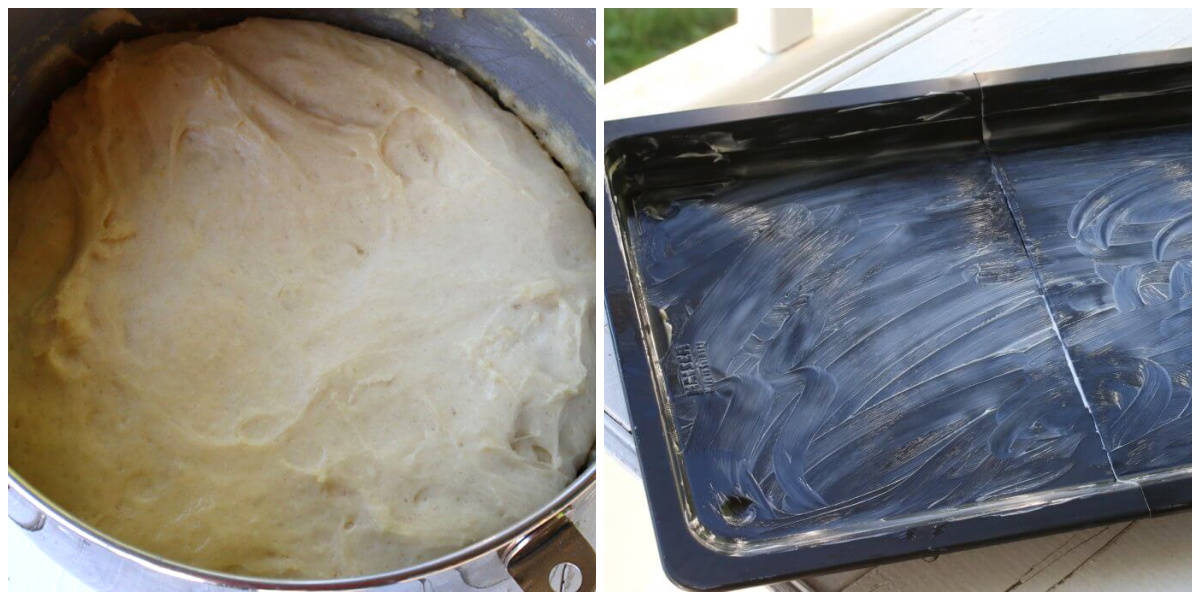
Cover it loosely with plastic wrap and set it in a warm, draft free place to rise for an hour or until about doubled in size.
Generously butter a large jelly roll pan (at least 18 inches in length and about 13 inches wide) or, like I’m using and as pictured below, a German Backblech if you have one (the one I’m using in the picture I brought with me from Germany).
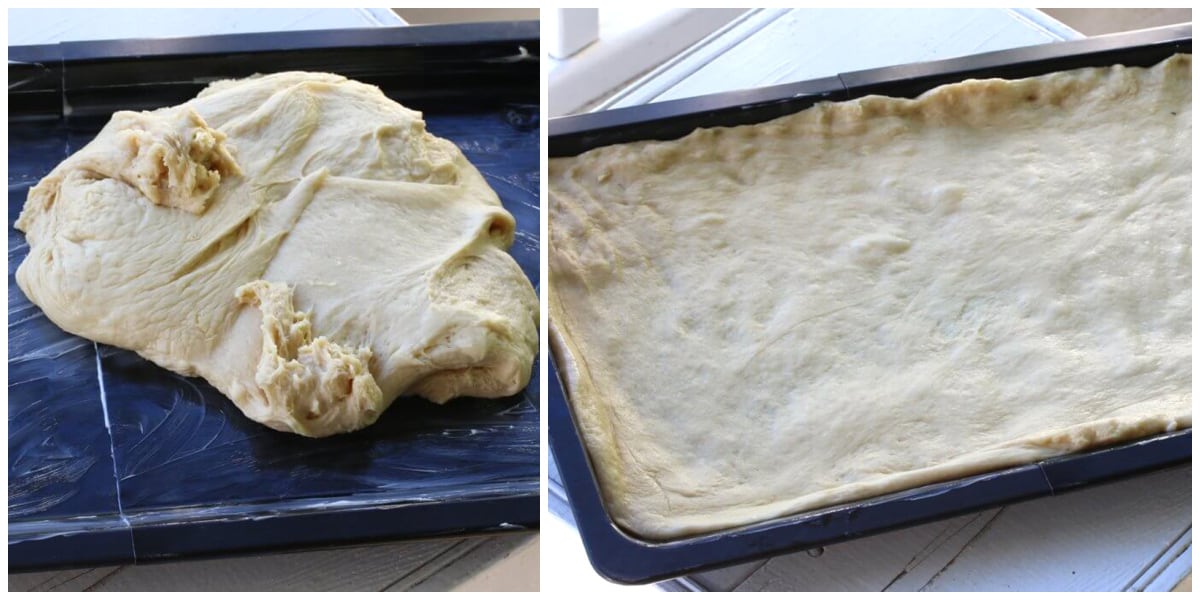
Use your hands to spread the dough out across the full length of the pan, pressing it up against the sides. It’s yeast dough so it will resist, but just keep pushing it back into position the best you can. Once you put the plums on it, those will help keep it in place.
Time for the plums! The riper the plums the sweeter the cake will be. However, if they’re overly ripe – meaning mushy – they’ll be even mushier on the finished baked product, so keep that in mind too.
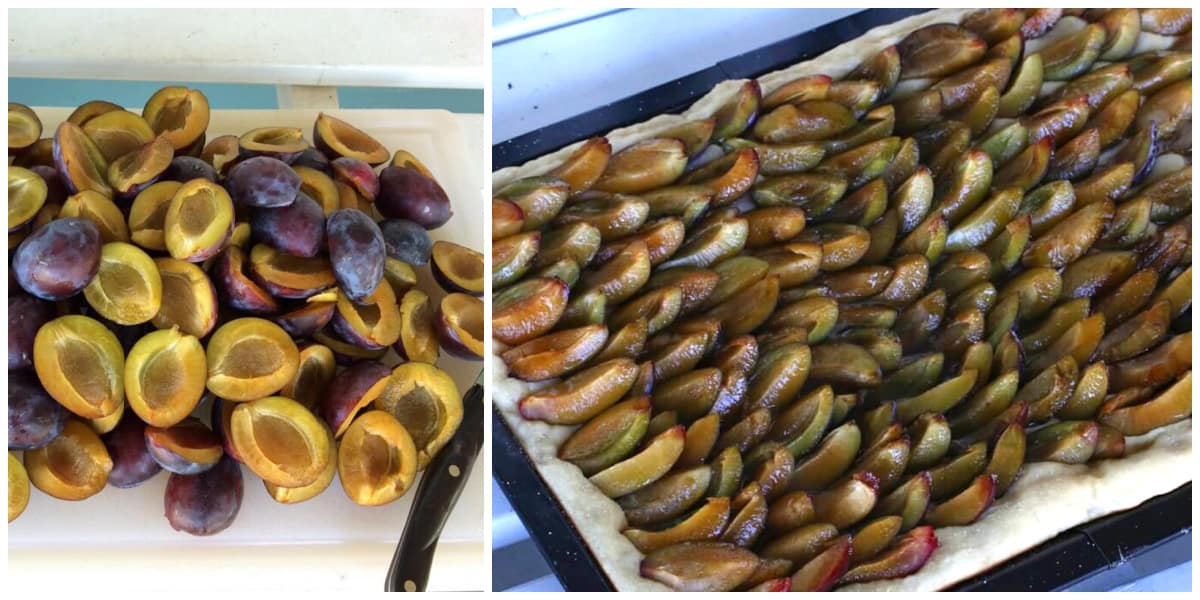
Cut the plums in half and remove the pits. Then slice the plums in half again, slicing each plum into quarters. Lay the plums close together in rows over the whole length of the dough on the sheet pan.
If you want your cake a bit sweeter you can sprinkle it *lightly* with sugar or cinnamon-sugar if you prefer more cinnamon. I emphasize “lightly” because the more sugar you add the more watery the cake will be as the sugar liquifies during baking and your streusel will also “melt” in contact with it.
Set the pan in a warm place and let it rise for up to another hour.
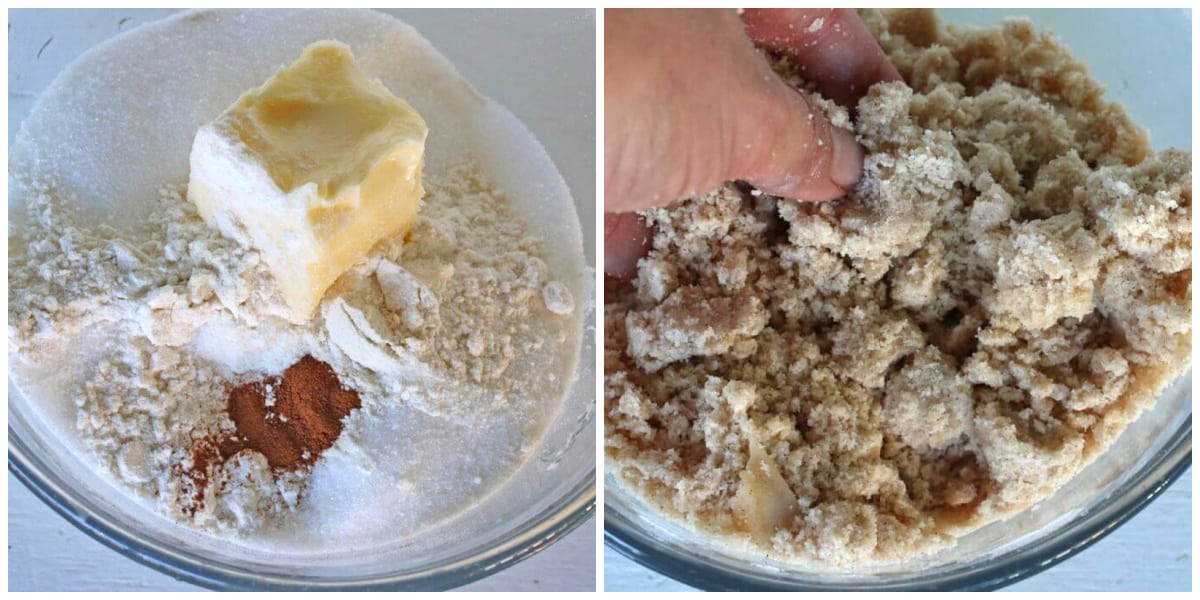
Now let’s make the streusel topping. Place all the ingredients in a medium-sized bowl and use your fingers to bring it all together. Work with the mixture until it’s thoroughly combined and forms a rough sand and clumpy texture.
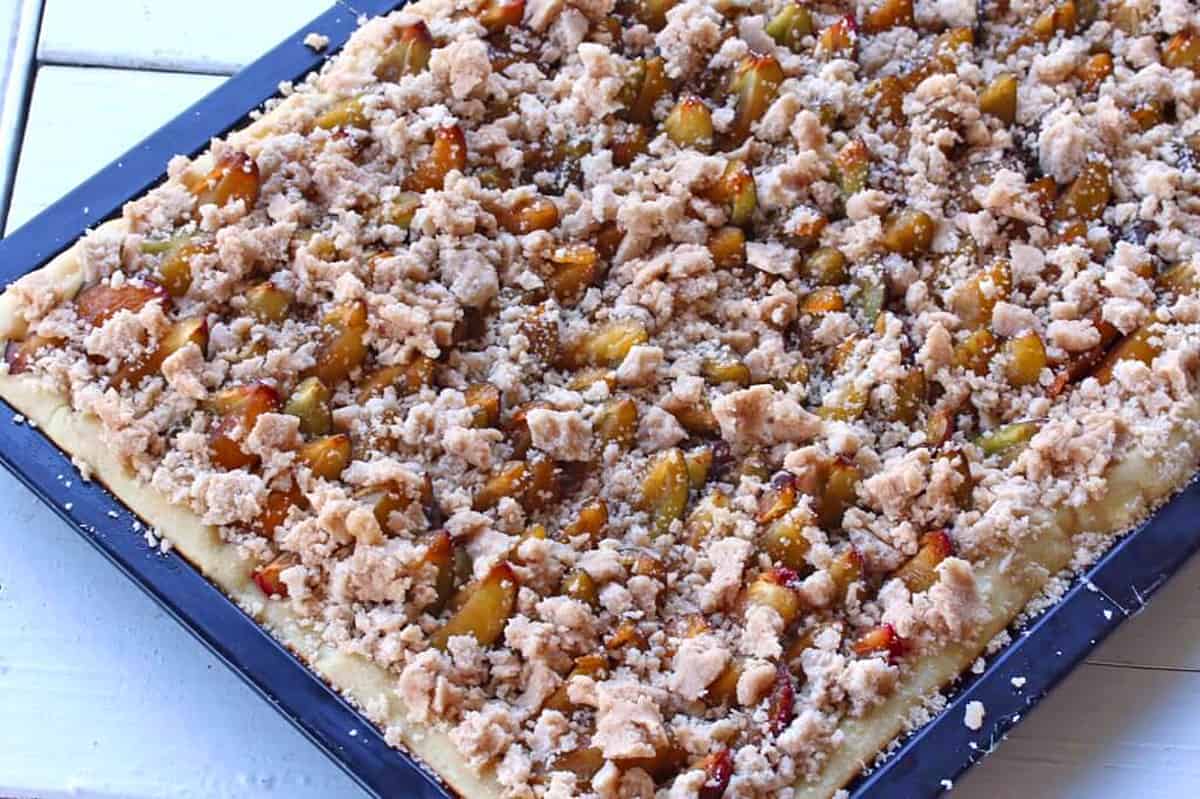
Sprinkle the streusel over the top of the cake.
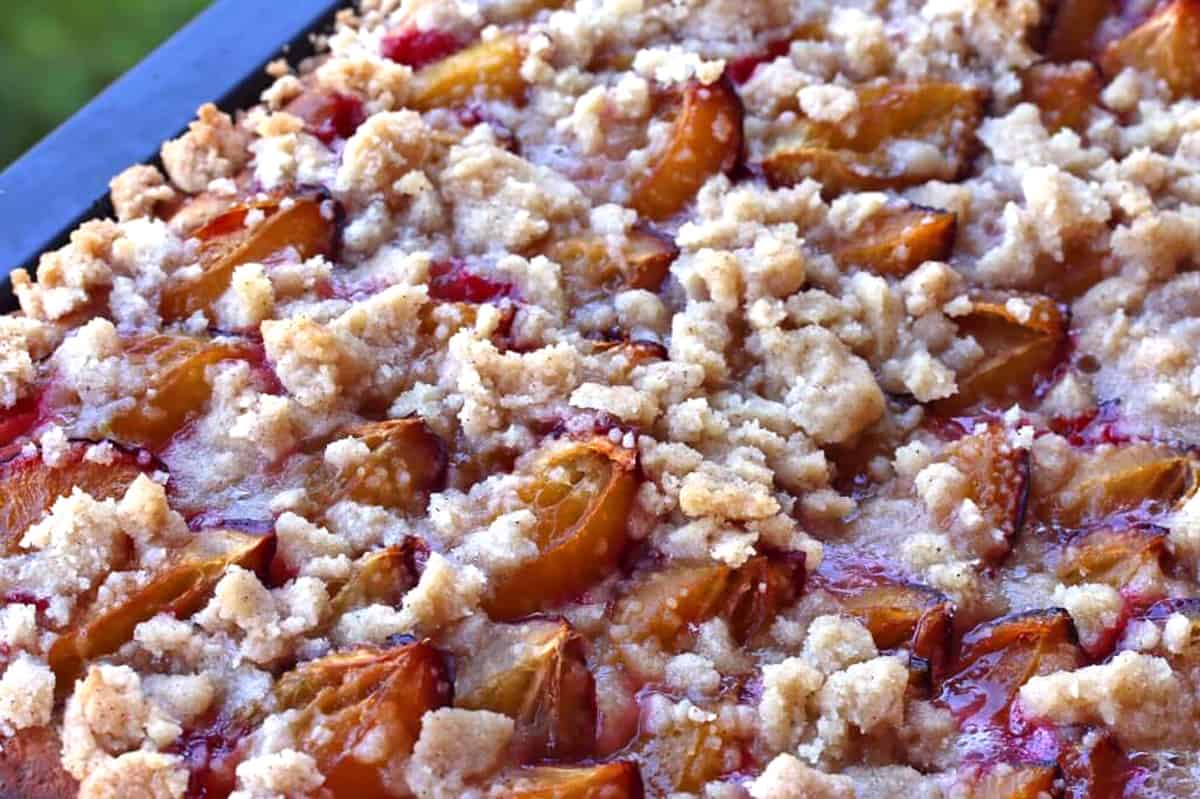
Bake the cake on the middle rack of the oven preheated to 350 degrees for 30-35 minutes or until the top is golden.
Let the cake sit for at least 10 minutes before slicing to let some of the liquid set.
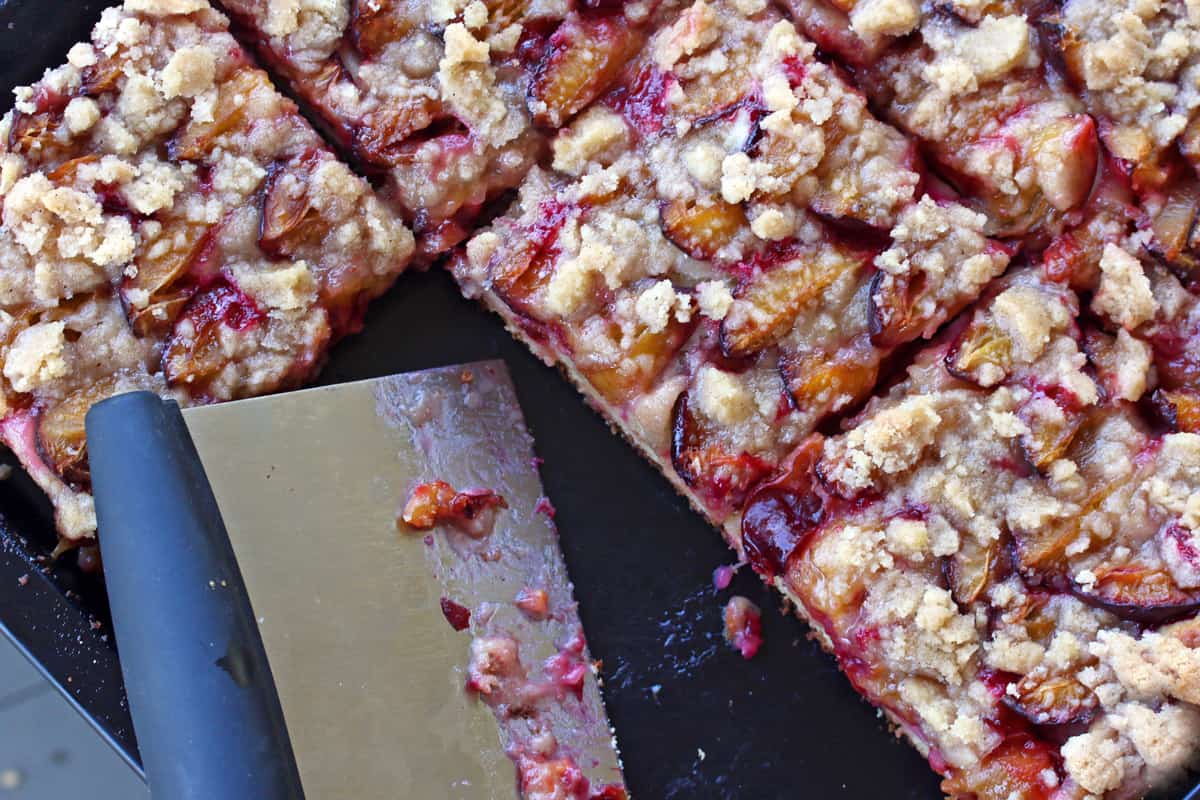
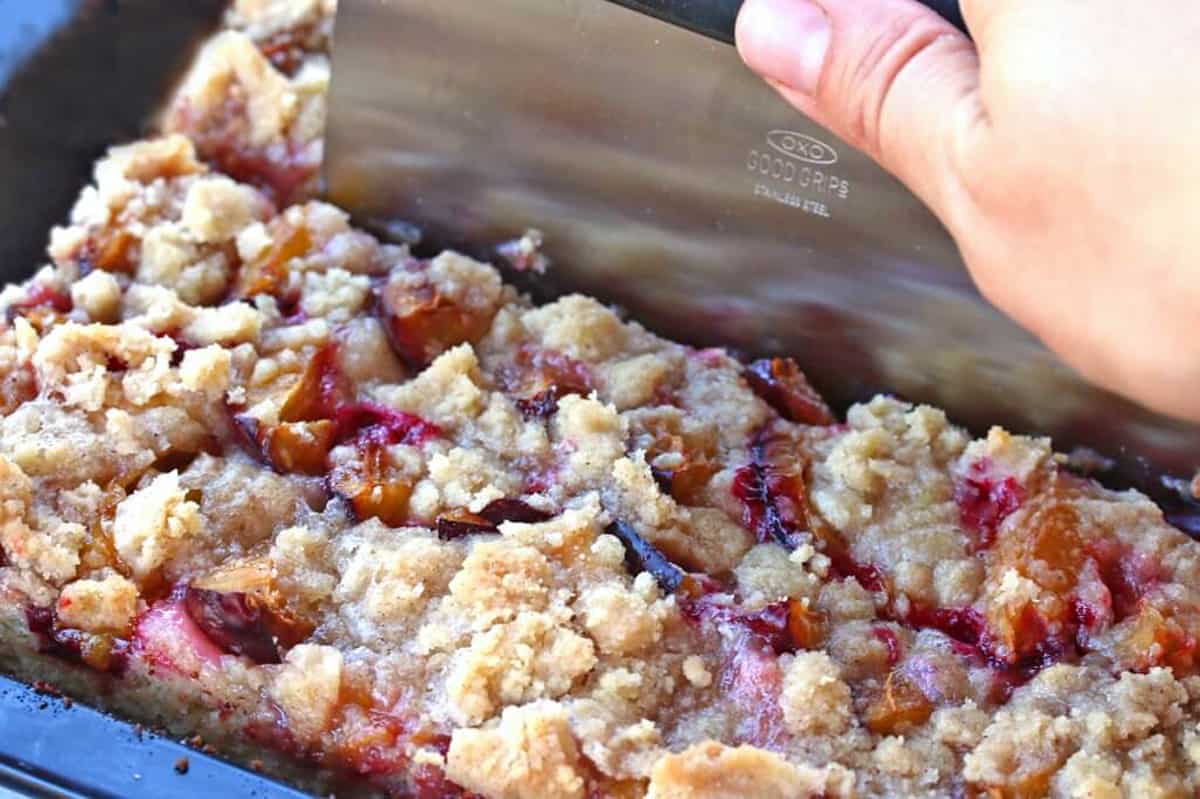
Slice the cake into squares.
A tool that I use that’s really handy and works like a charm for sheet cakes and many other things is the OXO Multi-Purpose Scraper & Chopper.
Serve and enjoy!
Guten Appetit!
For more delicious German desserts try my:
- German Apple Cake
- German Cheesecake
- Bee Sting Cake
- Marmorkuchen
- Pineapple Cake
- Berliner
- Dampfnudeln
- Germknödel
- Cherry Marzipan Streusel Cake
- Gugelhupf
- Stollen
- Apple Strudel
- Rhubarb Streusel Cake
- Pfeffernüsse
- Lebkuchen
- Zimtsterne
Save This Recipe
German Plum Cake (Zwetschgenkuchen)
Ingredients
- 3 + pounds Italian plums , cut into quarters, pits removed
- 1 cup warm milk , *start with 3/4 and add extra to the dough as needed
- 1 1/2 tablespoons dry active yeast
- 4 cups all-purpose flour
- 3/4 cup sugar
- 1/2 teaspoon salt
- 1 stick butter (1/2 cup melted but not hot)
- 2 eggs
- 1 teaspoon quality pure vanilla extract
- For the Streusel:
- 1 cup all-purpose flour
- 1 cup sugar
- 1 teaspoon ground cinnamon
- 1/2 cup butter , at room temperature
Instructions
- Dissolve the yeast into the 3/4 cup warm milk and let is sit for 5-10 minutes until frothy.
- Place the flour, sugar and salt in the bowl of a stand mixer and pour in the yeast mixture, melted warm (not hot) butter, eggs and vanilla extract. Give it an initial stir to combine the ingredients and then attach a dough hook and knead it on the bread setting (“2”) for 4-5 minutes, adding the remaining 1/4 cup milk as necessary. (The dough will be sticky but should hold together fairly well. It will not be firm enough to knead into a ball, think of it more as a thick batter.) Cover it loosely with plastic wrap and set it in a warm, draft free place to rise for an hour or until about doubled in size.
- Generously butter a German Backblech extended to full length or an extra large jelly roll pan (at least 18 inches in length and 1 inch sides, but even then the crust will be thicker than with the Backblech so consider using slightly less of the dough).Use your hands to spread the dough out across the full length of the pan, pressing it up against the sides. (It's yeast dough so it will resist, but just keep pushing it back into position the best you can. Once you put the plums on it, those will help keep it in place.) Lay the plums close together in rows over the whole length of the dough on the sheet pan. (If you want your cake a bit sweeter you can sprinkle it *lightly* with sugar or cinnamon-sugar if you prefer more cinnamon. I emphasize "lightly" because the more sugar you add the more watery the cake will be as the sugar liquifies during baking and your streusel will also "melt" in contact with it.)Set the pan in a warm place and let it rise for up to another hour.
- To make the streusel: Place all the ingredients in a medium-sized bowl and use your fingers to bring it all together. Work with the mixture until it’s thoroughly combined and forms a rough sand and clumpy texture. Sprinkle the streusel over the top of the cake.
- Bake the cake on the middle rack of the oven preheated to 350 degrees for 30-35 minutes or until the top is golden.Let the cake sit for at least 10 minutes before slicing to let some of the liquid set. Slice the cake into squares and serve.
Notes
Nutrition
Originally published on The Daring Gourmet September 8, 2016

Hi, I’m Kimberly Killebrew and welcome to Daring Gourmet where you'll find delicious originals, revitalized classics, and simply downright good eats from around the world! Originally from Germany, later raised in England, world-traveled, and now living in the U.S., from my globally-influenced kitchen I invite you to tour the world through your taste buds!

















I could not find the plums this year. However, I did find a glass jar of prune plums in juice. Can I use these?
Hi Sandra, yes, those should work just fine. Just make sure to let them drain well.
This has been my go to recipe for “Kwetchekuche” for years. It’s the absolute best, using much less flour than the older recipes call for, and so easy to prepare.
I was born and lived in Germany for the first 22 years of my life, remembering our plum trees loaded with fruit at this time of the year. What Oma didn’t use for baking was delivered to the local distiller, and made into Schnaps for the winter..
Thank you so much for the positive feedback and for sharing those memories, Trudy, I’m so thrilled this has been a regular favorite! <3
This looks really nice and I want to try it.
How thick should the base be before you layer the fruit? I don’t like thick bases on slices.
Hi Graham, the dough is calculated for an 18×13 inch pan. I wouldn’t go any thinner than 1/8 inch to make sure the base is structurally thick enough to hold the toppings.
This cake was a big hit in my family, I liked the dough as it was light , and it certainly made a lot of cake , it also froze well !
Sure reminded me of my Omas cake as She baked it often during my childhood in Germany, it’s keeper 👍👍
I’m so delighted to hear that, Inge, thank you very much for the positive feedback! <3
I am very happy to hear that it can also be frozen because it’s such a large amount. 🙂
Is there a way or suggestion on how to 1/2 this recipe. I know some recipes don’t half that well and require some modifications. Thanks! Julie
Hi Julie, you can simply halve all of the ingredients, no modifications beyond that other than using a smaller pan. Alternatively you can make the full batch and freeze the other half!
Freeze after baking, yes?
Yes!
I love this recipe, My dear friend was from Germany and her Mom would make this when we went to the lake in the summers. What FUN WE HAD there with her family. Her brother would always play tricks on us. BUT this lovely Kuchen was our morning breakfast with tea or COFFEE….but I didn’t drink coffee. Such wonderful memories with my dear Ursula. I think of you always, my dear friend, and we’ll be together soon. Can’t wait to make it again for my family who just arrived.
Thank you for sharing those heartfelt memories, Koreen, and I’m so happy you enjoyed this recipe <3
I have made this a number of times and it is perfect! I had an old recipe prior to this and it was good but I prefer this as it tastes exactly the way it is supposed to. I had to save some for my children who were coming to visit in a month and I took a chance on freezing it. It’s not the same as fresh but it was still good and the kids loved it.
I’m so thrilled to hear that, Barbara, thank you very much! <3
Looked all over the internet for a recipe that reminded me of my Oma’s… this one takes the cake!
Thank you so much, Donna! :)