
Homemade Mayonnaise Recipe

This post may contain affiliate links. See my disclosure policy.
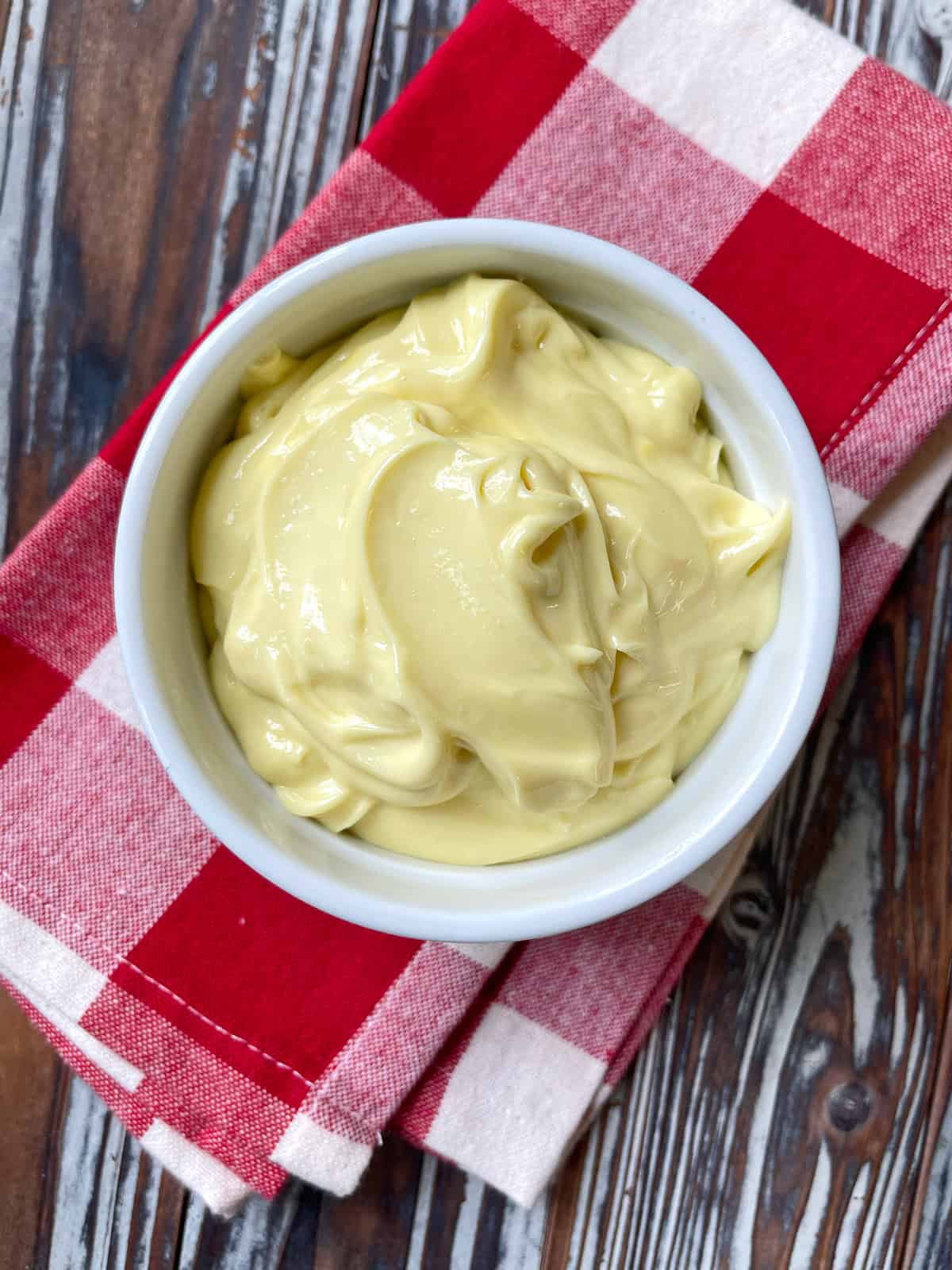
This homemade mayonnaise recipe comes together in 5 minutes, is made with clean ingredients, and tastes better than anything store-bought. There is simply no good reason to ever buy mayonnaise again!
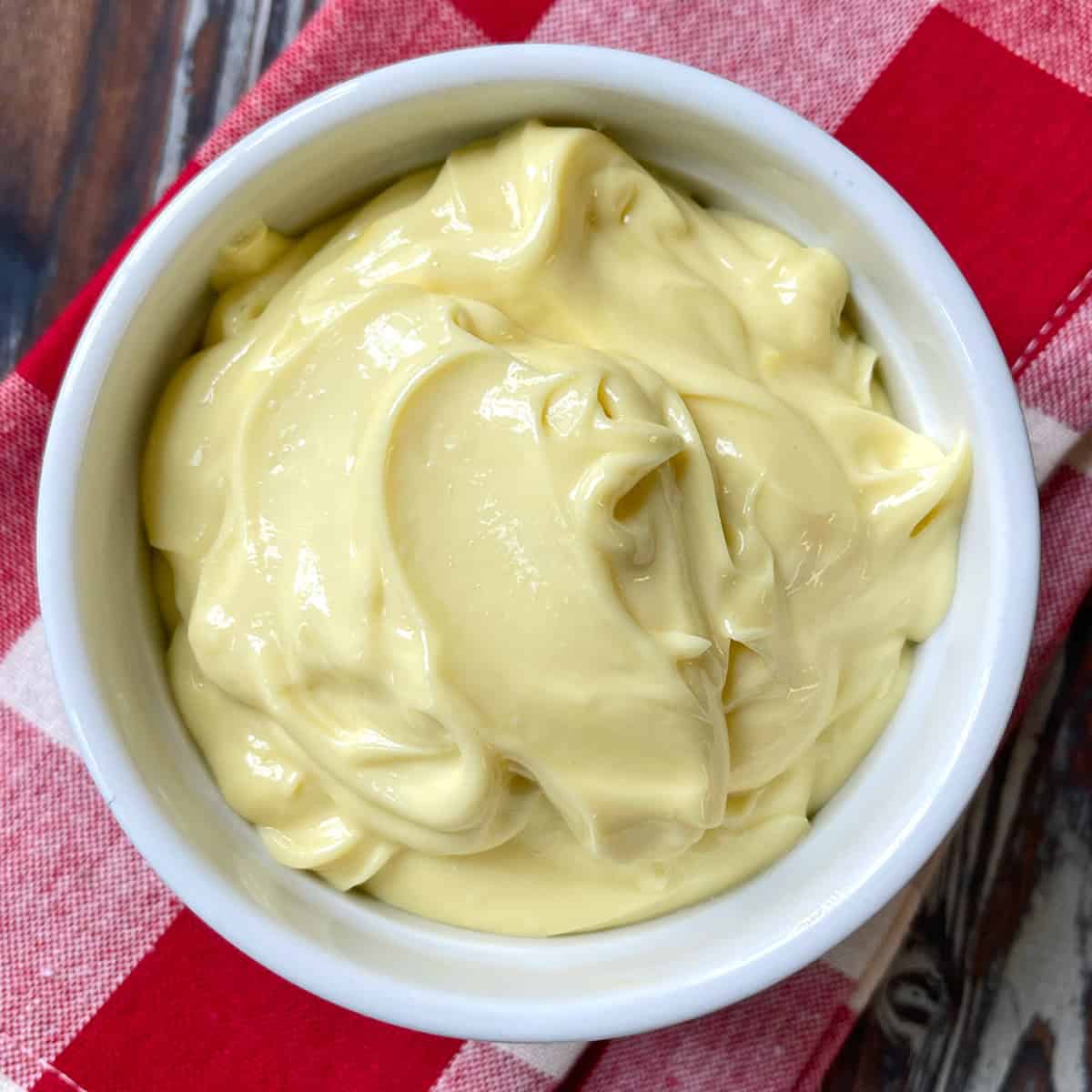
Mayonnaise is a thick, creamy condiment made by emulsifying oil with egg yolks, an acid such as vinegar or lemon juice, and seasonings. Next to ketchup, it’s the most widely recognized and popular condiment in the world. And now it’s time to leave the jarred stuff on the shelf and make your own!
Where Did Mayonnaise Originate?
The origin of mayonnaise is much debated and while there is no firm consensus on the matter, there is speculation. Some food historians trace its origin to the earlier aiolis of Catalonia, Spain. But the most widely accepted story traces its creation to 1756, when French chef Louis François Armand de Vignerot du Plessis, the Duke of Richelieu, celebrated a military victory over the British at the Spanish port of Mahón on the island of Menorca. According to tradition, the chef improvised a sauce of egg yolks and olive oil after discovering that cream was unavailable, naming the new creation “mahonnaise” in honor of the town. Over time, the name evolved into the familiar “mayonnaise”.
Mayonnaise quickly spread throughout Europe, where chefs refined the simple emulsion of oil, egg yolk, and acid into a versatile culinary staple. By the nineteenth century, it had become a hallmark of French cuisine, serving as the foundation for countless sauces and dressings. As the condiment crossed the Atlantic, mass production in the early twentieth century transformed mayonnaise from a gourmet delicacy into a household essential. Today, it is enjoyed around the globe, enriching everything from sandwiches and salads to dips and marinades. Regardless of its exact origins, it was unquestionably the French who turned mayonnaise into one of the world’s most popular and widely used condiments.
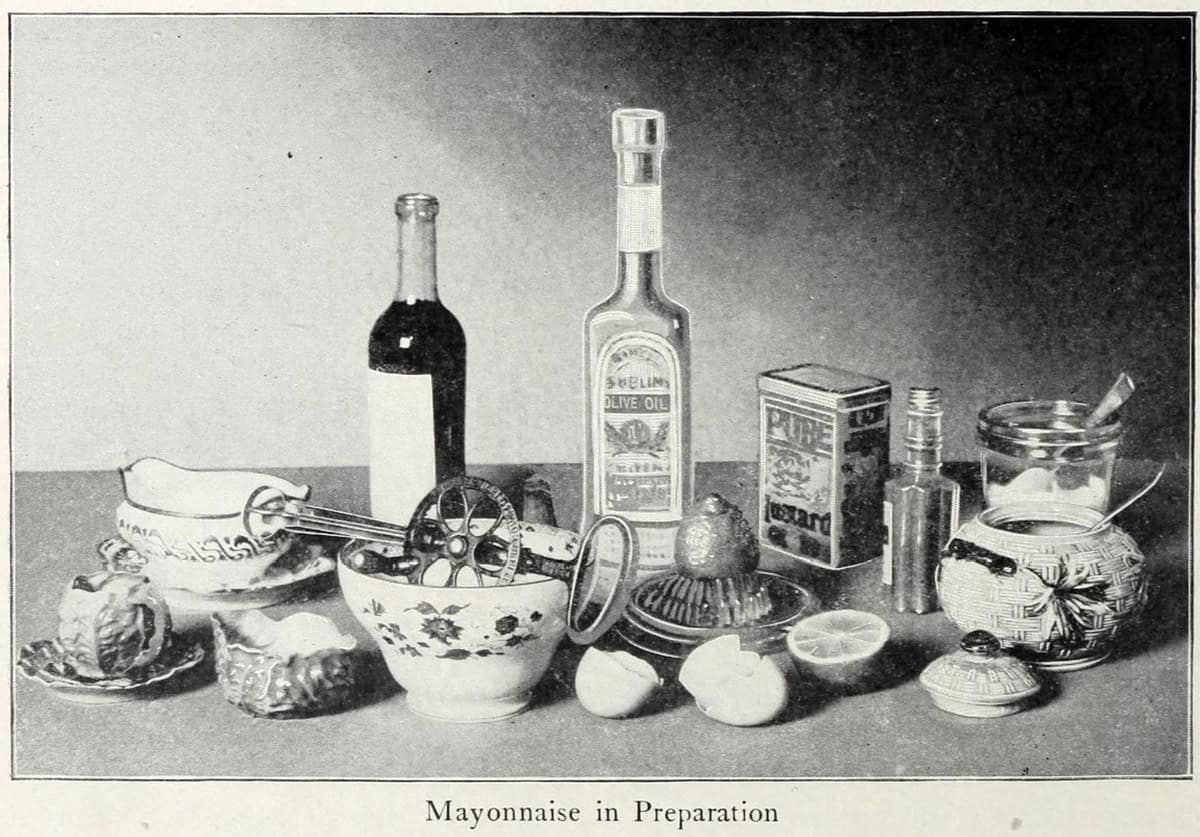
Homemade Mayonnaise Ingredients
Making mayonnaise requires just a few staple ingredients that you most likely already have on hand. Here’s what you’ll need:
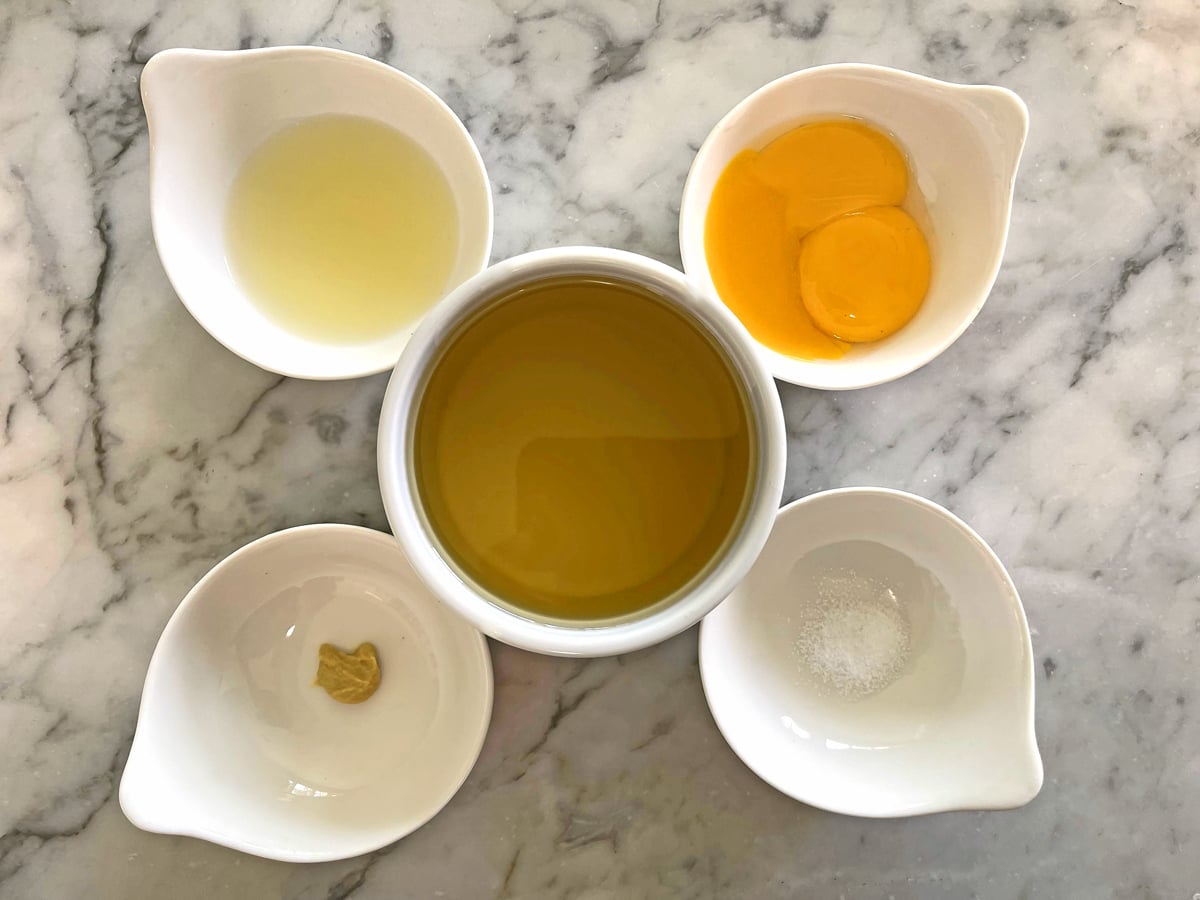
- Oil: This is the primary component of mayonnaise so choose an oil that you like. Most commercial mayo is made with soybean/vegetable oil because it’s cheap and has a mild flavor, but that’s an oil that I personally avoid. Other mild-flavored oils you can use to make mayonnaise include avocado, canola, grape seed and safflower oil (I’m using avocado in the photos). I’m a huge fan of olive oil but do not recommend it for mayonnaise because its flavor is overpowering. The color of your mayonnaise will be whiter or more yellow depending on the oil you’re using.
- Egg Yolks: This recipe uses the traditional French method of using yolks only. You can use the whites (that would alter the oil measurement), but yolks will give you that characteristic rich and creamy texture and flavor. The darker your egg yolks, the more yellow the hue your mayonnaise will take on.
- Lemon Juice: Some recipes call for vinegar, but the traditional French preparation is to use freshly squeezed lemon juice. Lemon juice gives the mayonnaise a brighter, more vibrant flavor while vinegar provides a more neutral, clean tang. The choice is entirely yours (I’m using lemon juice in the photos). Some chefs even like to use a combination of the two. If you use lemon juice, freshly squeezed is a must.
- Dijon Mustard: This adds an important flavor component, contributing a zesty, sharp, complex and earthy taste. But it’s also a critical ingredient for stabilizing the emulsion. Mustard is a natural emulsifier and in the case of mayonnaise it helps bind the oil and egg yolks together.
- Salt: Just a touch to balance all the flavors.
Tips for Making Mayonnaise
Mayonnaise is a stable emulsion made by slowly combining oil with egg yolks, an acid (such as lemon juice or vinegar), and seasonings. The egg yolk contains lecithin, a natural emulsifier that allows tiny droplets of oil to remain suspended in the water-based ingredients, creating a smooth, thick sauce. The key to success is adding the oil gradually while whisking or blending continuously so the emulsion forms evenly.
Several things can go wrong during the process. The most common problem is a “broken” mayonnaise, where the oil separates from the mixture because it was added too quickly or the ingredients were not properly emulsified. Using ingredients that are at very different temperatures can also make it more difficult for the emulsion to form. Adding too much oil before the base has thickened, or stopping the mixing process too soon, can also lead to separation. Over-processing with a blender may slightly warm the mixture, although this is less common than adding the oil too quickly.
To improve your chances of success, use room-temperature ingredients whenever possible. Begin by whisking or blending the egg yolk and acid together before adding the oil. Add the oil one drop at a time at first, then gradually increase to a slow, steady stream once the mixture begins to thicken. If the mayonnaise becomes too thick, whisk in a teaspoon of water to loosen it without breaking the emulsion. If it does break, you can often rescue it by starting with a fresh egg yolk (or a teaspoon of mustard, but that will add more mustard flavor) in a clean bowl and slowly whisking the broken mayonnaise into it, treating it like the oil component in a new emulsion.
Making homemade mayonnaise isn’t difficult at all and once you get the hang of it, it’s a breeze. As long as you observe the two most important rules – use room temp ingredients and add the oil extremely gradually in tiny amounts – you’ll be successful. And as already mentioned above, if you mayonnaise does “break”, add some more egg yolk gradually to rescue it.
Once you’ve made your first batch of mayonnaise I can virtually guarantee that you’ll never buy it again. Not only is it incredibly quick and easy to make, it uses just small handful of whole, real ingredients without any of those junk ingredients, additives or preservatives!
Homemade Mayonnaise Recipe
Let’s get started!
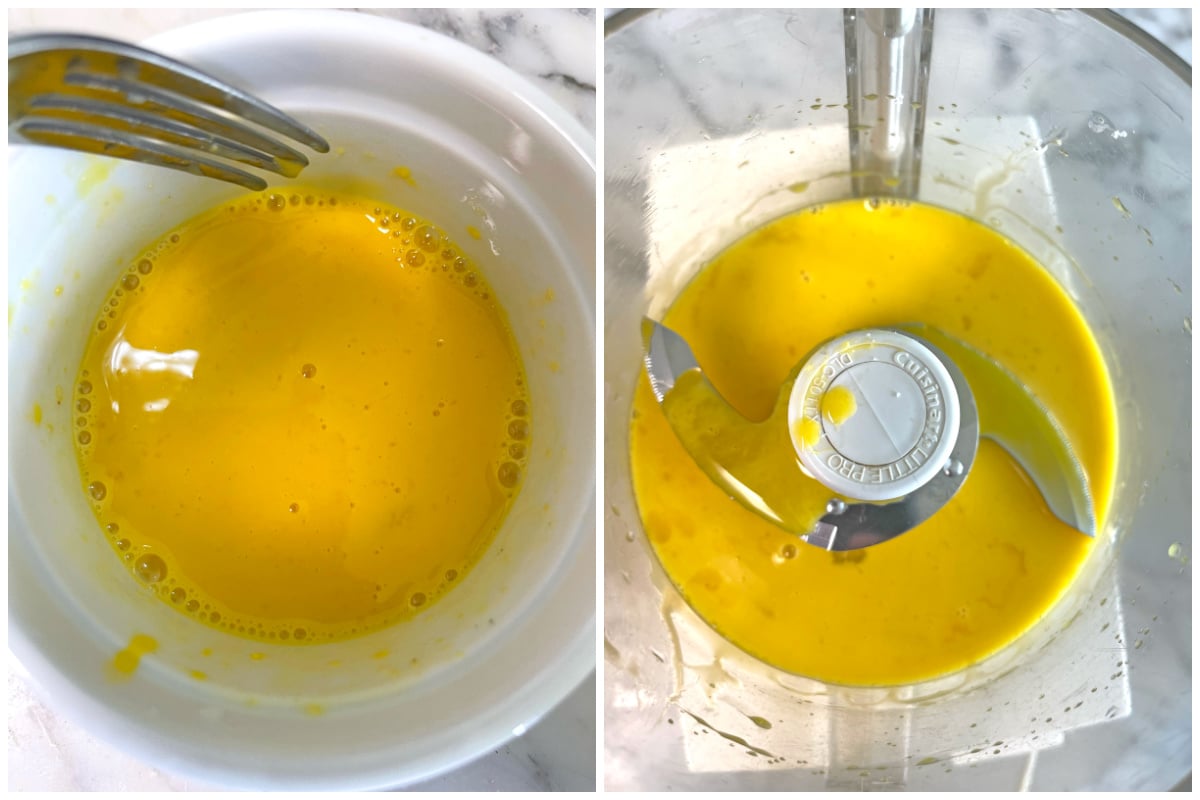
You can use either a mini food processor, a regular food processor with a small bowl attachment, or an immersion blender. What’s critical is that the blades make direct contact with the mixture. If you double the batch you may be able to use a regular food processor.
Whisk the egg yolks, lemon juice or vinegar, Dijon mustard and salt in a small bowl until combined and then place the mixture in the mini food processor or blender cup of your immersion blender.
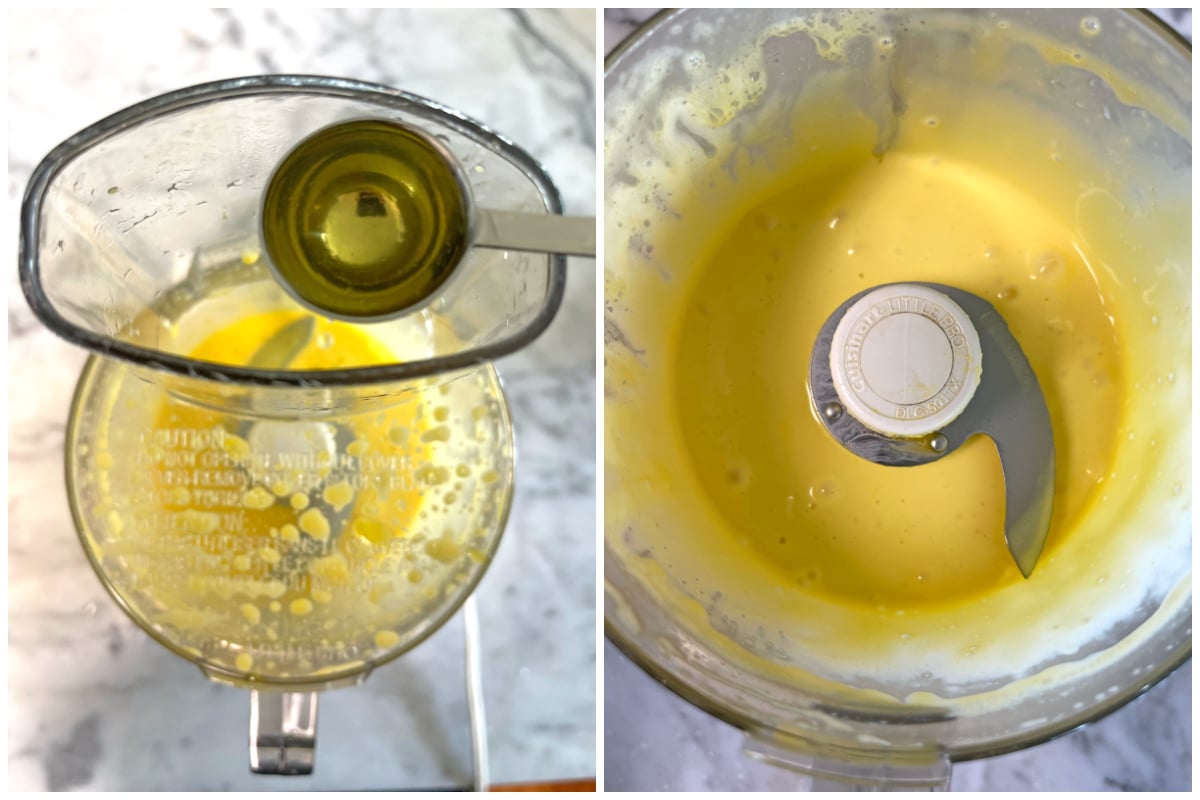
Initially add just 1/4 teaspoon of oil at a time, pulsing to fully incorporate each addition before adding more. Do this a few times and then increase it to 1 teaspoon at a time. Once you’ve used roughly 1/3 of the oil, you can safely add 1 tablespoon at a time until the oil is used up. Make sure that you are thoroughly blending each addition of oil until fully incorporated before adding more.
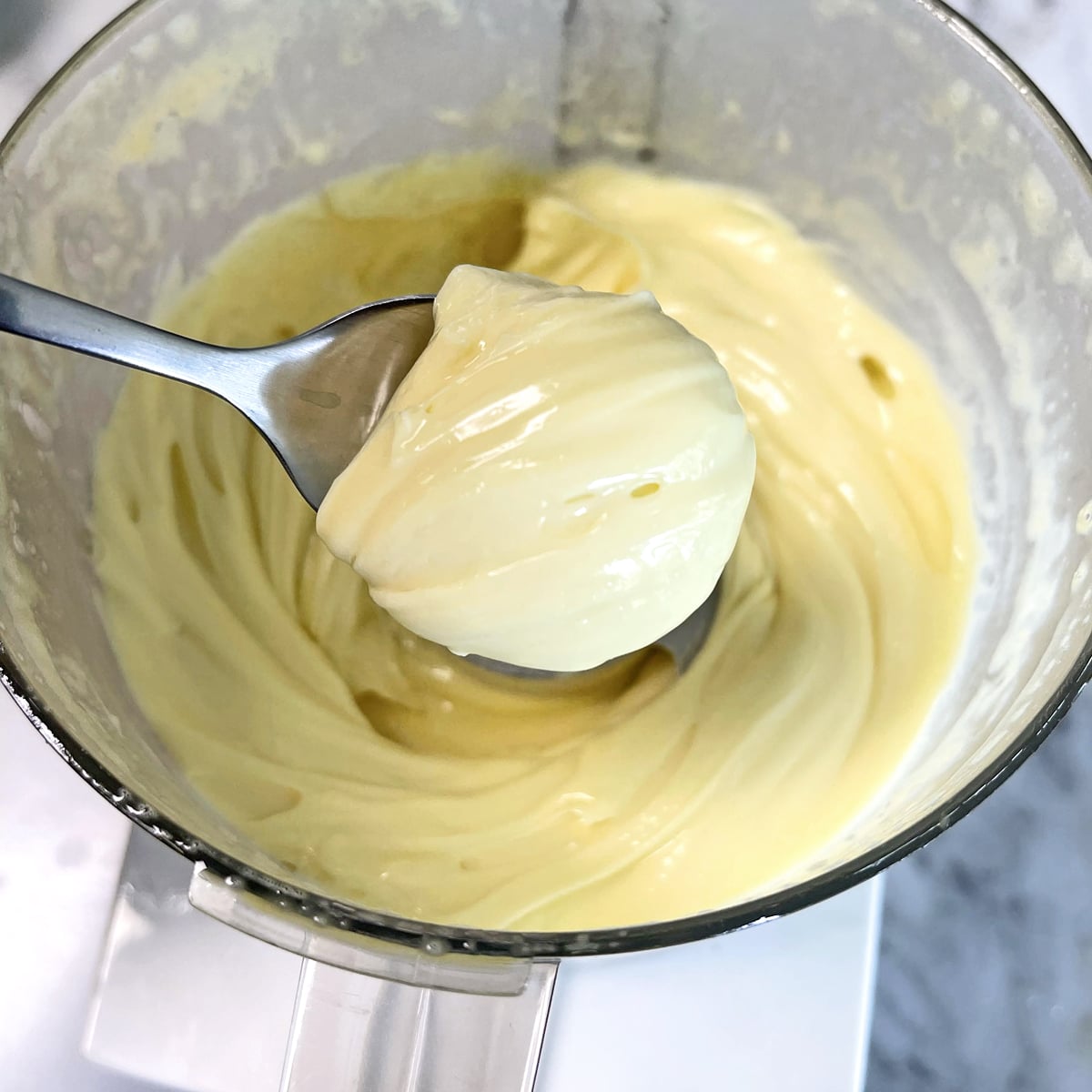
The mixture will gradually start to thicken.
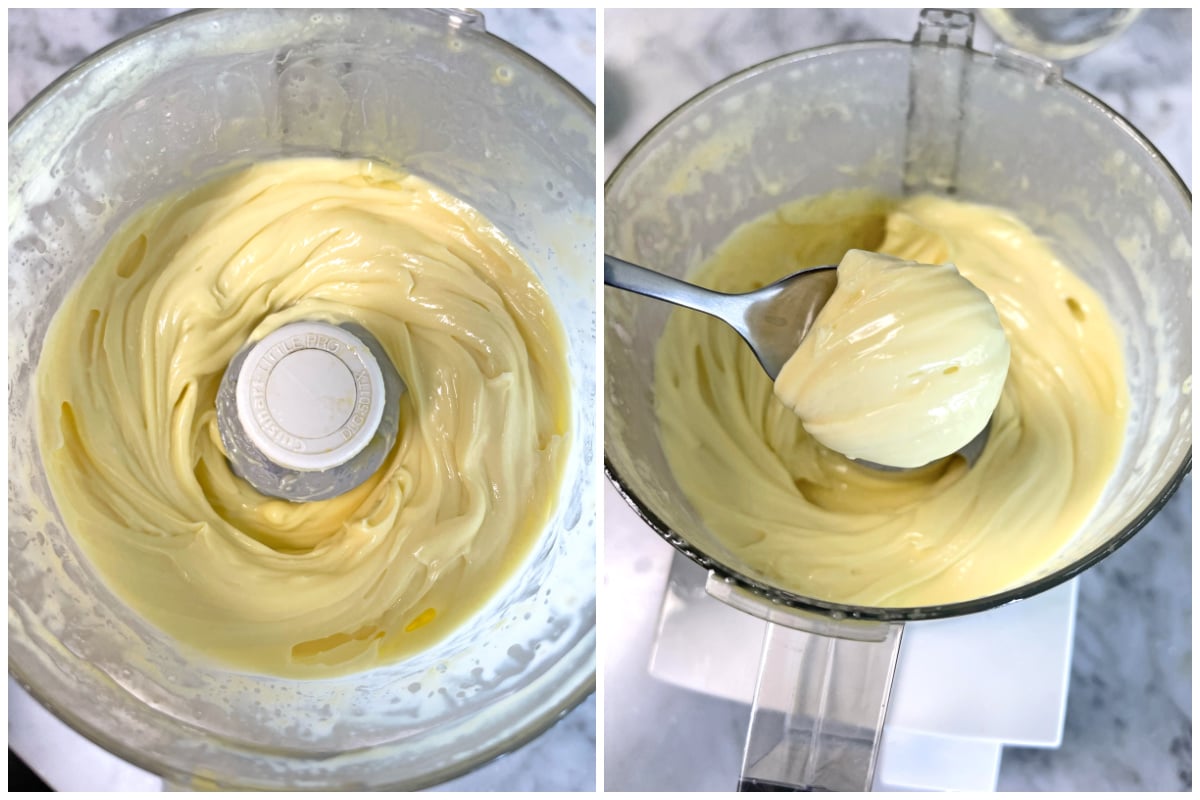
Keep pulsing the mixture until it becomes thick and smooth and looks like the correct consistency for mayonnaise.
How to Store Homemade Mayonnaise
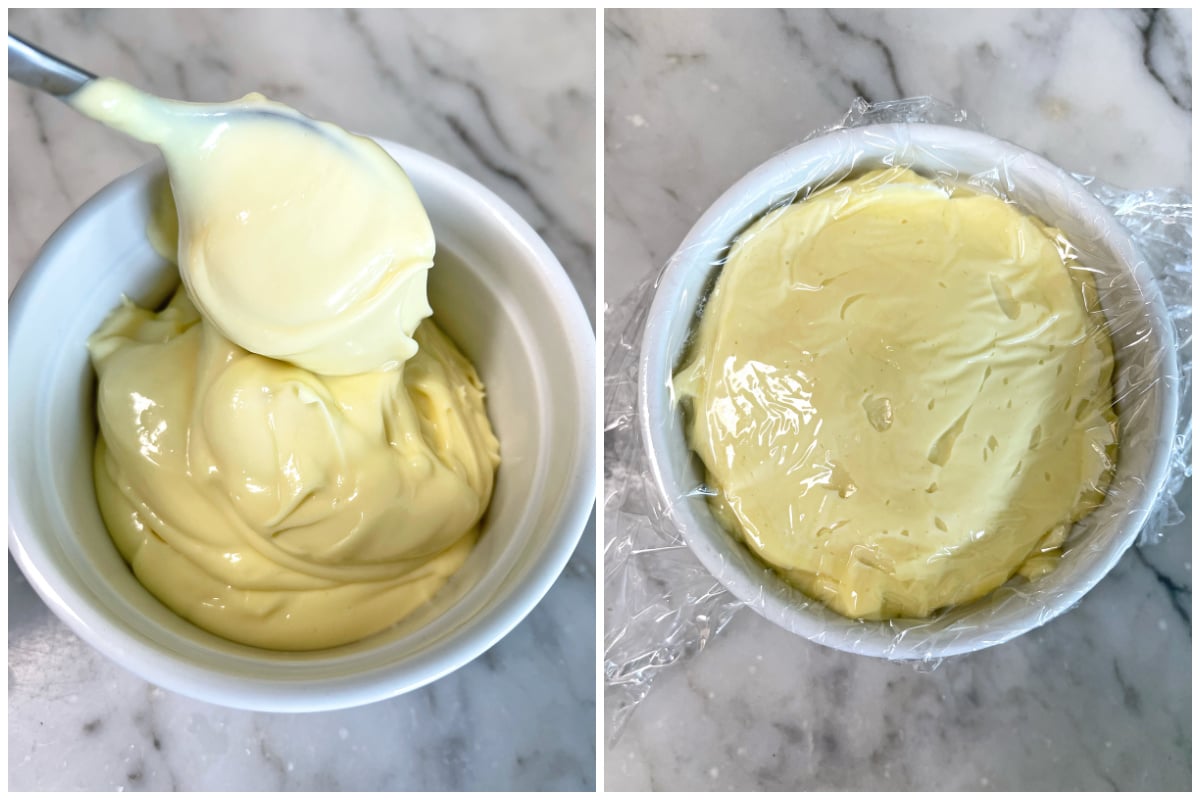
Transfer the mayonnaise to a non-reactive bowl and press some plastic wrap directly on top of the surface before placing the lid on. This will prevent the mayonnaise from developing a skin on top and becoming discolored. Store the covered mayonnaise in the fridge where it will keep for up to a week.
Mayonnaise does not freeze well because the water in the mayo turns into ice crystals which then causes the oil and egg yolk to separate, breaking the emulsion.
Ways to Use Mayonnaise
This could easily be a never-ending list! One of the most versatile condiments in existence, there are countless ways to use mayonnaise. Here are just few tasty ways to put your homemade mayonnaise to use:
- Sandwiches & Burgers: Spread on sandwiches instead of butter, or mix with mustard for a quick sandwich sauce. Use on burgers for extra richness or blend with hot sauce for a spicy burger sauce. Make garlic aioli by adding minced garlic and lemon juice and spread it on sandwiches and wraps.
- Salads: Use to to make classic potato salad, creamy coleslaw, deli-style broccoli salad, pea salad, chicken salad, coronation chicken, tuna salad, egg salad, Olivier salad, macaroni salad, Waldorf salad, German Fleischsalat, and Mexican corn salad.
- Dressings, Dips & Sauces: Tartar sauce, French remoulade, Big Mac sauce, pimento cheese, Neiman Marcus dip, French onion dip mix, animal style fries (In-N-Out sauce), fry sauce, aji verde, honey mustard sauce, sriracha mayo, ranch dressing, blue cheese dressing, thousand island dressing, Russian dressing, creamy French dressing, creamy cilantro dressing, horseradish sauce and yum yum sauce.
- Cooking, Roasting & Baking: Coat grilled cheese bread with mayo instead of butter, brush on grilled corn before seasoning, mix into mashed potatoes for extra creaminess, stir into scrambled eggs before cooking, add to biscuit or bread dough for tenderness, use in chocolate cake for an extra moist crumb, coat vegetables with mayo before roasting to help seasonings adhere and encourage browning, spread on turkey or chicken skin before roasting for a crisp golden skin, brush mayo onto the top of biscuits or pie crusts before baking to get a glossy finish, shake fish with a thin mayo coating to keep it moist, and spread over chicken before baking to help herbs and breadcrumbs stick.
Enjoy!
For more homemade condiments try my:
- BBQ Sauce Recipe
- Teriyaki Sauce
- Sweet Chili Sauce
- Sweet and Sour Sauce
- Big Mac Sauce
- Chick Fil A Sauce
- Yum Yum Sauce
- Sriracha Mayo
- Homemade Ketchup
- Horseradish Sauce
- Plum Sauce
- Hoisin Sauce
- Black Bean Sauce
- Tahini
- Curry Ketchup
- Kecap Manis
Save This Recipe
Homemade Mayonnaise
Ingredients
- 2 large egg yolks , room temperature (critical)
- 2 tablespoons freshly squeezed lemon juice (this is traditional but can substitute white wine vinegar)
- 1/2 teaspoon Dijon mustard , or more to taste
- 1/2 teaspoon kosher salt
- 1 cup neutral flavored oil , e.g. avocado, canola, grape seed, safflower
Instructions
- You can use either a regular food processor with a small bowl attachment, a mini food processor, or an immersion blender. What's critical is that the blades make direct contact with the mixture. If you double the batch you may be able to use a regular food processor.Whisk the egg yolks, lemon juice or vinegar, Dijon mustard and salt in a small bowl until combined and then place the mixture in the food processor or blender cup of your immersion blender.Initially add just 1/4 teaspoon of oil at a time, pulsing to fully incorporate each addition before adding more. Do this a few times and then increase it to 1 teaspoon at a time. Once you've used roughly 1/3 of the oil, you can safely add 1 tablespoon at a time until the oil is used up. Make sure that you are thoroughly blending each addition of oil until fully incorporated before adding more.The mixture will gradually start to thicken. Keep pulsing the mixture until it becomes thick and smooth and looks like the correct consistency for mayonnaise.Transfer the mayonnaise to a non-reactive bowl and press some plastic wrap directly on top of the surface before placing the lid on. This will prevent the mayonnaise from developing a skin on top and becoming discolored. Store the covered mayonnaise in the fridge where it will keep for up to a week.Makes about 1 cup.
Nutrition

Hi, I’m Kimberly Killebrew and welcome to Daring Gourmet where you'll find delicious originals, revitalized classics, and simply downright good eats from around the world! Originally from Germany, later raised in England, world-traveled, and now living in the U.S., from my globally-influenced kitchen I invite you to tour the world through your taste buds!
















This recipe was easy to follow and my mayonnaise turned out perfectly.
I’m so glad, thank you very much, Sonja!
can I use olive extra virgin oil , as I don’t have any other.
regards
Geoff
Hi Geoff, I’m a huge olive oil fan but I don’t recommend it for mayonnaise because its flavor is overwhelming. It will certainly “work” and you’re welcome to use it, but it won’t taste good in my opinion.
Hi, I would like to add mustard to mayonnaise both for flavor and emulsification but don’t want any vinegar- I use lemon juice. Can I use dry mustard powder in your recipe and if so how much? Thanks!
Hi Heather, yes you can use dry mustard powder and 1/4 teaspoon is sufficient. It’s not going to give you the same flavor as prepared mustard though. It doesn’t have to be Dijon, it can be any yellow mustard, but Dijon is the classic choice.
This was actually pretty fun to make and to see it gradually start to thicken until it became this beautiful, creamy, spreadable mayonnaise. The pictures were helpful and I followed the recipe exactly. Thank you!
Fantastic, thank you so much, Kendra!
Success!! This was my first attempt ever making mayonnaise and I am SO happy with the result, PERFECT mayonnaise!! Can you tell I’m jumping with joy, lol??!
Lol, that’s wonderful, Torey, I’m so thrilled it was a success, thank you! <3